 MinuteRead
30 min
Book summary
Premium summary · Opens in the app · 30 min read
Product development is one of the most economically important activities in the modern world. It determines which companies thrive and which disappear. It shapes the products we use every day. It drives innovation, creates jobs, and builds wealth. Yet most organizations manage product development with methods that would be considered primitive in any other domain.
**Author:** Donald G. Reinertsen
**Estimated Reading Time:** 45 minutes
**What You'll Learn:**
- Why most product development organizations are optimizing the wrong things - How to make economic decisions that actually improve profitability - Why queues are the hidden killer of development speed - How to use variability as an asset rather than fighting it - Why small batches transform everything about development - How to control work in process without killing flexibility - Why cadence and synchronization matter more than raw speed - How to build feedback systems that prevent disasters - How to decentralize control without losing alignment
**Who This Book Is For:**
Product managers, engineering leaders, executives, and anyone responsible for making decisions about what to build and when to build it. If you have ever wondered why your development organization feels slow despite everyone working hard, this book will show you the invisible forces at work and how to master them.
Product development is one of the most economically important activities in the modern world. It determines which companies thrive and which disappear. It shapes the products we use every day. It drives innovation, creates jobs, and builds wealth. Yet most organizations manage product development with methods that would be considered primitive in any other domain. The problem is not a lack of effort. Product developers work extraordinarily hard. The problem is not a lack of intelligence. The people drawn to product development are often brilliant. The problem is that the fundamental principles governing product development flow are invisible to most practitioners. They operate below the surface of daily work, shaping outcomes in ways that are rarely noticed and almost never managed. Donald Reinertsen spent decades studying why some product development organizations consistently outperform others. His conclusion was uncomfortable for many: the difference is not talent or culture or even strategy. The difference is that high-performing organizations understand and manage the underlying economics of their development process. They make decisions differently. Most organizations rely on intuition. They prioritize projects based on who shouts loudest. They start too much work and finish too little. They treat variability as an enemy to be eliminated. They batch work into large chunks because it feels efficient. They measure progress by how busy people are. They optimize local efficiency while destroying global throughput. Reinertsen's insight is that product development is fundamentally an economic activity. Every decision, from how to sequence projects to how large a batch should be, has economic consequences. When you understand these consequences, you can make better decisions. When you ignore them, you make decisions that feel right but are economically wrong. The book's central contribution is a set of principles that connect the operational details of product…
Continue reading in the MinuteRead app
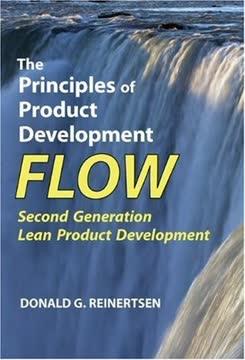
Get the complete 30-minute summary of The Principles of Product Development Flow
Get the complete summary in the appQuantify cost of delay for every project and use it to prioritize.
Manage queues actively. They are the invisible killer of speed.
Reduce work in process to reduce cycle time.
Embrace variability where the payoff function is asymmetric.
Reduce batch size to accelerate feedback and learning.
Constrain WIP to control flow and improve quality.
"The Principles of Product Development Flow" is a strong fit if you want practical ideas around business, management, leadership, especially themes like quantify cost of delay for every project and use it to prioritize; manage queues actively. they are the invisible killer of speed. The MinuteRead summary distills these concepts into a focused read, whether you're deciding whether to buy the book or applying its lessons at work.
Donald G. Reinertsen is a respected authority in product development and management. With extensive experience as a consultant and educator, Donald G. Reinertsen has significantly influenced modern product development practices. His work focuses on applying economic and manufacturing principles to improve product development processes. Reinertsen has authored several influential books, including "Managing the Design Factory" and "Developing Products in Half the Time." He is known for challenging…
View all summaries by Donald G. ReinertsenContinue Reading
Access the complete 30-minute summary and thousands more nonfiction books in the MinuteRead app.

Continue reading the complete summary in the MinuteRead app.






