MinuteRead
30 min
Book summary
Premium summary · Opens in the app · 30 min read
Every day, millions of people make investment decisions they believe are rational. They study financial statements, follow market news, consult advisors, and carefully weigh their options. They believe they are making choices based on facts, logic, and sound financial principles. Most of them are wrong.
**Author:** John R. Nofsinger
**Estimated Reading Time:** 45 minutes
**What You'll Learn:** How your mind systematically sabotages your investment decisions, why traditional finance theory fails to explain real market behavior, and what you can do to recognize and overcome the psychological biases that cost you money.
**Who This Book Is For:** Individual investors, financial professionals, students of finance, and anyone who has ever made a financial decision they later regretted and wondered why.
Every day, millions of people make investment decisions they believe are rational. They study financial statements, follow market news, consult advisors, and carefully weigh their options. They believe they are making choices based on facts, logic, and sound financial principles. Most of them are wrong. The uncomfortable truth is that your brain was not designed for investing. It was designed for survival on the savanna, where quick emotional reactions meant the difference between life and death, where belonging to a group provided safety, and where avoiding losses mattered more than capturing gains. These ancient mental shortcuts served our ancestors well, but they create havoc when applied to modern financial markets. Traditional finance theory operates on a simple premise: investors are rational actors who make decisions designed to maximize their wealth while minimizing risk. This assumption underpins everything from portfolio theory to asset pricing models. There is just one problem. Real investors do not behave this way. Real investors trade too frequently, driven by an inflated belief in their own abilities. Real investors hold losing investments far too long, hoping to avoid the pain of admitting a mistake. Real investors sell winning investments too early, eager to lock in the pleasure of being right. Real investors follow the crowd into overvalued assets and flee from undervalued ones. Real investors let their mood, the weather, and even the outcome of sporting events influence their financial decisions. John Nofsinger's work sits at the intersection of psychology and finance, a field known as behavioral finance. This discipline does not discard the tools of traditional finance. Instead, it recognizes that these tools are wielded by human beings with all their cognitive limitations, emotional responses, and social influences. Understanding these psychological factors is not merely an academic exercise. It is essential for anyone who wants to protect and grow their wealth. The stakes are enormous. Consider the investor who consistently buys high and sells low, not because they lack intelligence, but because their emotions drive them to chase rising prices and flee falling ones. Consider the retirement saver who cannot resist spending today at the expense of tomorrow. Consider the investment club that makes poor collective decisions because no one wants to challenge the group consensus. In each case, psychological biases are silently…
Continue reading in the MinuteRead app
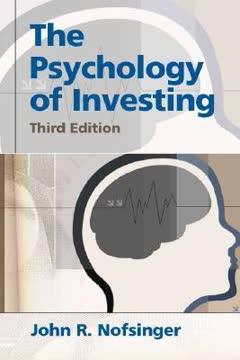
Get the complete 30-minute summary of The Psychology of Investing
Get the complete summary in the appPsychology affects investment decisions more than financial theory does.
Overconfidence leads to excessive trading and lower returns.
The disposition effect causes investors to sell winners too early and hold losers too long.
Risk perception changes based on recent gains and losses.
The way a decision is framed influences the choice made.
Mental accounting prevents optimal portfolio construction.
"The Psychology of Investing" is a strong fit if you want practical ideas around finance, psychology, business, especially themes like psychology affects investment decisions more than financial theory does; overconfidence leads to excessive trading and lower returns. The MinuteRead summary distills these concepts into a focused read, whether you're deciding whether to buy the book or applying its lessons at work.
John R. Nofsinger is an expert in behavioral finance and investing psychology. He has authored several books on the subject and is known for his research on how psychological factors influence financial decision-making. Nofsinger's work focuses on bridging the gap between traditional finance theory and real-world investor behavior. He has contributed significantly to the field by examining topics such as investor overconfidence, social interaction in investing, and the impact of emotions on fina…
View all summaries by John R. NofsingerContinue Reading
Access the complete 30-minute summary and thousands more nonfiction books in the MinuteRead app.

Continue reading the complete summary in the MinuteRead app.