MinuteRead
30 min
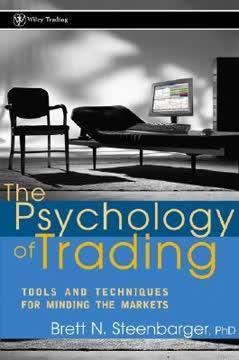
Book summary
Premium summary · Opens in the app · 30 min read
Every trader eventually confronts a humbling truth. The markets are not the problem. The charts are not the problem. The strategy is not the problem. The problem sits between the chair and the keyboard.
**Author:** Brett N. Steenbarger
**Estimated Reading Time:** 45 minutes
**What You'll Learn:**
- Why your emotional reactions to markets contain more valuable information than any indicator - How successful traders develop intuitive pattern recognition through immersive practice - Why rule-based trading systems outperform discretionary decisions - How to apply the OODA Loop framework to make faster, better trading decisions - Practical methods for managing risk, building resilience, and adapting to changing markets
**Who This Book Is For:**
This book is for traders who have studied charts, indicators, and strategies but still find themselves making the same costly mistakes. It is for anyone who has ever felt that their own psychology is the biggest obstacle standing between them and consistent profitability. Whether you are a novice trader struggling with emotional discipline or an experienced professional looking to reach the next level of performance, the insights in this book will transform how you understand yourself and the markets.
Every trader eventually confronts a humbling truth. The markets are not the problem. The charts are not the problem. The strategy is not the problem. The problem sits between the chair and the keyboard. You have probably experienced this yourself. You spent hours studying technical analysis. You backtested a strategy until the numbers looked promising. You developed clear entry and exit rules. And then, in the heat of a live trade, you did something completely different. You moved your stop loss. You doubled down on a losing position. You exited a winning trade too early because you could not stand the anxiety of watching your profits fluctuate. This is not a knowledge problem. It is a psychology problem. Brett Steenbarger wrote The Psychology of Trading because he recognized that most trading books ignore the most important variable in the entire equation: the human being making the decisions. Steenbarger is uniquely qualified to address this gap. Before becoming a trader and trading coach, he worked as a clinical psychologist. He spent years helping people understand their emotional patterns, their unconscious motivations, and their self-defeating behaviors. When he turned his attention to the financial markets, he saw the same psychological dynamics playing out in traders' accounts. The traditional approach to trading psychology has been remarkably shallow. Most advice amounts to some version of "control your emotions" or "stay disciplined." Traders are told to suppress their fear, ignore their anxiety, and follow their rules without deviation. This advice sounds reasonable. It also fails completely in practice. Steenbarger's insight is that emotions are not the enemy. They are information. The anxiety you feel when a trade goes against you is not a problem to be eliminated. It is a signal that something important is happening, both in the…
Continue reading in the MinuteRead app
Get the complete 30-minute summary of The Psychology of Trading
Get the complete summary in the appYour emotions are data, not enemies. Learn to observe them without being controlled by them.
Trading intuition develops through implicit learning. Immerse yourself in market patterns and practice deliberately.
Create a rule-based trading system and follow it without exception. Consistency comes from systems.
Master the OODA Loop: Observe, Orient, Decide, Act. Speed matters in trading.
Risk no more than 1-2% of your account on any single trade. Position sizing is your most important risk management tool.
Self-regulation means creating space between stimulus and response. Pause before acting on emotional impulses.
"The Psychology of Trading" is a strong fit if you want practical ideas around finance, psychology, business, especially themes like your emotions are data, not enemies. learn to observe them without being controlled by them; trading intuition develops through implicit learning. immerse yourself in market patterns and practice deliberately. The MinuteRead summary distills these concepts into a focused read, whether you're deciding whether to buy the book or applying its lessons at work.
Brett N. Steenbarger is a renowned psychologist, trader, and author specializing in trading psychology. He has extensive experience as a psychotherapist and has applied his psychological expertise to the field of trading. Steenbarger is known for his ability to bridge the gap between clinical psychology and financial markets, offering unique insights into trader behavior and performance. He has written several books on trading psychology and is a respected figure in the trading community. Steenb…
View all summaries by Brett N. SteenbargerContinue Reading
Access the complete 30-minute summary and thousands more nonfiction books in the MinuteRead app.

Continue reading the complete summary in the MinuteRead app.