MinuteRead
30 min
Book summary
by Jack Welch
Premium summary · Opens in the app · 30 min read
Most business books fail you. They offer elegant theories that collapse on contact with reality. They present frameworks that look beautiful on a whiteboard but crumble when you try to apply them on a Monday morning with a hundred emails waiting, a frustrated customer on the phone, and a team member who just resigned.
**Author:** Jack Welch
**Estimated Reading Time:** 45 minutes
**What You'll Learn:**
- How to align your organization around a mission that actually drives behavior - Why truth and trust are the most powerful competitive weapons available to any leader - How to create growth even when your industry seems stagnant - The principles that turn crises into catalysts for positive change - How to build teams that consistently outperform expectations - The framework for finding work that genuinely fulfills you - How to reinvent yourself at any stage of your career
**Who This Book Is For:**
This book is for anyone who works. Whether you lead a global corporation, manage a small team, run your own business, or are trying to figure out your next career move, the principles here apply to you. It is for the manager who feels stuck, the entrepreneur facing uncertainty, the employee wondering if there is a better way to work, and the leader who suspects that the traditional playbook no longer works. If you want practical wisdom about how business actually operates in the real world, this book was written for you.
Most business books fail you. They offer elegant theories that collapse on contact with reality. They present frameworks that look beautiful on a whiteboard but crumble when you try to apply them on a Monday morning with a hundred emails waiting, a frustrated customer on the phone, and a team member who just resigned. This book is different. Jack Welch spent two decades running General Electric, one of the largest and most complex organizations on the planet. During his tenure, GE's market value grew from $12 billion to over $400 billion. But this book is not a memoir of those years. It is not a collection of war stories designed to impress you with what one executive accomplished. It is something far more useful. This is a field guide for the real world of work. Welch wrote this book with his wife Suzy after years of teaching at the Jack Welch Management Institute, writing a weekly business column, and speaking with thousands of managers, entrepreneurs, and employees around the world. What he discovered through all of that experience was striking. The problems people face at work are remarkably consistent, regardless of industry, company size, or geography. A manager in Mumbai struggles with the same issues as a manager in Milwaukee. A startup founder in São Paulo faces the same fundamental challenges as a division president in Singapore. The details differ, but the underlying dynamics are universal. The central problem Welch identified is simple: work gets in the way. The daily grind, the endless to-do lists, the urgent emails, the meetings that multiply…
Continue reading in the MinuteRead app
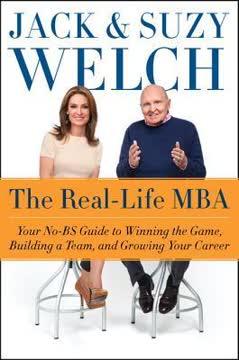
Get the complete 30-minute summary of The Real-Life MBA
Get the complete summary in the app**Align mission, behaviors, and consequences.** Make sure what you say, what you do, and what you reward all point in th
**Pursue truth relentlessly.** Honest communication is the foundation of effective leadership and healthy organizations.
**Build trust through consistent behavior.** Follow through on commitments, admit mistakes, and show genuine care for yo
**Cultivate a growth mindset.** Believe that growth is possible, and act accordingly, regardless of market conditions.
**Own crises immediately.** Take responsibility, communicate openly, act decisively, and learn from the experience.
**Understand your numbers.** Use variance analysis to turn financial data into insight and better decisions.
"The Real-Life MBA" is a strong fit if you want practical ideas around business, leadership, management, especially themes like **align mission, behaviors, and consequences.** make sure what you say, what you do, and what you reward all point in th; **pursue truth relentlessly.** honest communication is the foundation of effective leadership and healthy organizations. The MinuteRead summary distills these concepts into a focused read, whether you're deciding whether to buy the book or applying its lessons at work.
John Francis "Jack" Welch Jr. was a prominent American business executive, author, and chemical engineer. He served as chairman and CEO of General Electric from 1981 to 2001, during which time he significantly increased the company's stock value. After retiring, Welch continued to share his business expertise through various channels. He co-authored a weekly business column called "The Welch Way" with his wife Suzy and established the Jack Welch Management Institute, an online MBA program. Welch…
View all summaries by Jack WelchContinue Reading
Access the complete 30-minute summary and thousands more nonfiction books in the MinuteRead app.

Continue reading the complete summary in the MinuteRead app.