MinuteRead
30 min
Book summary
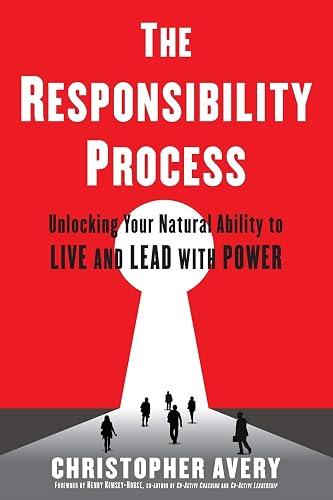
by Christopher Avery
Premium summary · Opens in the app · 30 min read
There is a moment when everything goes wrong. A project fails. A relationship fractures. A mistake costs money or trust or time. In that moment, something happens inside your mind before you even speak. A process begins. It is fast, automatic, and largely invisible. It determines whether you will spend the next hour, day, or year stuck in frustration or whether you will move quickly toward a solution.
**Author:** Christopher Avery
**Estimated Reading Time:** 45 minutes
**What You'll Learn:**
- Why you instinctively avoid responsibility when things go wrong - The six mental stages you pass through before accepting responsibility - How to shorten the time between problem and solution - Why accountability systems fail without responsibility underneath them - Practical tools for developing responsibility in yourself and others
**Who This Book Is For:**
This book is for anyone who has ever felt stuck in blame, frustration, or helplessness when facing a difficult situation. It is for leaders who want to build cultures where people own their work without being forced. It is for parents who want to raise capable children. It is for individuals who sense they are capable of more but cannot quite access it. If you have ever wondered why some people rise to challenges while others collapse into excuses, this book explains the mechanism behind both responses and shows you how to choose the former more often.
There is a moment when everything goes wrong. A project fails. A relationship fractures. A mistake costs money or trust or time. In that moment, something happens inside your mind before you even speak. A process begins. It is fast, automatic, and largely invisible. It determines whether you will spend the next hour, day, or year stuck in frustration or whether you will move quickly toward a solution. Christopher Avery spent years studying why smart, capable professionals often felt miserable at work. He noticed that the same intelligent people who could solve complex technical problems became helpless when facing organizational or interpersonal challenges. They blamed their bosses. They justified their inaction. They felt trapped by circumstances. They complained constantly but changed nothing. What Avery discovered is that this pattern is not a personality flaw. It is a mental process. It is a predictable sequence of coping mechanisms that every human being uses when faced with a problem. Understanding this process changes everything because once you can see the mechanism, you can interrupt it. The central problem this book addresses is simple but profound. Most people believe they are already responsible. They show up to work on time. They pay their bills. They meet their obligations. But this is not the kind of responsibility Avery is talking about. He is talking about something deeper: the internal state of ownership that allows you to respond creatively to any situation, no matter who caused it or how unfair it seems. The reason this matters is that your ability to solve problems is directly limited by your willingness to take responsibility for them. As long as you believe someone else is to blame for your situation, you are waiting for someone…
Continue reading in the MinuteRead app
Get the complete 30-minute summary of The Responsibility Process
Get the complete summary in the appThe Responsibility Process has six stages: Lay Blame, Justify, Shame, Obligation, Quit, and Responsibility. The first fi
Responsibility is not about fault. It is about power. You can take responsibility for your response even when you did no
Accountability is external. Responsibility is internal. You cannot force responsibility. You can only invite it.
The Three Keys to Responsibility are Intention, Awareness, and Confront. Practice them daily.
The Catch Sooner Game is Catch, Change, Forgive, Vow. Use it for any habit you want to change.
Every upset is an opportunity to learn. Ask "what do I want?" instead of "whose fault is it?"
"The Responsibility Process" is a strong fit if you want practical ideas around leadership, self help, psychology, especially themes like the responsibility process has six stages: lay blame, justify, shame, obligation, quit, and responsibility. the first fi; responsibility is not about fault. it is about power. you can take responsibility for your response even when you did no. The MinuteRead summary distills these concepts into a focused read, whether you're deciding whether to buy the book or applying its lessons at work.
Motivated to help readers with the Responsibility Process shows us that we are far more powerful and able than we usually give ourselves, Christopher Avery wrote “The Responsibility Process” to package those ideas for a fast, focused read. In “The Responsibility Process”, Christopher Avery focuses on the Responsibility Process shows us that we are far more powerful and able than we usually give ourselves. Through “The Responsibility Process”, Christopher Avery distills the core ideas on leadersh…
Continue Reading
Access the complete 30-minute summary and thousands more nonfiction books in the MinuteRead app.

Continue reading the complete summary in the MinuteRead app.