 MinuteRead
30 min
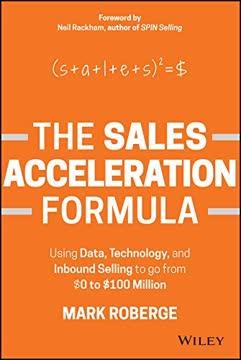
Book summary
by Mark Roberge
Premium summary · Opens in the app · 30 min read
Most sales organizations operate on folklore. They hire based on a hiring manager's intuition about who seems like a good salesperson. They train by having new reps shadow experienced ones for a few weeks. They coach by listening to calls and offering generic advice like "be more consultative" or "close harder." They compensate based on whatever plan the previous VP of Sales put in place. And they generate demand by buying lists, cold calling strangers, and hoping for the best.
By Mark Roberge
**Estimated Reading Time:** 45 minutes
**What You'll Learn:**
- How to engineer a predictable, scalable sales hiring process using data instead of intuition - The exact training methodology that transformed HubSpot's sales team from chaos to consistency - How to coach salespeople using metrics-driven diagnostics rather than guesswork - Why inbound marketing fundamentally changed the relationship between buyers and sellers - How to align sales and marketing with quantified service level agreements - The technology stack that accelerates sales without burdening salespeople - How to build a culture of continuous experimentation that compounds improvement over time
**Who This Book Is For:**
Sales leaders frustrated by unpredictable results. Founders who need to scale revenue without sacrificing quality. Marketing executives who want to end the war with sales. Anyone who believes there must be a better way to build a sales organization than relying on gut instinct and outdated playbooks.
Most sales organizations operate on folklore. They hire based on a hiring manager's intuition about who seems like a good salesperson. They train by having new reps shadow experienced ones for a few weeks. They coach by listening to calls and offering generic advice like "be more consultative" or "close harder." They compensate based on whatever plan the previous VP of Sales put in place. And they generate demand by buying lists, cold calling strangers, and hoping for the best. This approach might have worked in a world where buyers had limited information and salespeople controlled the flow of knowledge. But that world no longer exists. Today's buyer is empowered. Before a prospect ever speaks to a salesperson, they have likely read dozens of blog posts, downloaded whitepapers, watched product demos, and asked their network for recommendations. By the time they engage with sales, they often know more about the competitive landscape than the salesperson does. The old playbook of interruptive outreach and persuasive pitching feels increasingly desperate and ineffective. Mark Roberge understood this shift earlier than most. As an engineer turned Chief Revenue Officer at HubSpot, he approached the challenge of building a sales organization the way an engineer approaches any complex problem: by treating it as a system that could be measured, analyzed, and optimized. When Roberge joined HubSpot in 2007, the company had no sales team, no sales process, and no revenue. When he left seven years later, HubSpot had scaled to over $100 million in annual recurring revenue, employed hundreds of salespeople across multiple offices, and had become one of the fastest-growing software companies in the world. More importantly, the company had built a sales organization that could predictably produce results, not one that depended on a few superstar performers. The Sales Acceleration Formula is…
Continue reading in the MinuteRead app
Get the complete 30-minute summary of The Sales Acceleration Formula
Get the complete summary in the appTreat sales as a system that can be measured, analyzed, and optimized, not as an art that depends on intuition.
Discover the traits that predict success in your specific context through data analysis, then build a rigorous hiring pr
Replace ride-along training with a structured curriculum based on a clearly defined sales methodology.
Use funnel metrics to diagnose specific skill gaps, then create customized coaching plans focused on one skill at a time
Design compensation plans that align with company goals, are simple enough to understand, and provide immediate feedback
Develop sales leaders through a formal curriculum that includes real management experience before promotion.
"The Sales Acceleration Formula" is a strong fit if you want practical ideas around business, entrepreneurship, leadership, especially themes like treat sales as a system that can be measured, analyzed, and optimized, not as an art that depends on intuition; discover the traits that predict success in your specific context through data analysis, then build a rigorous hiring pr. The MinuteRead summary distills these concepts into a focused read, whether you're deciding whether to buy the book or applying its lessons at work.
Mark Roberge is the former Chief Revenue Officer of HubSpot, where he played a crucial role in scaling the company's sales from $0 to $100 million. His background as an engineer brought a unique, data-driven perspective to sales leadership. Roberge developed innovative strategies for hiring, training, and managing sales teams, which he shares in his book. His approach emphasizes the importance of aligning sales with modern buyer behavior and leveraging technology to improve efficiency. Roberge's…
View all summaries by Mark RobergeContinue Reading
Access the complete 30-minute summary and thousands more nonfiction books in the MinuteRead app.

Continue reading the complete summary in the MinuteRead app.






