 MinuteRead
30 min
Book summary
Premium summary · Opens in the app · 30 min read
Most organizations measure what is easy to count. Revenue, profit, costs, return on investment. These numbers appear clean and objective. They fit neatly into spreadsheets and board presentations. And they are dangerously incomplete.
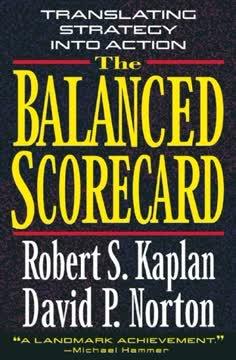
**Author:** Robert S. Kaplan **Co-Author:** David P. Norton **Estimated Reading Time:** 45 minutes
Why financial measures alone cannot tell you whether your business is healthy, why the companies you admire most have abandoned simplistic performance tracking, and how to build a measurement system that actually drives strategy instead of just reporting history. You will learn the four perspectives that make up the Balanced Scorecard, how to link them together in a cause-and-effect chain, and how to translate abstract strategy into concrete actions that every employee can understand and execute.
This book is for leaders who sense that their current measurement systems are incomplete. If you manage a team, a division, or an entire organization, and you have ever wondered why hitting your financial targets does not always mean you are building a healthy business, this book will give you a new lens. It is also for strategists frustrated by the gap between ambitious plans and daily operations, and for anyone who wants to understand how to align an entire organization around a shared vision of success.
Most organizations measure what is easy to count. Revenue, profit, costs, return on investment. These numbers appear clean and objective. They fit neatly into spreadsheets and board presentations. And they are dangerously incomplete. The problem is not that financial measures are wrong. The problem is that they are lagging indicators. They tell you what already happened. They reveal the outcome of decisions made months or years ago. By the time your financial results arrive, the actions that produced them are long past. You cannot manage a business by staring exclusively in the rearview mirror. A deeper problem lurks beneath this one. When you measure only financial outcomes, you implicitly tell your organization that nothing else matters. People respond to what gets measured. If the only numbers that count are quarterly earnings, people will make decisions that boost quarterly earnings, even when those decisions weaken the company's long-term health. They will cut training budgets. They will delay maintenance. They will push customers to close deals before the quarter ends, even when the customer is not ready. They will do exactly what you are measuring them to do, and you will be surprised when the organization slowly deteriorates. Robert Kaplan and David Norton recognized this pattern in the late 1980s and early 1990s. They studied companies that were succeeding not just in the short term but over decades. They noticed something consistent. These companies measured things that traditional accounting systems ignored. They tracked customer satisfaction, internal process quality, and employee capabilities with the same rigor they applied to financial results. They understood that financial success was the consequence of doing other things well, not the thing…
Continue reading in the MinuteRead app
Get the complete 30-minute summary of Balanced Scorecard
Get the complete summary in the appFinancial measures alone are dangerously incomplete. They tell you what happened, not what will happen.
The Balanced Scorecard adds three perspectives to financial measures: customer, internal process, and learning and growt
These four perspectives form a cause-and-effect chain. Investments in capabilities drive process excellence, which drive
A strategy map makes these cause-and-effect relationships explicit and communicable.
Every measure on your scorecard should reflect your specific strategy. Generic measures produce generic results.
The customer perspective must include both satisfaction and profitability. Satisfied customers who are unprofitable are
"Balanced Scorecard" is a strong fit if you want practical ideas around business, management, leadership, especially themes like financial measures alone are dangerously incomplete. they tell you what happened, not what will happen; the balanced scorecard adds three perspectives to financial measures: customer, internal process, and learning and growt. The MinuteRead summary distills these concepts into a focused read, whether you're deciding whether to buy the book or applying its lessons at work.
Robert S. Kaplan is a renowned author and academic in the field of management and accounting. He is best known for co-developing the Balanced Scorecard, a strategic planning and management system widely used in business and industry. Kaplan is the Marvin Bower Professor of Leadership Development, Emeritus at Harvard Business School. He has authored or co-authored numerous books and articles on strategy, cost management, and performance measurement. His work has significantly influenced modern ma…
View all summaries by Robert S. KaplanContinue Reading
Access the complete 30-minute summary and thousands more nonfiction books in the MinuteRead app.

Continue reading the complete summary in the MinuteRead app.






