MinuteRead
30 min
Book summary
by Patrick King
Premium summary · Opens in the app · 30 min read
Attraction feels mysterious. One person walks into a room and something shifts. Another person says all the right things and nothing happens. We tell ourselves stories about chemistry and sparks and fate. We treat attraction as if it were magic, something that either exists or does not, something beyond understanding.
**Author:** Patrick King **Estimated Reading Time:** 42 minutes
Why you feel drawn to certain people and not others. How biology silently shapes your romantic choices. What body language reveals before you speak a single word. Why the chase matters more than you think. How to flirt with intention rather than accident. What actually makes relationships last beyond the initial spark. And why great sex has almost nothing to do with technique.
Anyone who has ever wondered why they keep falling for the wrong person. Anyone who wants to understand the invisible forces that govern romantic attraction. Anyone tired of dating advice built on gimmicks and manipulation. And anyone who wants to build genuine connection rooted in psychology rather than pickup artistry.
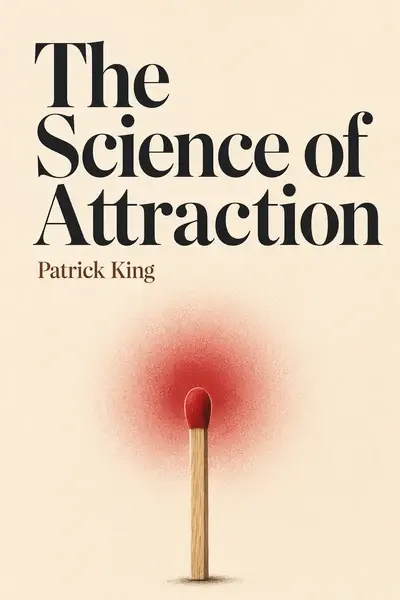
Attraction feels mysterious. One person walks into a room and something shifts. Another person says all the right things and nothing happens. We tell ourselves stories about chemistry and sparks and fate. We treat attraction as if it were magic, something that either exists or does not, something beyond understanding. Patrick King argues otherwise. Attraction is not magic. It is science. It follows patterns that have been shaped by millions of years of evolution, reinforced by neurochemistry, and expressed through behavior we barely notice. Once you understand those patterns, you stop leaving your romantic life to chance. The problem is that most people approach dating blind. They rely on vague advice like "just be yourself" or "play it cool." They mimic what they see in movies and wonder why it does not work. They feel chemistry with someone and assume it means compatibility. They feel nothing on a first date and walk away from someone who might have been perfect for them. They chase people who are wrong for them and ignore people who are right. They mistake anxiety for excitement and comfort for boredom. This book exists to replace guesswork with understanding. King draws on evolutionary psychology, social research, and behavioral science to explain why we are attracted to certain traits, how nonverbal communication shapes first impressions, why uncertainty fuels desire, and what actually predicts long-term relationship success. He does not offer pickup lines or manipulation tactics. He offers something more valuable: a clear model of how attraction works. The stakes are high. Choosing a partner is one of the most consequential decisions most people make. It affects happiness, health, financial stability, and the well-being of any children who come from the union. Yet most people make this decision with less information than they would use to buy a car. They trust feelings they do not understand. They repeat patterns they cannot see. They blame bad luck for outcomes that were predictable from the start. Understanding the science…
Continue reading in the MinuteRead app
Get the complete 30-minute summary of The Science of Attraction
Get the complete summary in the appAttraction is rooted in evolution. You are drawn to signals of health, fertility, and resources because those signals ma
Neurochemistry explains the intensity of early attraction. The feelings are real, but they are not evidence of compatibi
Body language communicates more than words. Your posture, eye contact, and touch shape how others perceive you.
Uncertainty fuels desire. Being too available reduces your perceived value.
Flirting follows three stages: approach, synchronize, touch. Follow the stages and pay attention to signals.
Love is not enough. Compatibility, commitment, and intimacy are what make relationships last.
"The Science of Attraction" is a strong fit if you want practical ideas around relationships, psychology, love, especially themes like attraction is rooted in evolution. you are drawn to signals of health, fertility, and resources because those signals ma; neurochemistry explains the intensity of early attraction. the feelings are real, but they are not evidence of compatibi. The MinuteRead summary distills these concepts into a focused read, whether you're deciding whether to buy the book or applying its lessons at work.
Patrick King is a Social Interaction Specialist and bestselling author based in San Francisco. He specializes in dating, relationships, and communication coaching. King's approach focuses on emotional intelligence and human psychology to help people overcome barriers and build confidence. His work has been featured in national publications, and he has written extensively on dating and relationships, including the most popular online dating book on Amazon. King's background includes three years o…
View all summaries by Patrick KingContinue Reading
Access the complete 30-minute summary and thousands more nonfiction books in the MinuteRead app.

Continue reading the complete summary in the MinuteRead app.