MinuteRead
30 min
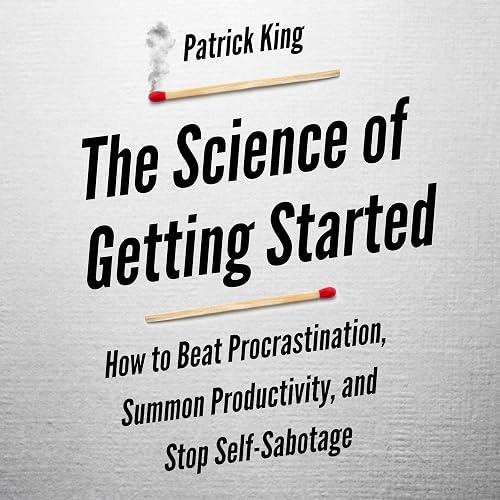
Book summary
by Patrick King
Premium summary · Opens in the app · 30 min read
You know what you should be doing right now. There is a task, a project, a conversation, or a decision waiting for your attention. It matters. It has consequences. And yet you are not doing it. You are scrolling, tidying, checking email, researching, planning, or doing any number of things that feel productive but are really just elaborate ways of avoiding the one thing that actually needs your attention.
**Author:** Patrick King **Estimated Reading Time:** 42 minutes
### What You'll Learn
Why you procrastinate even when you know better, how your brain sabotages your best intentions, and the specific strategies you can use to take action immediately. You will learn how to identify your personal procrastination patterns, restructure your environment for productivity, and build systems that make starting easier than delaying.
### Who This Book Is For
Anyone who has ever stared at a blank screen, put off an important conversation, delayed a project until the last minute, or felt the quiet guilt of knowing they should be doing something else. If you have ever wondered why you cannot simply will yourself into action, this book will show you what is actually happening and what to do about it.
You know what you should be doing right now. There is a task, a project, a conversation, or a decision waiting for your attention. It matters. It has consequences. And yet you are not doing it. You are scrolling, tidying, checking email, researching, planning, or doing any number of things that feel productive but are really just elaborate ways of avoiding the one thing that actually needs your attention. This is not a character flaw. It is not laziness. It is not a sign that you lack discipline or willpower. What you are experiencing is a fundamental tension built into the architecture of your brain, a conflict between two systems that evolved for different purposes and often work at cross purposes. The first system is ancient. It developed hundreds of millions of years ago and it is designed for survival. It seeks pleasure, avoids pain, conserves energy, and reacts to immediate threats and rewards. It does not care about your long-term goals, your career ambitions, or your desire to write a novel. It cares about right now. It wants comfort, safety, and gratification. This is what Patrick King calls the lizard brain, and it is running more of your life than you probably realize. The second system is much newer in evolutionary terms. It is the prefrontal cortex, the part of your brain responsible for planning, reasoning, impulse control, and delayed gratification. This is the part of you that can envision a future self, set goals, and make decisions based on what will be good for you in the long run. It is powerful, but it is also slower, more energy-intensive, and more easily overwhelmed than the lizard brain. Procrastination happens when these two systems collide. The lizard brain wants to feel good now. The prefrontal cortex wants to accomplish something meaningful later. When the task at hand feels difficult, boring, uncertain, or uncomfortable, the lizard brain wins. It sends…
Continue reading in the MinuteRead app
Get the complete 30-minute summary of The Science of Getting Started
Get the complete summary in the appProcrastination is an emotional regulation problem, not a time management problem.
Mood follows action. Start first, and motivation will come.
Willpower is limited. Design your environment to reduce the need for it.
Identify your procrastination type and target your specific triggers.
Use the procrastination equation to diagnose why you are avoiding a task.
No zero days. Do at least one small thing toward your goals every day.
"The Science of Getting Started" is a strong fit if you want practical ideas around productivity, self help, psychology, especially themes like procrastination is an emotional regulation problem, not a time management problem; mood follows action. start first, and motivation will come. The MinuteRead summary distills these concepts into a focused read, whether you're deciding whether to buy the book or applying its lessons at work.
Motivated to help readers with "Procrastination may have many other ways of manifesting other than that, Patrick King wrote “The Science of Getting Started” to package those ideas for a fast, focused read. In “The Science of Getting Started”, Patrick King focuses on "Procrastination may have many other ways of manifesting other than that. Through “The Science of Getting Started”, Patrick King distills the core ideas on productivity into lessons readers can absorb in a single short sitting. Reade…
View all summaries by Patrick KingContinue Reading
Access the complete 30-minute summary and thousands more nonfiction books in the MinuteRead app.

Continue reading the complete summary in the MinuteRead app.