 MinuteRead
30 min
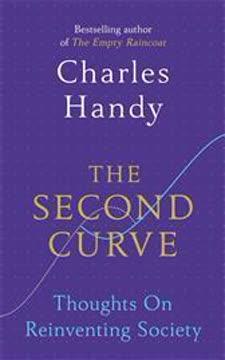
There is a moment in every life, every organization, and every society when the trajectory that carried you forward begins to flatten. Growth slows. Energy wanes. The strategies that once produced spectacular results start yielding diminishing returns. Most people do not notice this moment when it arrives. They are too busy enjoying the view from the top.
**Author:** Charles B. Handy
**Estimated Reading Time:** 45 minutes
**What You'll Learn:**
- Why the most dangerous moment is when everything seems to be going well - How to reinvent your life, career, and organization before circumstances force you to - Why our assumptions about work, education, capitalism, and democracy need radical revision - What it means to build a society based on trust rather than control - How to think about growth, success, and meaning in an age of disruption
**Who This Book Is For:**
This book is for anyone who senses that the old rules no longer apply but feels uncertain about what should replace them. It is for leaders navigating organizations through turbulent change, for individuals contemplating career reinvention, for parents wondering what kind of education will actually prepare their children, and for citizens concerned about the sustainability of our economic and political systems. If you have ever felt that the path you are on cannot continue indefinitely, yet struggled to imagine a different one, this book will give you both the courage and the conceptual tools to act.
There is a moment in every life, every organization, and every society when the trajectory that carried you forward begins to flatten. Growth slows. Energy wanes. The strategies that once produced spectacular results start yielding diminishing returns. Most people do not notice this moment when it arrives. They are too busy enjoying the view from the top. Charles Handy has spent decades observing this pattern. As a former oil executive turned professor at London Business School, then a writer and social philosopher, he has watched companies rise and fall, careers flourish and stagnate, and entire economic systems approach their limits. What he has learned is both unsettling and liberating: the secret to sustained success is knowing when to abandon it. The problem is not that we fail to recognize when things are going badly. We are actually quite good at responding to crisis. When revenue collapses, we restructure. When health fails, we seek treatment. When relationships break down, we seek help. The problem is that we are terrible at responding to success. When things are going well, every instinct tells us to keep doing what we are doing. Why change a winning formula? This is precisely the trap. By the time the winning formula stops working, it is often too late to change course. The resources needed to fund a new direction have been depleted. The energy required for reinvention has been spent maintaining the old model. The credibility needed to inspire confidence in a new approach has been invested in defending the status quo. Handy calls this the paradox of success: the very things that make you…
Continue reading in the MinuteRead app
Get the complete 30-minute summary of The Second Curve
Get the complete summary in the appThe Second Curve must start before the first curve peaks. Waiting for decline is waiting too long.
Success is a phase, not a destination. The goal is reinvention, not permanence.
The DIY Society transfers labor and risk from institutions to individuals. Participate with awareness.
Information is non-rivalrous. Business models based on scarcity are obsolete.
Work is what you do, not where you go. Build a portfolio, not a dependency.
Markets are useful, but not for everything. What cannot be measured cannot be priced.
"The Second Curve" is a strong fit if you want practical ideas around business, society, management, especially themes like the second curve must start before the first curve peaks. waiting for decline is waiting too long; success is a phase, not a destination. the goal is reinvention, not permanence. The MinuteRead summary distills these concepts into a focused read, whether you're deciding whether to buy the book or applying its lessons at work.
Charles Handy is an Irish author and philosopher known for his work in organizational behavior and management. He introduced influential concepts like the "portfolio worker" and "Shamrock Organization." Handy spent many years as a professor at London Business School, establishing himself as a respected management guru. His writings often explore societal changes and their impact on work and life. Handy's approach combines academic rigor with practical insights, making his ideas accessible to a w…
View all summaries by Charles B. HandyContinue Reading
Access the complete 30-minute summary and thousands more nonfiction books in the MinuteRead app.

Continue reading the complete summary in the MinuteRead app.






