MinuteRead
30 min
Book summary
Premium summary · Opens in the app · 30 min read
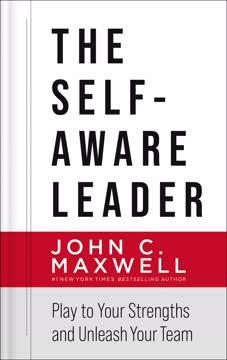
Every leader eventually faces a moment of uncomfortable clarity. The team is underperforming. Trust has eroded. Talented people are walking out the door. The natural instinct is to look outward: to blame the market, the economy, the unmotivated employees, the unreasonable board. But John C. Maxwell suggests a different starting point. The problem, more often than not, is looking back at you in the mirror.
**Author:** John C. Maxwell **Estimated Reading Time:** 45 minutes
**What You'll Learn:** - Why the hardest person you will ever lead is yourself - How self-awareness transforms your leadership capacity - Practical strategies for handling criticism, admitting mistakes, and building trust - How to measure your leadership by the growth of your team - The trade-offs required to reach higher levels of leadership
**Who This Book Is For:** This book is for anyone who leads people, whether in business, ministry, education, or community organizations. It is especially valuable for leaders who sense that their own blind spots are holding them back, who want to move from managing tasks to developing people, and who are willing to do the difficult inner work that authentic leadership requires.
Every leader eventually faces a moment of uncomfortable clarity. The team is underperforming. Trust has eroded. Talented people are walking out the door. The natural instinct is to look outward: to blame the market, the economy, the unmotivated employees, the unreasonable board. But John C. Maxwell suggests a different starting point. The problem, more often than not, is looking back at you in the mirror. Maxwell has spent decades studying leadership, writing about it, teaching it, and living it. He has led large organizations, trained thousands of leaders around the world, and written more books on the subject than almost anyone alive. Yet his most important discovery was not about how to influence others. It was about how difficult it is to lead oneself. The Self-Aware Leader is built on a simple but uncomfortable premise: before you can effectively lead anyone else, you must first learn to lead yourself. This sounds obvious. It is not. Most leaders spend their energy trying to fix their organizations, their teams, their circumstances. They rarely stop to examine their own assumptions, habits, blind spots, and motivations. The result is predictable. Leaders who lack self-awareness create cultures that reflect their own unresolved issues. Insecure leaders create fearful teams. Impatient leaders create exhausted teams. Leaders who cannot admit mistakes create teams that hide problems until they explode. This book is not a collection of leadership techniques. It is an invitation to do the harder work of looking inward. Maxwell draws on his own failures, which he discusses with unusual candor. He describes leadership crises that were rooted in his own lack of focus, his impatience, and his poor decision-making. He talks about the painful process of realizing that people were leaving his organization not because of the organization itself, but because of him. The problem this book addresses is universal. Every leader has blind spots. Every leader has weaknesses that undermine their effectiveness. Every leader faces the temptation to prioritize personal…
Continue reading in the MinuteRead app
Get the complete 30-minute summary of The Self-Aware Leader
Get the complete summary in the appThe toughest person you will ever lead is yourself. Master self-leadership before trying to lead others.
Your purpose is connected to your giftedness. Identify your strengths and build your life around them.
People do not care how much you know until they know how much you care. Prioritize relationships over position.
People quit people, not companies. When people leave, look inward first.
Listening builds trust. Listen more than you talk.
Criticism is inevitable. Handle it with grace and look for the grain of truth.
"The Self-Aware Leader" is a strong fit if you want practical ideas around leadership, self help, business, especially themes like the toughest person you will ever lead is yourself. master self-leadership before trying to lead others; your purpose is connected to your giftedness. identify your strengths and build your life around them. The MinuteRead summary distills these concepts into a focused read, whether you're deciding whether to buy the book or applying its lessons at work.
John C. Maxwell is a prominent American author, speaker, and pastor renowned for his expertise in leadership. He has authored numerous books on the subject, with several becoming New York Times bestsellers. Maxwell's works, including "The 21 Irrefutable Laws of Leadership" and "The 21 Indispensable Qualities of a Leader," have significantly influenced the field of leadership development. His writing style is known for being accessible and practical, often incorporating real-world examples and pe…
View all summaries by John C. MaxwellContinue Reading
Access the complete 30-minute summary and thousands more nonfiction books in the MinuteRead app.

Continue reading the complete summary in the MinuteRead app.