MinuteRead
30 min
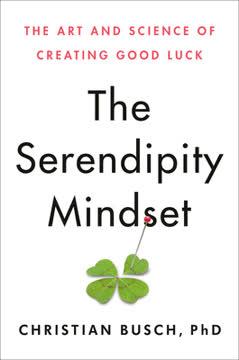
Book summary
Premium summary · Opens in the app · 30 min read
We have all experienced moments when life surprised us. A chance conversation on a train led to a job offer. A wrong turn revealed a neighborhood that became home. A book picked up on a whim changed how we think about everything. These moments feel magical, as though the universe briefly aligned in our favor. Most of us treat them as rare gifts, delightful anomalies in an otherwise predictable existence.
**Author:** Christian Busch
**Estimated Reading Time:** 45 minutes
**What You'll Learn:**
- Why serendipity is not random luck but a skill you can systematically develop - How to reframe unexpected events as opportunities rather than threats - Practical techniques for creating more meaningful coincidences in your life - How to cultivate the mindset that turns chance encounters into breakthrough outcomes - Ways to build networks and communities that amplify serendipity - How organizations can design cultures that encourage fortunate discoveries
**Who This Book Is For:**
Anyone who has ever wondered why some people seem to stumble into remarkable opportunities while others do not. Whether you are an entrepreneur seeking your next venture, a professional navigating career uncertainty, a leader building innovative teams, or simply someone who wants to live a richer, more connected life, this book offers a practical framework for turning the unexpected into an advantage.
We have all experienced moments when life surprised us. A chance conversation on a train led to a job offer. A wrong turn revealed a neighborhood that became home. A book picked up on a whim changed how we think about everything. These moments feel magical, as though the universe briefly aligned in our favor. Most of us treat them as rare gifts, delightful anomalies in an otherwise predictable existence. Christian Busch believes we have been thinking about these moments entirely wrong. The problem is not that serendipity is rare. The problem is that most of us are not equipped to recognize it, create it, or act on it when it appears. We walk through life with our heads down, focused on our plans, our schedules, our predetermined goals. When something unexpected happens, we often experience it as an interruption rather than an invitation. We are so busy executing our carefully constructed strategies that we miss the opportunities hiding in plain sight. This matters more than ever. The world has become increasingly unpredictable. Industries transform overnight. Career paths that once seemed stable now shift beneath our feet. The skills we trained for become obsolete. In such an environment, the ability to navigate uncertainty and extract value from the unexpected is not a luxury. It is a survival skill. Busch's approach is different because he treats serendipity as a discipline rather than an accident. Through years of research at New York University and the London School of Economics, through hundreds of interviews with entrepreneurs, scientists, artists, and leaders, he discovered that people who experience high levels of serendipity share common habits, mindsets, and practices. They are not luckier than the rest of us. They are better prepared. The book you are about to read distills those findings into a practical framework. It will show…
Continue reading in the MinuteRead app
Get the complete 30-minute summary of The Serendipity Mindset
Get the complete summary in the appSerendipity is a skill you can develop, not just luck that happens to you.
Reframe unexpected events as opportunities rather than threats.
Practice noticing: pay attention to details, anomalies, and patterns others miss.
Connect the dots: link unexpected observations to meaningful problems and goals.
Find your North Star: a clear sense of purpose helps you recognize relevant opportunities.
Actively create triggers: diversify experiences, share goals, build diverse networks.
"The Serendipity Mindset" is a strong fit if you want practical ideas around self help, psychology, business, especially themes like serendipity is a skill you can develop, not just luck that happens to you; reframe unexpected events as opportunities rather than threats. The MinuteRead summary distills these concepts into a focused read, whether you're deciding whether to buy the book or applying its lessons at work.
Dr. Christian Busch is an academic and entrepreneur who teaches at New York University (NYU) and the London School of Economics (LSE). At NYU, he directs the CGA Global Economy program, while at LSE, he co-directed the Innovation & Co-Creation Lab. Busch is also a cofounder of Sandbox Network, a community for young innovators, and Leaders on Purpose. His work focuses on serendipity, purpose, and community. Despite his professional engagements, Busch describes himself as an introvert who enjoys s…
View all summaries by Christian BuschContinue Reading
Access the complete 30-minute summary and thousands more nonfiction books in the MinuteRead app.

Continue reading the complete summary in the MinuteRead app.