 MinuteRead
30 min
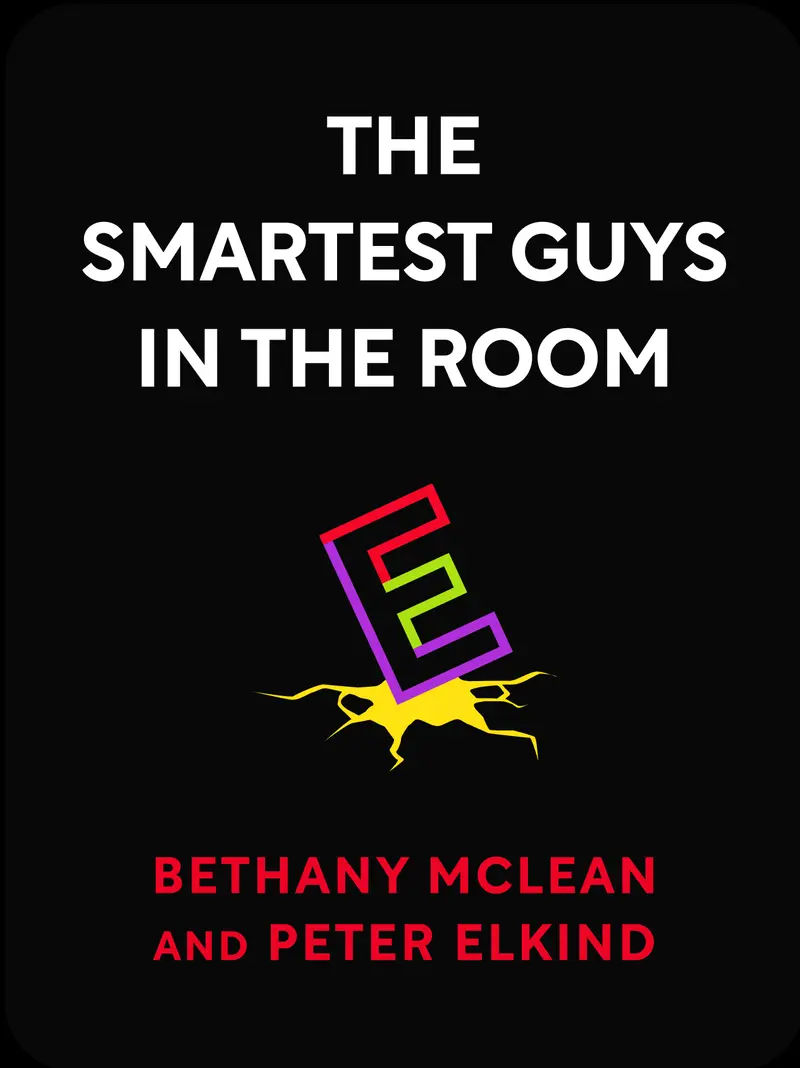
Book summary
Premium summary · Opens in the app · 30 min read
In the late 1990s, Enron was not just a company. It was a symbol. Fortune magazine named it America's Most Innovative Company six years in a row. Business schools taught case studies about its revolutionary business model. Wall Street analysts competed to praise its visionary leadership. The stock price climbed from around $20 in 1997 to over $90 in 2000. Ken Lay, the company's chairman, was a close friend of presidents. Jeff Skilling, the CEO, was celebrated as a genius who had reinvented the e
**Author:** Bethany McLean **Estimated Reading Time:** 45 minutes
**What You'll Learn:**
How one of America's most admired companies built an empire on illusion, why brilliant people convinced themselves that financial manipulation was innovation, and what happens when a culture rewards appearance over substance. You will understand the specific mechanisms that allowed Enron to hide billions in debt, the psychological forces that kept smart people from seeing the truth, and the warning signs that every investor, employee, and leader should recognize.
**Who This Book Is For:**
Anyone who works in business, invests in markets, or wants to understand how corporate cultures can quietly corrupt the people inside them. This book is essential reading for leaders who want to build ethical organizations, employees who sense something wrong but cannot articulate it, and citizens who want to understand how institutional safeguards can fail so completely.
In the late 1990s, Enron was not just a company. It was a symbol. Fortune magazine named it America's Most Innovative Company six years in a row. Business schools taught case studies about its revolutionary business model. Wall Street analysts competed to praise its visionary leadership. The stock price climbed from around $20 in 1997 to over $90 in 2000. Ken Lay, the company's chairman, was a close friend of presidents. Jeff Skilling, the CEO, was celebrated as a genius who had reinvented the energy industry. Then, in the span of a few months, it all collapsed. The company that had been worth $70 billion filed for bankruptcy in December 2001. Thousands of employees lost their jobs and their retirement savings. Investors lost billions. Arthur Andersen, one of the world's most respected accounting firms, was destroyed. And the American public was left asking a simple question: How did this happen? The answer, as Bethany McLean reveals in this extraordinary work of investigative journalism, is both more complex and more disturbing than most people imagine. Enron's collapse was not the result of a few bad actors making a few bad decisions. It was the inevitable outcome of a culture that systematically rewarded deception, a business model built on financial manipulation rather than real value creation, and a network of enablers who chose to look the other way. McLean was one of the first journalists to question Enron's numbers. In March 2001, she published an article in Fortune titled "Is Enron Overpriced?" The article asked a simple question that no one on Wall Street seemed willing to ask: How exactly does Enron make its money? The response was telling. Enron's executives attacked her. Wall Street analysts dismissed her. The stock price barely moved. Everyone was too invested in the narrative to consider the possibility that it might be false. What…
Continue reading in the MinuteRead app
Get the complete 30-minute summary of The Smartest Guys in the Room
Get the complete summary in the appEnron's fraud was not a sudden event but a gradual erosion of ethical boundaries, with each compromise making the next o
The company used mark-to-market accounting to book profits on contracts that might never generate actual cash.
Off-balance-sheet partnerships allowed Enron to hide billions in debt while appearing financially healthy.
The Performance Review Committee created a culture of fear that rewarded appearance over substance.
Ken Lay and Jeff Skilling created the culture that enabled fraud and ignored the warning signs that something was wrong.
Wall Street banks and analysts enabled Enron's fraud by prioritizing fees over ethical considerations.
"The Smartest Guys in the Room" is a strong fit if you want practical ideas around business, finance, history, especially themes like enron's fraud was not a sudden event but a gradual erosion of ethical boundaries, with each compromise making the next o; the company used mark-to-market accounting to book profits on contracts that might never generate actual cash. The MinuteRead summary distills these concepts into a focused read, whether you're deciding whether to buy the book or applying its lessons at work.
Bethany McLean is a respected financial journalist known for her work on the Enron scandal. She contributes to Vanity Fair magazine and previously worked as an editor at large and columnist for Fortune. McLean's background includes a BA in English and mathematics from Williams College and experience as an investment banker at Goldman Sachs. Her investigative reporting on Enron played a crucial role in exposing the company's fraudulent practices. McLean's expertise in financial journalism and her…
View all summaries by Bethany McLeanContinue Reading
Access the complete 30-minute summary and thousands more nonfiction books in the MinuteRead app.

Continue reading the complete summary in the MinuteRead app.






