MinuteRead
30 min
Book summary
Premium summary · Opens in the app · 30 min read
There is a hidden variable in every conversation, every transaction, every team meeting, every merger, every marriage, and every marketplace exchange. It is so fundamental that we rarely stop to notice it. When it is present, things happen faster and cost less. When it is absent, everything slows down and becomes more expensive. That variable is trust.
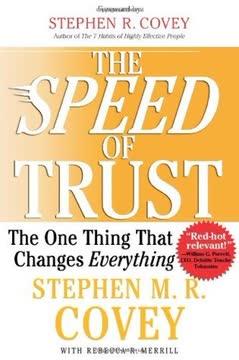
**Author:** Stephen M.R. Covey
**Estimated Reading Time:** 45 minutes
**What You'll Learn**
Why trust is not a soft social virtue but a hard economic driver that affects every outcome you care about. How to measure the hidden tax you pay when trust is low and the dividend you earn when trust is high. A complete framework for building trust in yourself, your relationships, your organization, and the world.
**Who This Book Is For**
Leaders who sense their organizations are moving too slowly and costing too much. Professionals who want to accelerate their careers and deepen their influence. Entrepreneurs building brands that must earn loyalty fast. Anyone who has ever had to rebuild trust after it was broken, or who wants to prevent that from happening in the first place.
There is a hidden variable in every conversation, every transaction, every team meeting, every merger, every marriage, and every marketplace exchange. It is so fundamental that we rarely stop to notice it. When it is present, things happen faster and cost less. When it is absent, everything slows down and becomes more expensive. That variable is trust. Most people think of trust as a nice-to-have. A soft skill. Something that matters in friendships and family relationships but takes a back seat to strategy, execution, and hard numbers in the business world. Stephen M.R. Covey argues this is not just wrong. It is dangerously wrong. Trust is the most overlooked, undervalued, and underutilized asset available to every person and every organization. Consider what happens when you trust someone. You do not need to verify every claim. You do not need contracts that anticipate every possible betrayal. You do not need layers of oversight and approval. Decisions get made. Work gets done. Deals close. Relationships deepen. Speed increases. Costs decrease. Now consider what happens when trust is absent. Every interaction requires verification. Lawyers review every sentence. Managers double-check every report. Partners second-guess every motive. The organization adds bureaucracy, redundancy, and oversight. Speed plummets. Costs skyrocket. This is not a feeling. It is a measurable economic reality. Covey calls this the trust tax and the trust dividend. Low-trust organizations pay a tax in the form of hidden costs that show up as politics, turnover, disengagement, and fraud. High-trust organizations earn a dividend in the form of accelerated growth, enhanced innovation, stronger collaboration, and better execution. The difference is not marginal. Covey's research found that high-trust companies outperform low-trust companies by up to 286 percent in total return to shareholders. The good news is that trust is not a fixed trait. It is not something you either have or you do not. Trust is a learnable competency. It can be built, measured, restored, and leveraged.…
Continue reading in the MinuteRead app
Get the complete 30-minute summary of The Speed of Trust
Get the complete summary in the appTrust always affects speed and cost. High trust equals high speed and low cost. Low trust equals low speed and high cost
Self-trust is the foundation. Build it through integrity, intent, capabilities, and results.
The thirteen behaviors are your toolkit for building trust with others. Practice all of them.
Every relationship has a trust account. Make deposits. Avoid withdrawals.
Organizations are aligned to get the results they get. Align systems with trust principles.
Market trust is earned through consistent value delivery and genuine contribution.
"The Speed of Trust" is a strong fit if you want practical ideas around business, leadership, self help—especially themes like trust always affects speed and cost. high trust equals high speed and low cost. low trust equals low speed and high cost; self-trust is the foundation. build it through integrity, intent, capabilities, and results. The MinuteRead summary distills these concepts into a focused read, whether you're deciding whether to buy the book or applying its lessons at work.
Stephen M. R. Covey is a renowned speaker, author, and advisor on trust, leadership, and performance. As the former CEO of Covey Leadership Center, he led the company to become the world's largest leadership development organization. Covey's book, "The SPEED of Trust," challenges traditional views on trust, positioning it as a critical economic driver. He advocates for trust as a learnable skill essential for success in the global economy. Covey's experience as a CEO informs his practical approa…
View all summaries by Stephen M.R. CoveyContinue Reading
Access the complete 30-minute summary and thousands more nonfiction books in the MinuteRead app.

Continue reading the complete summary in the MinuteRead app.