MinuteRead
30 min
Book summary
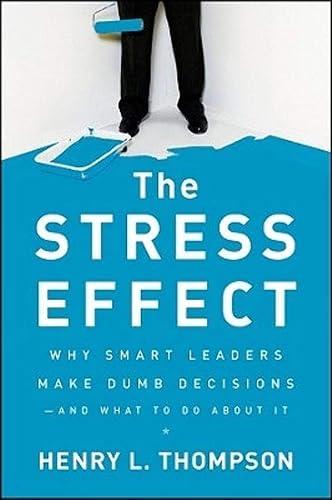
by Henry L. Thompson
Premium summary · Opens in the app · 30 min read
In the summer of 2008, some of the most experienced executives on Wall Street watched their companies collapse. They had Ivy League educations, decades of experience, and access to the best information money could buy. They had made thousands of successful decisions throughout their careers. Yet as the financial crisis deepened, many of them made choices that seemed inexplicably poor, choices that accelerated their companies' decline rather than slowing it.
**Author:** Henry L. Thompson, Ph.D.
**Estimated Reading Time:** 45 minutes
**What You'll Learn:**
- Why intelligent leaders suddenly make terrible decisions - How stress physically alters brain function and decision quality - The relationship between cognitive intelligence, emotional intelligence, and stress - A practical seven-part system for building stress resilience - Specific techniques to maintain mental performance under pressure
**Who This Book Is For:**
Leaders at any level who face high-pressure decisions, professionals navigating organizational crises, and anyone who wants to understand why smart people sometimes make catastrophic choices. If you have ever wondered why you made a decision you later regretted during a stressful period, this book explains what happened and how to prevent it from happening again.
In the summer of 2008, some of the most experienced executives on Wall Street watched their companies collapse. They had Ivy League educations, decades of experience, and access to the best information money could buy. They had made thousands of successful decisions throughout their careers. Yet as the financial crisis deepened, many of them made choices that seemed inexplicably poor, choices that accelerated their companies' decline rather than slowing it. What happened to these leaders? Were they simply incompetent all along? Did they suddenly stop caring? Or was something more fundamental at work? Henry L. Thompson spent years studying this question. His conclusion challenges many of our assumptions about leadership and decision-making. Smart leaders do not fail because they lack intelligence. They fail because stress degrades their ability to use the intelligence they have. The problem is not limited to Wall Street executives. It affects military commanders in combat, emergency room physicians during mass casualty events, entrepreneurs facing cash flow crises, and parents navigating family emergencies. Whenever stress levels rise beyond a certain threshold, the brain's decision-making machinery begins to malfunction. The result is a paradox: the more important the decision, the more likely we are to make it poorly. This book exists because understanding this phenomenon is the first step toward preventing it. Most leadership development programs focus on adding skills and knowledge. They assume that if you teach someone the right frameworks and give them enough practice, they will make good decisions under pressure. But this approach ignores a critical variable: the physiological state of the decision-maker. Thompson's research draws on neuroscience, psychology, and his own extensive experience working with leaders in high-stress environments. He discovered that stress does not simply make us feel uncomfortable. It triggers a cascade of hormonal changes that literally alter how our brains process information. Under stress, the prefrontal cortex, the brain region responsible for careful reasoning and impulse control, becomes less active. Meanwhile, the amygdala, which handles threat detection and emotional responses, becomes…
Continue reading in the MinuteRead app
Get the complete 30-minute summary of The Stress Effect
Get the complete summary in the appStress impairs decision-making through biological mechanisms, not character flaws.
The prefrontal cortex becomes less active under stress while the amygdala becomes hyperactive.
Stress narrows perception, reduces working memory, shortens time horizons, and shifts decision-making to automatic patte
The problem is lack of access to intelligence, not lack of intelligence itself.
Emotional intelligence becomes more critical as stress increases but is also more vulnerable to stress.
Stress management capacity determines how much stress you can handle before performance degrades.
"The Stress Effect" is a strong fit if you want practical ideas around leadership, business, psychology, especially themes like stress impairs decision-making through biological mechanisms, not character flaws; the prefrontal cortex becomes less active under stress while the amygdala becomes hyperactive. The MinuteRead summary distills these concepts into a focused read, whether you're deciding whether to buy the book or applying its lessons at work.
Motivated to help readers with smart leaders with proven track records sometimes suddenly begin making really bad decisions—or no decisions, Henry L. Thompson wrote “The Stress Effect” to package those ideas for a fast, focused read. In “The Stress Effect”, Henry L. Thompson focuses on smart leaders with proven track records sometimes suddenly begin making really bad decisions—or no decisions. Through “The Stress Effect”, Henry L. Thompson distills the core ideas on leadership into lessons reade…
Continue Reading
Access the complete 30-minute summary and thousands more nonfiction books in the MinuteRead app.

Continue reading the complete summary in the MinuteRead app.