 MinuteRead
30 min
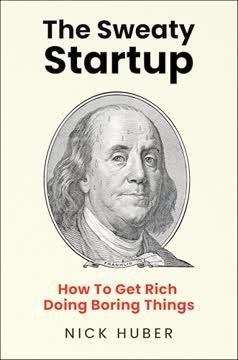
Book summary
by Nick Huber
Premium summary · Opens in the app · 30 min read
There is a story we have been told about entrepreneurship. It goes something like this: a brilliant founder has a world-changing idea, raises millions of dollars from investors, builds an app, scales it to millions of users, and becomes a billionaire before turning thirty. This story dominates the news, fills our social media feeds, and shapes how an entire generation thinks about building wealth.
**Author:** Nick Huber
**Estimated Reading Time:** 45 minutes
**What You'll Learn:**
- Why boring businesses build more wealth than revolutionary ideas - How to choose a business model with weak competition and high margins - The three forms of leverage that create true freedom - How to master sales, hiring, and delegation - A practical framework for escaping the trap of owning a job
**Who This Book Is For:**
This book is for the person who suspects the startup world is selling a fantasy. It is for the electrician who wonders if he should start his own shop, the office worker who wants out, the college student who would rather build something real than chase venture capital. It is for anyone who wants to build wealth through proven business models, hard work, and smart operations rather than hoping to become the next tech unicorn.
There is a story we have been told about entrepreneurship. It goes something like this: a brilliant founder has a world-changing idea, raises millions of dollars from investors, builds an app, scales it to millions of users, and becomes a billionaire before turning thirty. This story dominates the news, fills our social media feeds, and shapes how an entire generation thinks about building wealth. Nick Huber wants you to know that this story is mostly fiction. The reality is far less glamorous and far more accessible. Most of the wealthy people in your town, the ones eating at nice restaurants and holding memberships at fancy country clubs, did not disrupt industries or raise venture capital. They started small, boring businesses. They mowed lawns. They fixed air conditioners. They hauled junk. They cleaned carpets. They did the unglamorous work that most people overlook, and they did it consistently for years until they built something valuable. Huber calls these "sweaty startups." The name is deliberate. These are businesses that require actual physical work, at least in the beginning. They are businesses where you trade time for money, get your hands dirty, and learn the fundamentals of commerce through direct experience. They are not sexy. They will never make headlines. But they have built more millionaires than Silicon Valley ever will. The problem is that most people overlook these opportunities. They are conditioned to believe that entrepreneurship means innovation, disruption, and scale. They think a business needs to be novel to be valuable. They chase "fun" businesses like restaurants, apps, and passion projects, only to discover that these industries attract hordes of competitors and produce razor-thin margins. Meanwhile, the boring businesses quietly generate consistent profit for their owners, year after year, decade after decade. Huber learned this lesson firsthand. He started a moving and storage company while in college,…
Continue reading in the MinuteRead app
Get the complete 30-minute summary of The Sweaty Startup
Get the complete summary in the appWealth is freedom, not money. Build leverage, not just income.
Execution beats ideas. Start small, get paid, and move fast.
Choose boring businesses with weak competition, high margins, and low failure rates.
Become an expert operator, not just a technician. Learn sales, hiring, and management.
Everything is sales. Focus on the other person's needs, not your own.
Time is your most valuable asset. Focus on Quadrant 2 activities that build long-term value.
"The Sweaty Startup" is a strong fit if you want practical ideas around business, startup, entrepreneurship, especially themes like wealth is freedom, not money. build leverage, not just income; execution beats ideas. start small, get paid, and move fast. The MinuteRead summary distills these concepts into a focused read, whether you're deciding whether to buy the book or applying its lessons at work.
Nick Huber is an entrepreneur and author known for his unconventional approach to business. He gained success through his college moving and storage service, which became the foundation for his business philosophy. Huber advocates for "sweaty startups" - businesses that focus on everyday, unglamorous services rather than high-tech innovations. His experience spans from local service industries to real estate investments. Nick Huber 's teachings emphasize practical strategies, efficient operation…
View all summaries by Nick HuberContinue Reading
Access the complete 30-minute summary and thousands more nonfiction books in the MinuteRead app.

Continue reading the complete summary in the MinuteRead app.






