MinuteRead
30 min
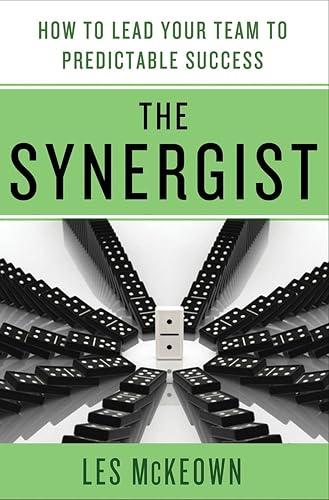
Book summary
by Les McKeown
Premium summary · Opens in the app · 30 min read
Every organization has them. The meetings that drag on for hours without producing a decision. The projects that stall because two departments cannot agree. The brilliant ideas that die in committee. The talented teams that somehow produce mediocre results.
**Author:** Les McKeown
**Estimated Reading Time:** 45 minutes
**What You'll Learn:** Why teams fail despite having talented people, how four distinct working styles shape every group interaction, and how to master the Synergist role that transforms dysfunctional teams into high-performing ones.
**Who This Book Is For:** Anyone who works with other people and has felt the frustration of watching smart, capable individuals fail to work together effectively. Whether you lead a team, participate in one, or simply want to understand why some groups thrive while others implode, this book offers a clear path forward.
Every organization has them. The meetings that drag on for hours without producing a decision. The projects that stall because two departments cannot agree. The brilliant ideas that die in committee. The talented teams that somehow produce mediocre results. Most people have experienced the frustration of working with intelligent, well-intentioned colleagues who nevertheless cannot seem to work together effectively. The experience is so common that many have come to accept it as inevitable. Dysfunction, they assume, is simply the price of working with other people. Les McKeown argues otherwise. After decades of working with organizations of every size, from startups to multinational corporations, McKeown identified a pattern hiding in plain sight. The problem is not that people are difficult or that organizations are inherently flawed. The problem is that most teams are missing a crucial element, one that no one has named or understood clearly. That missing element is the Synergist. The Synergist is not a personality type. It is not a natural style that some people are born with and others lack. It is a role, a set of behaviors and skills that anyone can learn. When someone steps into this role, the entire dynamic of a team changes. Conflicts that seemed intractable begin to resolve. Decisions that stalled for weeks suddenly move forward. People who could not communicate begin to understand each other. The cost of missing this role is staggering. Billions of dollars are lost every year to failed projects, stalled initiatives, and dysfunctional teams. Talented people burn out and leave organizations not because the work is too hard, but because the interpersonal friction is too great. Creativity is stifled not by lack of ideas, but by the inability to move those ideas through the group. McKeown's insight emerged from a simple observation. Every group, regardless of its purpose or composition, contains three natural working styles. He calls them the Visionary, the Operator, and the Processor. Each style brings essential strengths to the table. The Visionary generates ideas and sees possibilities. The Operator gets things done and pushes for action. The Processor creates systems and ensures consistency. The problem is that these three…
Continue reading in the MinuteRead app
Get the complete 30-minute summary of The Synergist
Get the complete summary in the appEvery group contains three natural styles: Visionary, Operator, and Processor. Each is essential, but they are inherentl
Left unmanaged, the tension between these styles inevitably leads to gridlock, underperformance, or failure.
The Synergist is the missing piece that stabilizes the V-O-P triangle. It is a role, not a personality type.
Anyone can learn to be a Synergist, regardless of their natural style.
The Synergist focuses on the needs of the enterprise as a whole, regulating extremes, resolving conflicts, and sequencin
The Synergist's toolkit includes nine learnable skills: time management, priority management, crisis management, delegat
"The Synergist" is a strong fit if you want practical ideas around leadership, business, management, especially themes like every group contains three natural styles: visionary, operator, and processor. each is essential, but they are inherentl; left unmanaged, the tension between these styles inevitably leads to gridlock, underperformance, or failure. The MinuteRead summary distills these concepts into a focused read, whether you're deciding whether to buy the book or applying its lessons at work.
Motivated to help readers with put simply, Les McKeown wrote “The Synergist” to package those ideas for a fast, focused read. In “The Synergist”, Les McKeown focuses on put simply. Through “The Synergist”, Les McKeown distills the core ideas on leadership into lessons readers can absorb in a single short sitting. Readers turn to this work when they want Les McKeown's perspective on the subject without working through the entire original volume. Leslie Richard McKeown (12 November 1955 – 20 April…
View all summaries by Les McKeownContinue Reading
Access the complete 30-minute summary and thousands more nonfiction books in the MinuteRead app.

Continue reading the complete summary in the MinuteRead app.