MinuteRead
30 min
Book summary
by John Heider
Premium summary · Opens in the app · 30 min read
Most leadership books are built on a simple premise: the leader must do something. Set a vision. Motivate the team. Drive results. Overcome resistance. Push through obstacles. The underlying assumption is that leadership is fundamentally about action, and that more action produces better outcomes.
**Author:** John Heider **Estimated Reading Time:** 45 minutes
**What You'll Learn:**
- Why the ancient wisdom of Lao Tzu offers a radically different approach to leadership - How doing less can produce better results than constant intervention - Why awareness matters more than technique - How to lead groups without creating competition, jealousy, or resistance - Practical ways to apply Taoist principles in modern organizations
**Who This Book Is For:**
This book is for anyone who leads others, whether formally or informally. Managers, executives, teachers, parents, coaches, therapists, and community organizers will all find value here. It is especially useful for leaders who feel exhausted by constant effort, frustrated by resistance, or suspicious that there must be a better way than pushing harder. If you have ever wondered why some leaders seem to accomplish great things with apparent ease while others struggle despite heroic effort, this book offers an answer.
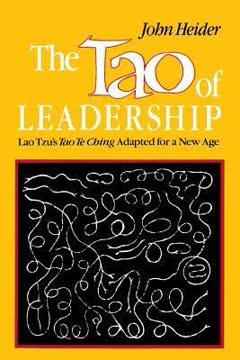
Most leadership books are built on a simple premise: the leader must do something. Set a vision. Motivate the team. Drive results. Overcome resistance. Push through obstacles. The underlying assumption is that leadership is fundamentally about action, and that more action produces better outcomes. John Heider's The Tao of Leadership challenges this premise at its root. Drawing on the ancient Chinese text Tao Te Ching, written by Lao Tzu roughly 2,500 years ago, Heider argues that the most effective leadership often looks like doing less, not more. The wise leader, he suggests, is not the one who dominates the room but the one who creates conditions for others to flourish. The best leader is often invisible, guiding without controlling, influencing without forcing. The Tao Te Ching is one of the most translated books in human history, second only to the Bible. It consists of 81 short chapters of poetic wisdom about how things work. The word Tao translates roughly as "how" or "the way." It refers to the natural order of the universe, the underlying pattern that governs all things. Lao Tzu observed that water flows downhill, seasons change in cycles, and living things grow according to their own inner nature. The wise person, he argued, understands these patterns and works with them rather than against them. Heider, a psychologist and leadership consultant, recognized that these ancient insights had profound implications for modern leaders. In the 1980s, when he wrote this book, leadership theory was dominated by ideas about assertiveness, goal-setting, and strategic planning. Heider saw that these approaches, while useful, often created unintended problems. Leaders who pushed too hard created resistance. Leaders who controlled too tightly stifled creativity. Leaders who took too much credit bred resentment. The Taoist alternative is not passivity. It is a different kind of activity,…
Continue reading in the MinuteRead app
Get the complete 30-minute summary of The Tao of Leadership
Get the complete summary in the appTao means how: how things happen, how things work. Leadership is about understanding and working with the natural order.
The best leader is barely known. When the work is done, the group says, "We did it ourselves."
Non-action (wu wei) means acting in harmony with natural flow, not passivity. Forcing creates resistance.
Awareness is the foundation of leadership. You cannot lead what you cannot see.
The wise leader is like water: adaptable, persistent, humble, and powerful through gentleness.
Simplicity creates clarity. Unclutter your mind and simplify your work.
"The Tao of Leadership" is a strong fit if you want practical ideas around leadership, business, philosophy, especially themes like tao means how: how things happen, how things work. leadership is about understanding and working with the natural order; the best leader is barely known. when the work is done, the group says, "we did it ourselves.". The MinuteRead summary distills these concepts into a focused read, whether you're deciding whether to buy the book or applying its lessons at work.
John Heider PH.D is the author of "The Tao of Leadership," a book that applies principles from Lao Tzu's Tao Te Ching to modern leadership concepts. Heider's approach blends Eastern philosophy with Western management practices, offering a unique perspective on effective leadership. His work emphasizes the importance of mindfulness, flexibility, and empowering others. Heider's background likely includes expertise in psychology, philosophy, and organizational behavior, given the book's content. Wh…
View all summaries by John HeiderContinue Reading
Access the complete 30-minute summary and thousands more nonfiction books in the MinuteRead app.

Continue reading the complete summary in the MinuteRead app.