 MinuteRead
30 min
Book summary
Premium summary · Opens in the app · 30 min read
Most companies operate in a state of controlled chaos. They chase quarterly numbers, react to crises, and implement improvement programs that fade within months. They hire consultants who deliver binders full of recommendations that gather dust on shelves. They reorganize, restructure, and re-engineer, yet somehow the same problems keep resurfacing in new forms.
**Author:** Jeffrey K. Liker
**Estimated Reading Time:** 45 minutes
**What You'll Learn:** How Toyota's management principles create sustainable excellence through long-term thinking, respect for people, and relentless problem-solving. You will discover the practical systems, habits, and mindsets that make Toyota one of the world's most admired organizations.
**Who This Book Is For:** Leaders who want to build organizations that last. Managers who want to move beyond firefighting and create systems that improve themselves. Anyone who suspects that short-term thinking and superficial fixes are holding their team back.
Most companies operate in a state of controlled chaos. They chase quarterly numbers, react to crises, and implement improvement programs that fade within months. They hire consultants who deliver binders full of recommendations that gather dust on shelves. They reorganize, restructure, and re-engineer, yet somehow the same problems keep resurfacing in new forms. Toyota does something fundamentally different. For decades, Toyota has been studied, analyzed, and imitated by companies around the world. Thousands of executives have toured its factories. Hundreds of books have been written about its methods. Yet most organizations that attempt to copy Toyota fail to achieve the results they expected. They implement the tools without understanding the thinking behind them. They adopt the practices without building the culture that makes those practices work. This book exists because the gap between knowing Toyota's tools and living Toyota's philosophy is enormous. Jeffrey Liker spent years studying Toyota from the inside, observing how the company's principles operate in daily practice. What he found is that Toyota's success does not come from any single technique. It comes from a complete management system built on a foundation of long-term thinking and respect for people. The problem most organizations face is not a lack of tools. It is a lack of coherence. Companies adopt lean manufacturing techniques while maintaining command-and-control leadership styles. They implement visual management boards while punishing people who surface problems. They talk about continuous improvement while rewarding short-term cost cutting. The tools become empty rituals, and the organization eventually abandons them. Toyota's approach is different because it starts with a different question. Most companies ask: How can we make more money this quarter? Toyota asks: How can we create value for customers, employees, and society over the long term? This shift in starting point changes everything that follows. The topic matters because the business world is increasingly dominated by short-term thinking. Companies sacrifice long-term capability for short-term profits. They treat employees as costs to be minimized rather than assets to be developed. They squeeze suppliers instead of partnering with them. They chase fads instead of building systems. Toyota offers a proven alternative, a way of thinking and working that has produced extraordinary results…
Continue reading in the MinuteRead app
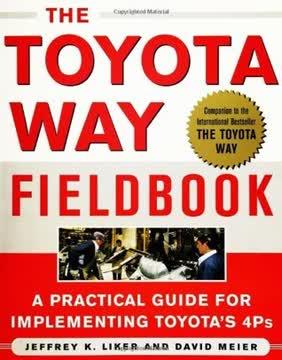
Get the complete 30-minute summary of The Toyota Way Fieldbook
Get the complete summary in the appStart with long-term purpose, not short-term profit.
Create flow to surface problems and compress time.
Use pull systems to produce only what is needed.
Level the workload to create stability.
Stop to fix problems at the source.
Standardize tasks as a baseline for improvement.
"The Toyota Way Fieldbook" is a strong fit if you want practical ideas around business, management, leadership, especially themes like start with long-term purpose, not short-term profit; create flow to surface problems and compress time. The MinuteRead summary distills these concepts into a focused read, whether you're deciding whether to buy the book or applying its lessons at work.
Dr. Jeffrey K. Liker is a renowned expert in lean manufacturing and the Toyota Production System. As a Professor of Industrial and Operations Engineering at the University of Michigan, he has authored numerous books and articles on these subjects. His most famous work, "The Toyota Way," has received international acclaim and multiple awards. Liker's research focuses on Toyota's management principles and their application in various industries. He is a frequent keynote speaker and consultant, wor…
View all summaries by Jeffrey K. LikerContinue Reading
Access the complete 30-minute summary and thousands more nonfiction books in the MinuteRead app.

Continue reading the complete summary in the MinuteRead app.






