MinuteRead
30 min
Book summary
Premium summary · Opens in the app · 30 min read
Most companies approach leadership the same way they approach everything else: as a problem to be solved with the right framework, the right competency model, or the right training program. They identify high-potential individuals, send them to leadership development courses, and hope that something sticks. The results are predictably disappointing.
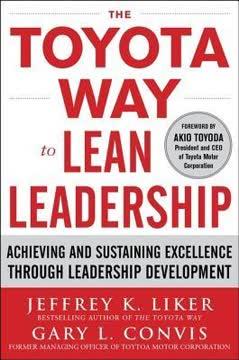
**Author:** Jeffrey K. Liker **Estimated Reading Time:** 42 minutes
### What You'll Learn
The real secret behind Toyota's extraordinary success is not its production system or its tools. It is a distinctive approach to leadership that has been refined over decades. This book reveals how Toyota develops leaders who think differently, who see their primary job as building capability in others, and who drive continuous improvement through deep engagement with the work itself. You will learn the values, practices, and developmental cycles that create leaders capable of sustaining excellence through any challenge.
### Who This Book Is For
This book is for leaders who suspect that the conventional approach to management, with its emphasis on short-term results and detached decision-making, is fundamentally broken. It is for executives, managers, and aspiring leaders who want to build organizations that learn, adapt, and improve continuously. It is for anyone who has wondered how Toyota consistently produces quality and innovation decade after decade, and who wants to understand the human system behind that performance.
Most companies approach leadership the same way they approach everything else: as a problem to be solved with the right framework, the right competency model, or the right training program. They identify high-potential individuals, send them to leadership development courses, and hope that something sticks. The results are predictably disappointing. Toyota does something fundamentally different. The company has built its entire leadership philosophy around a single, counterintuitive insight: the most important characteristic of a leader is not charisma, decisiveness, or strategic vision. It is the commitment to continuous self-development. At Toyota, a leader is someone who never stops learning, who actively seeks out challenges that will stretch their capabilities, and who measures their success primarily by the growth of the people they lead. This is not a soft or sentimental idea. It is a rigorous, demanding, and deeply practical approach to building organizational capability. Toyota's leadership system is as carefully designed as its production system, and it produces equally reliable results. The problem most organizations face is not a shortage of talented individuals. It is a shortage of leaders who understand that their fundamental job is to build more leaders. When leadership is treated as a position rather than a practice, when it is measured by individual achievement rather than collective capability, organizations become brittle. They depend on a few exceptional people rather than on systems that develop excellence at every level. Toyota's approach is different because it starts from a different assumption. The company believes that leadership capability is not something you either have or you do not have. It is something you build, deliberately and systematically, over an entire career. The role of senior leaders is to create…
Continue reading in the MinuteRead app
Get the complete 30-minute summary of The Toyota Way to Lean Leadership
Get the complete summary in the appLeadership at Toyota is about developing others, and you can only develop others if you are continuously developing your
The five core values are the spirit of challenge, kaizen, genchi genbutsu, teamwork, and respect. They must be practiced
Shu ha ri is the cycle of mastery: learn the basics through faithful repetition, break away to explore variations, trans
True North is an unattainable ideal that provides direction for all improvement efforts. The gap between current reality
Kaizen is a daily practice, not an occasional event. Every person, every day, is expected to look for and act on opportu
Hoshin kanri aligns strategy with daily work through a structured dialogue called catch-ball that moves both downward an
"The Toyota Way to Lean Leadership" is a strong fit if you want practical ideas around business, leadership, management, especially themes like leadership at toyota is about developing others, and you can only develop others if you are continuously developing your; the five core values are the spirit of challenge, kaizen, genchi genbutsu, teamwork, and respect. they must be practiced. The MinuteRead summary distills these concepts into a focused read, whether you're deciding whether to buy the book or applying its lessons at work.
Dr. Jeffrey K. Liker is a renowned expert in lean manufacturing and Toyota's production system. As a Professor of Industrial and Operations Engineering at the University of Michigan, he has authored numerous books and articles on these subjects. His best-selling work, "The Toyota Way," has received multiple awards and established him as a leading authority in the field. Liker's research focuses on Toyota's management principles, product development, and organizational culture. He has collaborate…
View all summaries by Jeffrey K. LikerContinue Reading
Access the complete 30-minute summary and thousands more nonfiction books in the MinuteRead app.

Continue reading the complete summary in the MinuteRead app.