 MinuteRead
30 min
Book summary
Premium summary · Opens in the app · 30 min read
Most businesses are invisible. Not because they lack quality products or dedicated employees or even reasonable prices. They are invisible because they have never given their customers a compelling reason to notice them. They blend into the background of a marketplace that is louder, more crowded, and more competitive than at any point in human history.
**Author:** Dan S. Kennedy
**Estimated Reading Time:** 45 minutes
**What You'll Learn:**
- How to craft a Unique Selling Proposition that makes your business impossible to ignore - The five-step psychological sequence that turns prospects into buyers - How to target your ideal customer with precision and stop wasting money on the wrong audience - The art of proving your claims with overwhelming evidence - How to create urgency that compels immediate action - The systems for building customer equity and generating referrals that compound over time
**Who This Book Is For:**
This book is for business owners, entrepreneurs, marketers, and sales professionals who are tired of competing on price and watching their marketing efforts produce mediocre results. If you have ever felt invisible in a crowded marketplace, struggled to explain why customers should choose you, or wondered why your advertising fails to generate consistent leads, this book will give you the tools to change that permanently.
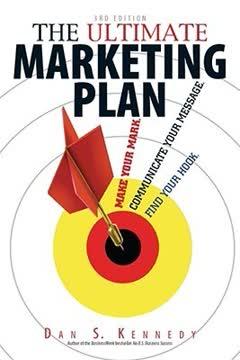
Most businesses are invisible. Not because they lack quality products or dedicated employees or even reasonable prices. They are invisible because they have never given their customers a compelling reason to notice them. They blend into the background of a marketplace that is louder, more crowded, and more competitive than at any point in human history. Walk down any commercial street, scroll through any social media feed, or open any inbox, and you will encounter hundreds of businesses making the same tired claims. "Quality service." "Competitive prices." "Customer-focused." "Serving our community since 1987." These phrases are so common they have become meaningless. They are the marketing equivalent of white noise. Customers have learned to filter them out completely. Dan S. Kennedy has spent decades studying why some businesses thrive while others struggle to survive. His conclusion is simple and uncomfortable: most businesses fail at marketing because they refuse to be interesting. They play it safe. They copy what everyone else is doing. They worry more about offending someone than about compelling anyone. And in doing so, they guarantee their own irrelevance. The Ultimate Marketing Plan is Kennedy's answer to this problem. It is not a book about social media algorithms or the latest digital advertising trends. It is a book about the fundamentals of persuasion that have worked for centuries and will continue to work long after today's platforms have been replaced. Kennedy's approach is direct, practical, and occasionally uncomfortable. He does not believe in marketing that makes you feel good about yourself. He believes in marketing that produces measurable results. The central problem this book addresses is simple: most businesses do not have a clear answer to the question, "Why should I buy from you instead of someone else?" If you cannot…
Continue reading in the MinuteRead app
Get the complete 30-minute summary of The Ultimate Marketing Plan
Get the complete summary in the appDefine your Unique Selling Proposition: a specific, memorable promise that differentiates you from all competitors, incl
Follow the five-step buying sequence in your marketing: awareness of need, choice of solution, selection of provider, ac
Target your ideal customer with precision. Marketing to everyone is marketing to no one.
Prove every claim with overwhelming evidence. When your customer makes your claim, it is a fact. When you make it, it is
Shape perception through consistent branding. Perception is reality, and consistency builds trust.
Create urgency in every offer. Procrastination is the enemy of sales.
"The Ultimate Marketing Plan" is a strong fit if you want practical ideas around business, entrepreneurship, money, especially themes like define your unique selling proposition: a specific, memorable promise that differentiates you from all competitors, incl; follow the five-step buying sequence in your marketing: awareness of need, choice of solution, selection of provider, ac. The MinuteRead summary distills these concepts into a focused read, whether you're deciding whether to buy the book or applying its lessons at work.
Dan S. Kennedy is a prolific author, entrepreneur, and marketing consultant. He has written numerous business books, including the popular No B.S. series. Dan S. Kennedy is known for his provocative and truth-telling approach to marketing. He has worked with a wide range of clients, from small businesses to large corporations, and has influenced over 1 million independent business owners annually through various channels. Kennedy is particularly renowned for his expertise in direct-response mark…
View all summaries by Dan S. KennedyContinue Reading
Access the complete 30-minute summary and thousands more nonfiction books in the MinuteRead app.

Continue reading the complete summary in the MinuteRead app.






