MinuteRead
5 min
Book summary
by Alan Watts
Premium summary · Opens in the app · 5 min read
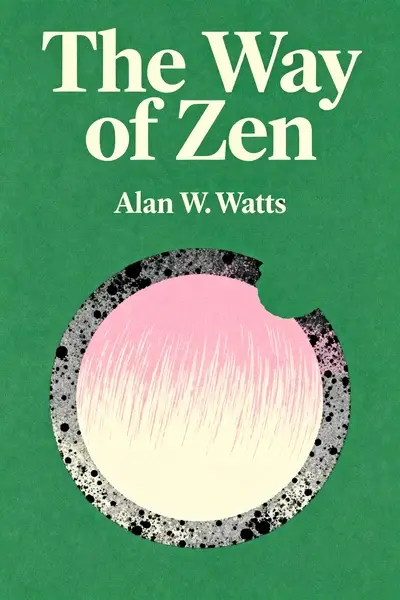
The Way Of Zen is the ultimate guide to understanding the history, principles, and benefits of Zen and how it can help us experience mental stillness and enjoy life even in uncertain times.
The Way Of Zen is the ultimate guide to understanding the history, principles, and benefits of Zen and how it can help us experience mental stillness and enjoy life even in uncertain times.
You want to be happy, of course, and it’s likely your ultimate goal in life. But have you ever thought about what you would do if you ever got it?
For subscribers to the Zen way, pursuing happiness is foolish. That’s because it comes from the false idea that we can have only the good in life without any of the bad.
Think of it this way. Do you remember the last time you felt uncomfortable while laying in bed on your side? You likely switched to the other side, right? At first, you feel better, but eventually, you’re in the same exact place as you were before.
This is where the paradox comes in. You can only feel the comfort of switching sides because you knew the discomfort of being on one side for too long. In other words, pain isn’t avoidable and it’s also just another aspect of pleasure.
Zen also teaches that you can’t be a victim of circumstances but that you are part of them. In the case of a hot summer day, you don’t sweat from the heat, the sweat is the heat.
Another way to understand it is to look at the connection between your mind and body. You don’t get into certain circumstances, they only exist because your mind and body are there to observe them.
According to this ancient philosophy, we needn’t try to become anything specific. In other words, it’s all about letting yourself be aimless. Doing nothing is encouraged, for example. For those of us in the west, this sounds like a waste of time. But if you look at the natural world, it’s the normal state for almost everything. Your cat doesn’t attempt to become anything except a cat, for instance. Zen teaches us to think similarly, that we should let our thoughts go to move naturally, however they want. It’s important to see emotions in this way too. Whatever you’re feeling after an event is natural, and thus valuable. One Zen monk began to cry after learning about the death of a close relative. This prompted his student to suggest that it wasn’t right for someone of his status to act like that. The monk’s response that he was weeping because he wanted to can teach us a lot about the importance of letting ourselves feel whatever we do. To Zen believers, anything we do and anything that happens is right in a way because it is instinctive. The words we say are another important…
Continue reading in the MinuteRead app
Get the complete 5-minute summary of The Way Of Zen
Get the complete summary in the appZen allows you to see clearly the illusions that your mind creates.
The art of Zen requires naturalness and spontaneity.
If you want to become good at meditation, observe the world just as it is.
"The Way Of Zen" is a strong fit if you want practical ideas around happiness, mindfulness, psychology, especially themes like zen allows you to see clearly the illusions that your mind creates; the art of zen requires naturalness and spontaneity. The MinuteRead summary distills these concepts into a focused read, whether you're deciding whether to buy the book or applying its lessons at work.
Alan Wilson Watts (6 January 1915 – 16 November 1973) was a British-born American philosopher, writer, and speaker, best known as an interpreter and populariser of Eastern philosophy for a Western audience. Born in Chislehurst, England, he moved to the United States in 1938 and began Zen training in New York. Pursuing a career, he attended Seabury-Western Theological Seminary, where he received a master's degree in theology. Watts became an Episcopal priest in 1945, then left the ministry in 195…
View all summaries by Alan WattsContinue Reading
Access the complete 5-minute summary and thousands more nonfiction books in the MinuteRead app.

Continue reading the complete summary in the MinuteRead app.