MinuteRead
30 min
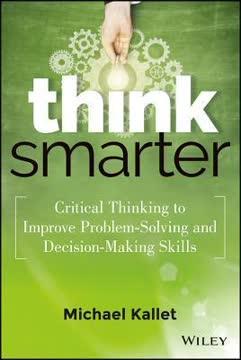
Think about the last time you faced a genuinely difficult problem. Maybe it was a project that kept going off track, a relationship conflict you could not resolve, or a business decision with significant consequences. How did you approach it? If you are like most people, you probably started thinking about solutions almost immediately. You drew on past experiences, applied familiar patterns, and made a choice based on what felt right.
### by Michael Kallet
**Estimated Reading Time:** 45 minutes
**What You'll Learn**
Every day you make thousands of decisions. Most happen automatically, without conscious thought. But when faced with complex problems, important choices, or unfamiliar situations, automatic thinking fails. This book teaches you how to switch from automatic to manual thinking, using a structured framework that brings clarity to confusing situations, generates better solutions, and produces confident decisions. You will learn specific tools for defining problems accurately, building strong premises, challenging assumptions, thinking innovatively, and evaluating decisions with clear criteria.
**Who This Book Is For**
This book is for anyone who wants to improve the quality of their thinking. Whether you are a business leader facing strategic decisions, a manager solving operational problems, an entrepreneur evaluating opportunities, or an individual navigating personal challenges, the tools in this book will help you think more clearly and act more confidently.
Think about the last time you faced a genuinely difficult problem. Maybe it was a project that kept going off track, a relationship conflict you could not resolve, or a business decision with significant consequences. How did you approach it? If you are like most people, you probably started thinking about solutions almost immediately. You drew on past experiences, applied familiar patterns, and made a choice based on what felt right. Now consider this: what if the problem you were trying to solve was not actually the real problem? What if your assumptions were flawed from the start? What if the solution you chose addressed a symptom rather than the underlying cause? This is the central challenge Michael Kallet addresses in Think Smarter. Most people believe they are already good thinkers. After all, thinking is something we do constantly, from the moment we wake up until we fall asleep. We make decisions, solve problems, and navigate complex social situations every day. Surely that means we are skilled at thinking. But Kallet draws a crucial distinction that changes everything: there is a difference between automatic thinking and manual thinking. Automatic thinking is what we do most of the time. It is fast, effortless, and largely unconscious. It relies on habits, patterns, and assumptions built up over years of experience. Automatic thinking is incredibly useful. It allows us to function without deliberating over every small choice. When you drive a familiar route, you do not consciously think about every turn. When you recognize a familiar situation at work, you apply the solution that worked last time. The problem is that automatic thinking has significant limitations. It works well for routine situations but breaks down when faced with complexity, ambiguity, or novelty. When automatic thinking fails, most people do not realize it. They simply apply…
Continue reading in the MinuteRead app
Get the complete 30-minute summary of Think Smarter
Get the complete summary in the appCritical thinking is manual thinking. It requires conscious effort and a structured framework.
Define the problem before attempting to solve it. Clarity is the foundation of effective thinking.
Every conclusion is built on a premise. Strengthen your premises to strengthen your conclusions.
A premise consists of facts, observations, experiences, beliefs, and assumptions. Distinguish among them and evaluate ea
Make assumptions visible. Examine them. Challenge them with "what if" and "what other" questions.
To think outside the box, challenge the assumptions that define the box.
"Think Smarter" is a strong fit if you want practical ideas around self help, psychology, business, especially themes like critical thinking is manual thinking. it requires conscious effort and a structured framework; define the problem before attempting to solve it. clarity is the foundation of effective thinking. The MinuteRead summary distills these concepts into a focused read, whether you're deciding whether to buy the book or applying its lessons at work.
Michael Kallet is the author of "Think Smarter: Critical Thinking to Improve Problem-Solving and Decision-Making Skills." He is an expert in critical thinking and problem-solving, with extensive experience in business and consulting. Kallet has developed frameworks and tools to enhance critical thinking skills, focusing on clarity, solutions, and decision-making. His approach emphasizes practical applications in professional settings. Kallet's work aims to help individuals and organizations impr…
View all summaries by Michael KalletContinue Reading
Access the complete 30-minute summary and thousands more nonfiction books in the MinuteRead app.

Continue reading the complete summary in the MinuteRead app.