MinuteRead
30 min
Book summary
by Adam LeBor
Premium summary · Opens in the app · 30 min read
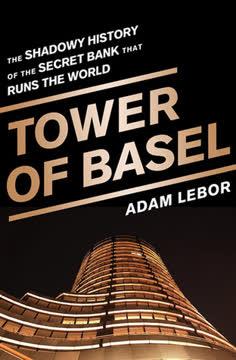
In the quiet Swiss city of Basel, a short walk from the medieval cathedral and the Rhine River, stands an eighteen-story cylindrical tower. It looks like something between a modern art installation and a fortress. Inside, the corridors are hushed, the security is discreet but omnipresent, and the people who work there speak in the careful language of central bankers. This building houses the Bank for International Settlements, known to insiders simply as the BIS.
**Author:** Adam LeBor
**Estimated Reading Time:** 2 hours 15 minutes
**What You'll Learn:** How a small institution in Switzerland became the most powerful financial organization most people have never heard of, why it was designed to operate beyond the reach of governments, and how its influence shaped the modern global economy.
**Who This Book Is For:** Readers interested in the hidden machinery of international finance, the history of central banking, the relationship between money and political power, and anyone who wants to understand how institutions built in the 1930s continue to shape economic decisions today.
In the quiet Swiss city of Basel, a short walk from the medieval cathedral and the Rhine River, stands an eighteen-story cylindrical tower. It looks like something between a modern art installation and a fortress. Inside, the corridors are hushed, the security is discreet but omnipresent, and the people who work there speak in the careful language of central bankers. This building houses the Bank for International Settlements, known to insiders simply as the BIS. Most people have never heard of it. Yet the decisions made within its walls affect the interest rates on mortgages in Madrid, the value of pensions in Pittsburgh, the stability of currencies in Seoul, and the regulatory frameworks that govern banks from London to Singapore. The BIS is, in many ways, the central bank of central banks. It is where the world's monetary authorities meet, coordinate policy, and shape the rules of global finance. What makes the BIS remarkable is not just its power but its extraordinary legal status. The BIS is immune from taxation, from expropriation, from seizure of its assets, and from virtually any form of governmental interference. Even in wartime, its property and operations are protected by international treaty. It is, as Adam LeBor describes it, a bankers' dream: an institution completely removed from political control, answerable only to itself and its member central banks. This book tells the story of how such an institution came to exist and what it has done with its extraordinary privileges. It is a story that begins in the aftermath of the First World War, when a small group of central bankers conceived of a new kind of financial institution. It continues through the rise of Nazi Germany, when the BIS accepted looted gold and maintained business relationships with the Reichsbank. It follows the bank through the postwar period, when it survived calls for its dissolution and became central to European reconstruction. And it brings us to the present day, when the BIS stands at the heart of global financial regulation while remaining one of the most opaque institutions in the world. The central question LeBor poses is simple but profound:…
Continue reading in the MinuteRead app
Get the complete 30-minute summary of Tower of Basel
Get the complete summary in the appThe BIS was deliberately designed to be beyond the reach of democratic accountability, protected by international treaty
The bank's commitment to "neutrality" meant that it accepted looted gold from Nazi Germany and maintained relationships
The BIS facilitated the transfer of Czechoslovak gold to the Reichsbank, demonstrating that its formalism outweighed any
The BIS survived the Bretton Woods resolution calling for its liquidation because powerful interests in the United State
Former Nazi bankers like Karl Blessing and Hermann Abs were reintegrated into positions of power after the war, often wi
The BIS played a crucial role in the creation of the Euro, providing the institutional infrastructure and technical expe
"Tower of Basel" is a strong fit if you want practical ideas around economics, finance, history, especially themes like the bis was deliberately designed to be beyond the reach of democratic accountability, protected by international treaty; the bank's commitment to "neutrality" meant that it accepted looted gold from nazi germany and maintained relationships. The MinuteRead summary distills these concepts into a focused read, whether you're deciding whether to buy the book or applying its lessons at work.
Adam LeBor is a British author, journalist, and foreign correspondent with extensive experience covering international affairs. Born in London, he studied Arabic and international politics at Leeds University. LeBor has reported from 30 countries, including coverage of the Yugoslav wars for major British newspapers. He currently serves as Central Europe correspondent for The Times of London and contributes to various publications in Britain and the United States. LeBor has authored seven books, …
View all summaries by Adam LeBorContinue Reading
Access the complete 30-minute summary and thousands more nonfiction books in the MinuteRead app.

Continue reading the complete summary in the MinuteRead app.