 MinuteRead
30 min
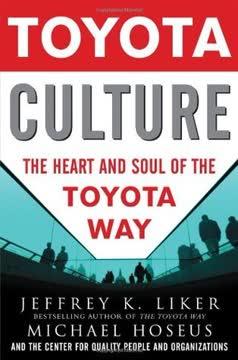
Every few years, a new management trend promises to transform organizations. Lean manufacturing. Six Sigma. Agile. Digital transformation. Companies spend millions implementing these systems, sending employees to training, hiring consultants, and redesigning processes. Then, quietly, most of these initiatives fade away. The tools remain, but the transformation never happens.
**Author:** Jeffrey K. Liker
**Estimated Reading Time:** 45 minutes
**What You'll Learn:**
- Why Toyota's culture, not its tools, drives its extraordinary success - How respect for people and continuous improvement work together - The rigorous systems Toyota uses to find, develop, and retain quality people - How problem-solving becomes everyone's job, not a specialist function - Practical ways to apply Toyota's cultural principles in any organization
**Who This Book Is For:**
Leaders who have tried lean tools and watched them fail. Managers who wonder why their improvement initiatives lose steam. HR professionals seeking a deeper understanding of how culture shapes performance. Anyone curious about what really makes Toyota different after decades of study and imitation.
Every few years, a new management trend promises to transform organizations. Lean manufacturing. Six Sigma. Agile. Digital transformation. Companies spend millions implementing these systems, sending employees to training, hiring consultants, and redesigning processes. Then, quietly, most of these initiatives fade away. The tools remain, but the transformation never happens. Toyota stands as a glaring exception to this pattern. For more than half a century, the company has consistently outperformed competitors in quality, cost, and innovation. Researchers have documented its methods in exhaustive detail. Books, articles, and case studies have dissected the Toyota Production System from every angle. Competitors have toured its plants, hired its consultants, and copied its tools. Yet few have replicated its results. Why? The answer lies in something harder to see than assembly lines and kanban cards. It lies in the assumptions people carry about work, about each other, and about what makes an organization succeed. It lies in culture. Jeffrey Liker spent decades studying Toyota, first as a researcher and later as a consultant helping other companies apply its principles. In his earlier work, particularly the international bestseller *The Toyota Way*, he documented the management principles behind Toyota's success. But over time, he recognized that something deeper was at work. The tools and techniques mattered, but they only worked within a specific cultural context. Without that context, they became empty rituals. This book, *Toyota Culture*, examines that deeper layer. It explores how Toyota finds, develops, and engages its people. It reveals why the company invests so heavily in training, why it hires so carefully, and why it expects every employee to become a problem solver. Most importantly, it shows that Toyota's culture is not a mysterious Japanese phenomenon. It is a deliberate, systematic creation that can be understood and adapted. The challenge for most organizations is not intellectual. Leaders can grasp the concepts quickly. The challenge is emotional and behavioral. Toyota's culture requires patience, humility, and a willingness to invest in people for the long term. It requires leaders who…
Continue reading in the MinuteRead app
Get the complete 30-minute summary of Toyota Culture
Get the complete summary in the appCulture drives performance. Toyota's success comes from its culture, not its tools. Tools work only within a cultural co
The Toyota Way rests on two pillars: respect for people and continuous improvement. These pillars reinforce each other i
People are the most important asset. Invest in hiring, training, and development like your organization's future depends
Hire slowly and carefully. A bad hire is far more costly than a rigorous selection process. Look for values alignment an
Train like surgeons. Every employee deserves comprehensive preparation before they are expected to perform independently
Make problem-solving everyone's job. Train all employees in problem-solving methodologies and create an environment wher
"Toyota Culture" is a strong fit if you want practical ideas around business, management, cultural, especially themes like culture drives performance. toyota's success comes from its culture, not its tools. tools work only within a cultural co; the toyota way rests on two pillars: respect for people and continuous improvement. these pillars reinforce each other i. The MinuteRead summary distills these concepts into a focused read, whether you're deciding whether to buy the book or applying its lessons at work.
Jeffrey K. Liker is a Professor of Industrial and Operations Engineering at the University of Michigan and a principle at Optiprise, Inc. He has authored numerous books and articles on Toyota's management principles and lean manufacturing. Liker's most famous work, "The Toyota Way," is an international bestseller. He has won multiple Shingo Prizes for Research Excellence and other awards for his publications. Liker frequently speaks at conferences and consults for various companies, helping them…
View all summaries by Jeffrey K. LikerContinue Reading
Access the complete 30-minute summary and thousands more nonfiction books in the MinuteRead app.

Continue reading the complete summary in the MinuteRead app.






