MinuteRead
30 min
Book summary
Premium summary · Opens in the app · 30 min read
Most people enter the financial markets believing they need to outsmart everyone else. They search for the perfect indicator, the secret formula, the hidden pattern that will unlock consistent profits. They buy expensive software, subscribe to newsletters, and watch countless hours of market commentary. Yet the vast majority of traders lose money. Not some of them. Most of them.
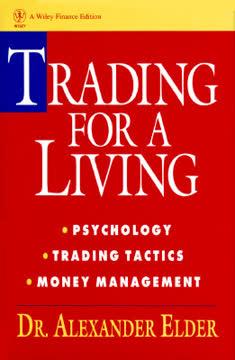
**Author:** Dr. Alexander Elder
**Estimated Reading Time:** 45 minutes
**What You'll Learn:**
- Why your own mind is your greatest obstacle to consistent profits - How to read the crowd psychology that drives every market move - The complete Triple Screen trading system for filtering high-probability trades - How to use MACD, Stochastic, and Elder-ray indicators effectively - The money management rules that keep you alive in the markets - A practical 30-day plan to transform your trading approach
**Who This Book Is For:**
This book is for anyone who has ever felt the sting of a losing trade and wondered what went wrong. It is for the beginner who wants to build a solid foundation before risking real capital. It is for the experienced trader who senses that discipline, not intelligence, is the missing piece. And it is for anyone who has discovered that knowing what to do and actually doing it are two very different things when money is on the line.
Most people enter the financial markets believing they need to outsmart everyone else. They search for the perfect indicator, the secret formula, the hidden pattern that will unlock consistent profits. They buy expensive software, subscribe to newsletters, and watch countless hours of market commentary. Yet the vast majority of traders lose money. Not some of them. Most of them. The reason is rarely a lack of intelligence. Many losing traders are doctors, engineers, lawyers, and successful business owners. They are people who have achieved mastery in other fields. But when they step into the markets, something changes. Their careful analytical minds get hijacked by emotions they never knew they had. Fear, greed, hope, and despair take turns driving their decisions. They become different people. Dr. Alexander Elder wrote Trading for a Living to address this fundamental problem. His background is unusual for a market analyst. Before becoming a trader, he worked as a psychiatrist in New York City. He spent years helping patients understand their own minds, their hidden motivations, and their self-destructive patterns. When he began trading, he recognized the same psychological dynamics at work in himself and in the traders around him. The market, Elder realized, is not just a collection of numbers and charts. It is a living reflection of human emotion on a massive scale. Every price tick represents someone's hope or someone's fear. Every trend is a wave of collective optimism or pessimism. To trade successfully, you must understand both your own psychology and the psychology of the crowd. This book is built on three pillars that Elder calls the three M's: Mind, Method, and Money Management. The Mind refers to your individual trading psychology. Method is your system for finding…
Continue reading in the MinuteRead app
Get the complete 30-minute summary of Trading for a Living
Get the complete summary in the app**Control your emotions.** Nobody can get high and make money at the same time. Emotional discipline is the foundation o
**Use the Three M's.** Mind, Method, and Money Management are equally important. Neglect any one of them and you will fa
**Trade with the trend.** Use the Triple Screen system to ensure you are trading in the direction of the larger trend.
**Never risk more than 2%** of your account on any single trade. Survival comes first.
**Keep a trading journal.** Record your trades and your emotional states. Review it regularly.
**Understand crowd psychology.** Markets reflect mass emotions. Extreme optimism marks tops; extreme pessimism marks bot
"Trading for a Living" is a strong fit if you want practical ideas around finance, business, psychology, especially themes like **control your emotions.** nobody can get high and make money at the same time. emotional discipline is the foundation o; **use the three m's.** mind, method, and money management are equally important. neglect any one of them and you will fa. The MinuteRead summary distills these concepts into a focused read, whether you're deciding whether to buy the book or applying its lessons at work.
Dr. Alexander Elder is a renowned trader and author based in New York City. Born in Leningrad and raised in Estonia, he defected from the Soviet Union at 23 and received political asylum in the United States. Elder's background as a psychiatrist informs his unique perspective on trading psychology. He has authored several influential books on trading, including "Come into My Trading Room" and "Trading for a Living." Elder is recognized as a leading expert in the field, conducting trading worksho…
View all summaries by Alexander ElderContinue Reading
Access the complete 30-minute summary and thousands more nonfiction books in the MinuteRead app.

Continue reading the complete summary in the MinuteRead app.