MinuteRead
5 min
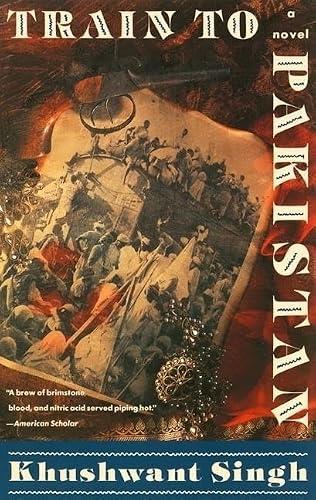
In the summer of 1947, the British are preparing to leave India after nearly two centuries of colonial rule. The subcontinent is about to be divided into two nations: Hindu-majority India and Muslim-majority Pakistan. The boundary line, drawn hastily by a British lawyer who had never visited India, will cut through Punjab and Bengal, through villages and farmlands, through families and friendships that have existed for generations.
**Author:** Khushwant Singh
**Estimated Reading Time:** 18 minutes
**What This Story Explores:** The fragile bonds of community when history demands that neighbors become enemies, the impossible choices forced upon ordinary people during Partition, and the way love persists even as the world burns around it.
**Who This Book Is For:** Readers who want to understand the human cost of the 1947 Partition of India, those who appreciate fiction that grapples with moral complexity without offering easy answers, and anyone drawn to stories about how violence transforms communities from within.
In the summer of 1947, the British are preparing to leave India after nearly two centuries of colonial rule. The subcontinent is about to be divided into two nations: Hindu-majority India and Muslim-majority Pakistan. The boundary line, drawn hastily by a British lawyer who had never visited India, will cut through Punjab and Bengal, through villages and farmlands, through families and friendships that have existed for generations. Khushwant Singh wrote *Train to Pakistan* in 1956, less than a decade after the events it describes. He had witnessed Partition firsthand as a lawyer in Lahore, and he understood that the official histories, with their statistics and political negotiations, could never capture what actually happened to ordinary people. The novel was his attempt to record the texture of that catastrophe: the fear that crept into villages, the rumors that traveled faster than trains, the moment when a neighbor became a stranger. The story centers on Mano Majra, a fictional village on the border between India and Pakistan. It is a small place, a few hundred souls, where Sikhs, Hindus, and Muslims have lived together for as long as anyone can remember. The village has no electricity, no running water, and almost no awareness of the political negotiations happening in distant cities. Its rhythms are governed by the trains that pass through the local station and by the daily calls to prayer from the mosque and the gurdwara. Singh's tone is unflinching but never sensational. He writes about violence with a journalist's precision and a novelist's heart. He does not pretend that the villagers of Mano Majra are saints; they are ordinary people with ordinary prejudices, ordinary kindnesses, and ordinary failures. What makes the novel devastating is watching those ordinary qualities become matters of life and death. The central question of the novel is not whether Partition was right or wrong. It is something more intimate: what happens to a community when the state declares that some of its members no longer belong? What happens to love, to loyalty, to the simple habit of living alongside people who are different from you, when the world insists that difference is intolerable? The novel has endured…
Continue reading in the MinuteRead app
Get the complete 30-minute summary of Train to Pakistan
Get the complete summary in the appDacoity
Kalyug
Mano Majra
Karma
"Train to Pakistan" is a strong fit if you want practical ideas around fiction, history, especially themes like dacoity; kalyug. The MinuteRead summary distills these concepts into a focused read, whether you're deciding whether to buy the book or applying its lessons at work.
Motivated to help readers with in the summer of 1947, Khushwant Singh wrote “Train to Pakistan” to package those ideas for a fast, focused read. In “Train to Pakistan”, Khushwant Singh focuses on in the summer of 1947. Through “Train to Pakistan”, Khushwant Singh distills the core ideas on fiction into lessons readers can absorb in a single short sitting. Readers turn to this work when they want Khushwant Singh's perspective on the subject without working through the entire original volume. Trai…
View all summaries by Khushwant SinghContinue Reading
Access the complete 30-minute summary and thousands more nonfiction books in the MinuteRead app.

Continue reading the complete summary in the MinuteRead app.