MinuteRead
30 min
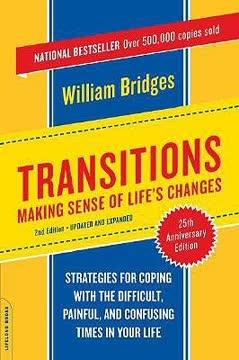
Something has ended in your life. A job. A marriage. A chapter of your identity that once felt permanent. Or perhaps something is ending right now, and you are caught in that strange limbo between what was and what might be.
By William Bridges
**Estimated Reading Time:** 45 minutes
**What You'll Learn:**
- Why every meaningful change begins with an ending, not a beginning - The three-phase transition process that governs all human change - How to navigate the uncomfortable but essential neutral zone - Why forcing new beginnings too early always backfires - How to use transitions as opportunities for genuine renewal
**Who This Book Is For:**
Anyone standing at a crossroads. Whether you are changing careers, ending a relationship, relocating, retiring, or simply feeling that the old rules no longer apply, this book offers a map for the territory you are entering. It is for people who sense that change is not just an external event but an internal journey, and who want to understand how that journey actually works.
Something has ended in your life. A job. A marriage. A chapter of your identity that once felt permanent. Or perhaps something is ending right now, and you are caught in that strange limbo between what was and what might be. Most people assume that when change happens, the difficult part is adjusting to the new situation. You move to a new city, start a new job, or end a long relationship, and you expect that the challenge lies in learning to live with what comes next. But William Bridges, drawing on decades of work with individuals and organizations navigating profound change, discovered something that contradicts this common assumption. The real difficulty is not the new beginning. The real difficulty is the ending. We fail to recognize this because our culture is obsessed with beginnings. We celebrate the first day at a new job, the wedding, the move to a bigger house. We congratulate people on their fresh starts and encourage them to focus on the future. What we rarely acknowledge is that before any of those beginnings can take root, something else had to die. And unless we consciously experience that death, unless we let go of what was, the new beginning will remain hollow. Bridges noticed this pattern repeatedly in his work. Organizations would announce restructurings and expect employees to immediately embrace new roles. Individuals would make major life changes and then wonder why they felt depressed rather than excited. The answer, he realized, was that they were trying to skip the ending. They were attempting to begin again without first letting go. This book is built on a simple but profound insight: transition is not the same as change. Change is the external event. The move, the new job, the loss, the reorganization. Transition is the internal psychological process that people go through to come to terms with a new situation. Change happens to you. Transition…
Continue reading in the MinuteRead app
Get the complete 30-minute summary of Transitions
Get the complete summary in the appEvery transition begins with an ending. You cannot start something new until you have let go of something old.
Change is external. Transition is internal. The real work is psychological, not circumstantial.
The ending has three parts: disengagement, dismantling, and disidentification. All three are necessary.
The neutral zone is uncomfortable but essential. It is the source of renewal, not a problem to be solved.
You cannot force a new beginning. It emerges from the inner work done in the neutral zone.
Denial is the enemy of transition. Acknowledging the loss is the first step toward growth.
"Transitions" is a strong fit if you want practical ideas around self help, psychology, business, especially themes like every transition begins with an ending. you cannot start something new until you have let go of something old; change is external. transition is internal. the real work is psychological, not circumstantial. The MinuteRead summary distills these concepts into a focused read, whether you're deciding whether to buy the book or applying its lessons at work.
William Bridges is a renowned speaker, author, and consultant specializing in change management. With a background in humanities from prestigious universities, he transitioned from academia to become an expert in helping individuals and organizations navigate transitions. Bridges developed a widely recognized three-phase model for understanding and managing change. His books, including "Transitions" and "Managing Transitions," have sold over a million copies. The Wall Street Journal recognized h…
View all summaries by William BridgesContinue Reading
Access the complete 30-minute summary and thousands more nonfiction books in the MinuteRead app.

Continue reading the complete summary in the MinuteRead app.