MinuteRead
30 min
Book summary
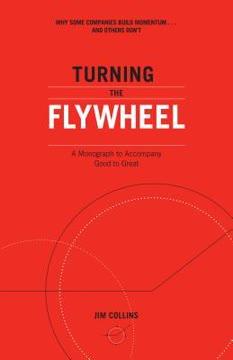
by Jim Collins
Premium summary · Opens in the app · 30 min read
Every leader wants to find the one big move that will transform their organization. We are drawn to stories of dramatic turnarounds, bold acquisitions, and visionary pivots. We imagine that success comes from a single stroke of brilliance, a moment when everything changes.
**Author:** Jim Collins
**Estimated Reading Time:** 45 minutes
**What You'll Learn:**
- Why some organizations build unstoppable momentum while others stall despite enormous effort - How to identify and map your own organization's flywheel, the sequence of actions that compounds success - Why abandoning a working system in search of the next big thing often destroys value - How to extend your flywheel into new markets without betting the company - The discipline required to keep a flywheel turning for decades
**Who This Book Is For:**
This book is for leaders, entrepreneurs, managers, and anyone responsible for building something that lasts. If you have ever felt that your organization works hard but never seems to gain traction, or if you have inherited a successful system and wondered how to preserve it while still innovating, this book will give you a new lens for understanding momentum.
Every leader wants to find the one big move that will transform their organization. We are drawn to stories of dramatic turnarounds, bold acquisitions, and visionary pivots. We imagine that success comes from a single stroke of brilliance, a moment when everything changes. Jim Collins spent decades studying what actually separates enduring great companies from merely good ones. What he found contradicts the dramatic narrative. Great organizations rarely succeed because of one defining action. Instead, they succeed because they find a repeating cycle of actions that reinforces itself, and then they execute that cycle with extraordinary discipline for years, sometimes decades. The problem is that most organizations never identify this cycle. They lurch from initiative to initiative, chasing trends and reacting to competitors. They work hard, but their efforts do not accumulate. Each new program starts from zero because it does not build on what came before. The result is exhaustion without momentum. Collins calls the alternative the flywheel effect. Picture a massive metal disk, heavy and resistant to movement. When you first push it, nothing seems to happen. You push again, and it inches forward. You keep pushing, and after enormous effort, it completes one full turn. Then another. Then another. Each turn requires less relative effort because the momentum is building. Eventually, the flywheel spins with its own force, and your pushes merely sustain and accelerate what is already in motion. This is not a metaphor for working harder. It is a description of how compounding works in organizations. Each successful action makes the next action easier. Each satisfied customer attracts more customers. Each improvement in efficiency frees resources for further improvement. The flywheel captures the specific sequence of cause and effect that turns isolated wins into accelerating success. Collins first introduced this concept in his landmark book Good to Great. But in…
Continue reading in the MinuteRead app
Get the complete 30-minute summary of Turning the Flywheel
Get the complete summary in the appSustainable success comes from a self-reinforcing cycle of actions that compounds over time, not from isolated breakthro
Map your flywheel by examining evidence of what has actually worked in your organization.
Each component of the flywheel must logically lead to the next. If the causal links are weak, the flywheel will not spin
Fire bullets before cannonballs. Test new ideas with small experiments before committing significant resources.
Never abandon a working flywheel in search of novelty. Exhaust options for renewal and extension first.
Discipline is the foundation of flywheel success. Consistency beats intensity.
"Turning the Flywheel" is a strong fit if you want practical ideas around business, leadership, management, especially themes like sustainable success comes from a self-reinforcing cycle of actions that compounds over time, not from isolated breakthro; map your flywheel by examining evidence of what has actually worked in your organization. The MinuteRead summary distills these concepts into a focused read, whether you're deciding whether to buy the book or applying its lessons at work.
James C. Collins is a renowned business researcher and author who has dedicated his career to studying enduring great companies. He has written several bestselling books, including "Built to Last" and "Good to Great," which have been translated into numerous languages and have sold millions of copies worldwide. Collins began his career as a faculty member at Stanford Graduate School of Business before founding his own management laboratory in Boulder, Colorado. He combines rigorous research with…
View all summaries by Jim CollinsContinue Reading
Access the complete 30-minute summary and thousands more nonfiction books in the MinuteRead app.

Continue reading the complete summary in the MinuteRead app.