 MinuteRead
30 min
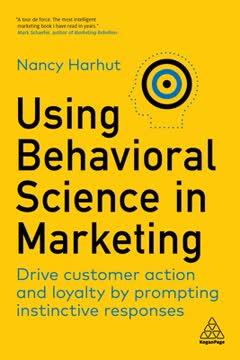
Book summary
by Nancy Harhut
Premium summary · Opens in the app · 30 min read
Every day, your customers make thousands of decisions. Most of them happen automatically, below the level of conscious thought. They choose one brand over another, open one email while deleting three others, click one ad while scrolling past dozens more. And in almost every case, they believe they are making rational, deliberate choices.
**Author:** Nancy Harhut
**Estimated Reading Time:** 45 minutes
**What You'll Learn:**
Why customers say yes to some offers and ignore others. How to apply proven principles from behavioral science to create marketing that drives action. The psychological triggers that influence decisions in both B2C and B2B contexts. Practical frameworks you can use immediately to improve response rates, engagement, and conversions.
**Who This Book Is For:**
Marketing professionals who want to move beyond guesswork. Business owners seeking to understand customer behavior at a deeper level. Copywriters and creatives looking for evidence-based techniques. Anyone responsible for persuading others to take action.
Every day, your customers make thousands of decisions. Most of them happen automatically, below the level of conscious thought. They choose one brand over another, open one email while deleting three others, click one ad while scrolling past dozens more. And in almost every case, they believe they are making rational, deliberate choices. They are not. The uncomfortable truth is that human beings are not the logical decision-makers we imagine ourselves to be. We are influenced by mental shortcuts, emotional triggers, and cognitive biases that operate faster than conscious thought. We feel first and reason second. We act on emotion and then construct logical explanations for our actions after the fact. This reality creates both a challenge and an opportunity for marketers. The challenge is that traditional marketing approaches, built on features, benefits, and rational arguments, often fail to move people. The opportunity is that once you understand how people actually make decisions, you can create marketing that aligns with human nature rather than fighting against it. Nancy Harhut has spent her career at the intersection of behavioral science and marketing. She has worked with major financial services and insurance companies, testing and refining the application of psychological principles to real-world marketing campaigns. The results have been remarkable: higher response rates, increased engagement, and more effective persuasion. This book distills that experience into a practical guide. It draws on decades of research from psychology, neuroscience, and behavioral economics, translating academic findings into actionable marketing techniques. Each chapter explores a specific principle, explains why it works, and shows how to apply it ethically and effectively. The principles in this book are not tricks or manipulations. They are fundamental truths about how human beings process information and make decisions. When used responsibly, they help marketers communicate more clearly, connect more deeply, and serve their customers better. What makes this approach different is its grounding in evidence. Rather than relying on intuition or conventional wisdom, Harhut builds her recommendations on research from Nobel laureates like Daniel Kahneman, groundbreaking social scientists like Robert Cialdini, and her own extensive testing in the marketplace. The result is…
Continue reading in the MinuteRead app
Get the complete 30-minute summary of Using Behavioral Science in Marketing
Get the complete summary in the appEmotion leads to action. Reason leads to conclusions. Lead with emotion and support with reason.
Losses are twice as motivating as gains. Frame messages to highlight what customers avoid losing.
Scarcity and exclusivity increase perceived value. Use them authentically and selectively.
Give before you ask. Reciprocity creates obligation and builds trust.
Social proof reduces risk and increases confidence. Show customers that others have chosen you.
Stories are more persuasive than facts. Use narratives to engage the emotional brain.
"Using Behavioral Science in Marketing" is a strong fit if you want practical ideas around business, psychology, buisness, especially themes like emotion leads to action. reason leads to conclusions. lead with emotion and support with reason; losses are twice as motivating as gains. frame messages to highlight what customers avoid losing. The MinuteRead summary distills these concepts into a focused read, whether you're deciding whether to buy the book or applying its lessons at work.
Nancy Harhut is an experienced marketing professional and author specializing in the application of behavioral science to marketing strategies. Her work focuses on leveraging psychological principles to influence consumer behavior and drive customer action. Harhut has extensive experience in the financial services and insurance industries, which is reflected in her book's examples and case studies. She is known for her ability to translate complex behavioral science concepts into practical marke…
View all summaries by Nancy HarhutContinue Reading
Access the complete 30-minute summary and thousands more nonfiction books in the MinuteRead app.

Continue reading the complete summary in the MinuteRead app.






