 MinuteRead
30 min
Book summary
by Alan Weiss
Premium summary · Opens in the app · 30 min read
Every year, thousands of talented consultants leave the profession. They do not leave because they lack skill. They do not leave because they cannot deliver results. They leave because they cannot figure out how to get paid what they are worth.
**Author:** Alan Weiss **Estimated Reading Time:** 45 minutes
**What You'll Learn:** - How to price consulting work based on value delivered rather than time spent - Why conceptual agreement with economic buyers is the foundation of successful engagements - How to create proposals with options that dramatically increase acceptance rates - How to overcome objections without discounting your fees - How to evolve from a commodity service provider to a sought-after expert
**Who This Book Is For:** Consultants, coaches, freelancers, and professional service providers who want to escape the billable hour, command premium fees, and build a practice that delivers exceptional value to clients while generating substantial income for themselves.
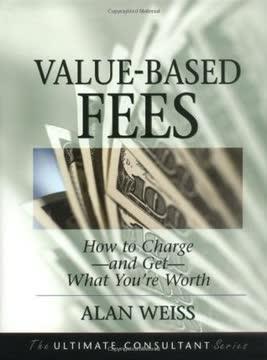
Every year, thousands of talented consultants leave the profession. They do not leave because they lack skill. They do not leave because they cannot deliver results. They leave because they cannot figure out how to get paid what they are worth. The consulting industry suffers from a quiet epidemic. Brilliant professionals with decades of experience charge by the hour, trade time for money, and eventually hit an invisible ceiling. They work longer hours to earn more income, but the math never works. There are only so many billable hours in a year. Eventually, they burn out, grow resentful, or simply give up. Alan Weiss wrote Value-Based Fees to address this problem directly. The book argues that the billable hour is not just an inefficient pricing model. It is a fundamentally broken way of thinking about professional services. When you charge by time, you punish yourself for being efficient. When you charge by time, you create an adversarial relationship with your client. When you charge by time, you cap your income at the number of hours you can physically work. The alternative is value-based fees. Under this model, the consultant and client agree on the value of a specific outcome before the work begins. The fee is based on the contribution to that outcome, not the time required to achieve it. This shifts everything. The consultant is no longer selling hours. The consultant is selling results. This distinction matters more than most professionals realize. A consultant who saves a client $2 million by identifying a critical operational inefficiency has delivered enormous value. If that consultant spent three days finding the problem, should the fee be based on three days of work or on the $2 million in value created? Weiss argues the answer is obvious. The fee should reflect the value. The problem is that most consultants do not know how to structure these conversations. They do not know how to establish trust with the right people. They do not know how to articulate value in terms the client cares about.…
Continue reading in the MinuteRead app
Get the complete 30-minute summary of Value-Based Fees
Get the complete summary in the appBase your fees on the value of outcomes, not the time required to achieve them.
Build trust with economic buyers before discussing fees.
Reach conceptual agreement on objectives, metrics, and value before proposing a fee.
Present three options with at least 20 percent price differences.
Diagnose objections before responding. Never discount immediately.
Raise your fees at least every two years.
"Value-Based Fees" is a strong fit if you want practical ideas around business, entrepreneurship, buisness, especially themes like base your fees on the value of outcomes, not the time required to achieve them; build trust with economic buyers before discussing fees. The MinuteRead summary distills these concepts into a focused read, whether you're deciding whether to buy the book or applying its lessons at work.
Alan Weiss is an American entrepreneur, author, and public speaker. He has established himself as a prominent figure in the consulting industry, particularly known for his expertise in value-based pricing strategies. Weiss has authored numerous books on consulting, business, and personal development. His work focuses on helping consultants and service professionals maximize their value and earnings potential. Weiss's approach emphasizes the importance of demonstrating value to clients rather tha…
View all summaries by Alan WeissContinue Reading
Access the complete 30-minute summary and thousands more nonfiction books in the MinuteRead app.

Continue reading the complete summary in the MinuteRead app.






