MinuteRead
30 min
The stock market presents one of the most puzzling paradoxes in modern life. Every day, millions of people buy and sell pieces of businesses with remarkable confidence, yet remarkably few of them can answer a simple question: what is this business actually worth?
**Author:** Bruce C. Greenwald
**Estimated Reading Time:** 45 minutes
**What You'll Learn:** How to identify undervalued securities using the Graham and Dodd framework, calculate intrinsic value through asset value and earnings power, recognize durable competitive advantages, and build a disciplined investment process that protects capital while generating superior long-term returns.
**Who This Book Is For:** Individual investors seeking a rigorous intellectual foundation for their investment decisions, professionals who want to move beyond superficial valuation metrics, and anyone who recognizes that successful investing requires a systematic approach to understanding business value.
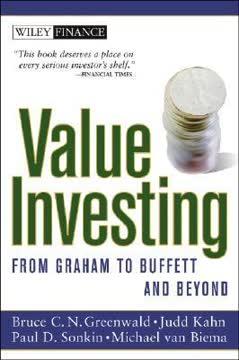
The stock market presents one of the most puzzling paradoxes in modern life. Every day, millions of people buy and sell pieces of businesses with remarkable confidence, yet remarkably few of them can answer a simple question: what is this business actually worth? Most investors never ask this question directly. Instead, they rely on proxies. They look at price charts and hope patterns repeat. They listen to earnings calls and react to quarterly guidance. They follow the recommendations of analysts who are themselves often following the crowd. They buy stocks that have gone up because they assume the trend will continue, and they sell stocks that have gone down because they fear further losses. The result is a market that frequently behaves like a casino, with participants making bets based on emotion, momentum, and incomplete information. This is not a new observation. In 1934, two Columbia Business School professors named Benjamin Graham and David Dodd published a book called Security Analysis that systematically dismantled the prevailing wisdom of their era. They argued that the stock market was not an efficient machine that always priced securities correctly. Instead, they demonstrated that market prices often diverged dramatically from underlying business values, and that investors who could calculate those values with reasonable accuracy could profit from the gap. Graham and Dodd's insight was revolutionary because it shifted the focus from predicting what other investors would do to understanding what a business was actually worth. They treated stocks not as ticker symbols to be traded but as fractional ownership interests in real enterprises with real assets, real earnings, and real competitive positions. This simple reframing changed everything. Bruce Greenwald, who holds the Robert Heilbrunn Professorship at Columbia Business School, has spent decades refining and teaching this framework. His book Value Investing: From Graham to Buffett and Beyond represents one of the most comprehensive modern treatments of the subject. Greenwald's contribution is significant because he bridges the gap between Graham's original asset-based approach and the more sophisticated competitive analysis that investors like Warren Buffett have popularized. The problem Greenwald addresses is straightforward: most investors lack a coherent intellectual framework for making investment decisions. They have…
Continue reading in the MinuteRead app
Get the complete 30-minute summary of Value Investing
Get the complete summary in the appThe value of any asset is the discounted value of its future cash flows.
The margin of safety is the difference between intrinsic value and market price, and it is the cornerstone of investment
Intrinsic value has three pillars: asset value, earnings power value, and growth value.
Growth only creates value when returns on reinvested capital exceed the cost of capital.
Competitive advantages are the source of value beyond asset value and earnings power value.
The best opportunities arise in areas of the market that other investors ignore or avoid.
"Value Investing" is a strong fit if you want practical ideas around finance, business, money, especially themes like the value of any asset is the discounted value of its future cash flows; the margin of safety is the difference between intrinsic value and market price, and it is the cornerstone of investment. The MinuteRead summary distills these concepts into a focused read, whether you're deciding whether to buy the book or applying its lessons at work.
Bruce C. Greenwald is a renowned authority on value investing and economics. He holds the Robert Heilbrunn Professorship of Finance and Asset Management at Columbia Business School, where he has taught value investing since 1993. Greenwald is credited with revitalizing Columbia's value investing program, which was originally established by Benjamin Graham. He has authored several influential books on investing and business strategy, including "Competition Demystified." Bruce C. Greenwald is wide…
View all summaries by Bruce C. GreenwaldContinue Reading
Access the complete 30-minute summary and thousands more nonfiction books in the MinuteRead app.

Continue reading the complete summary in the MinuteRead app.