MinuteRead
30 min
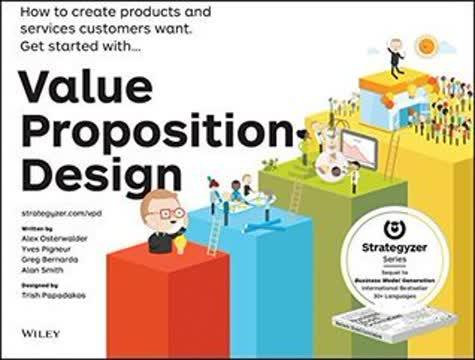
Book summary
Premium summary · Opens in the app · 30 min read
Most new products fail. This is not a controversial statement. Studies consistently show that the majority of new offerings never gain meaningful traction. They launch to silence. They consume resources. They fade away.
**Author:** Alexander Osterwalder
**Estimated Reading Time:** 45 minutes
**What You'll Learn**
How to design products and services that customers genuinely want. You will learn to map customer needs systematically, design value propositions that address those needs, test your ideas before investing heavily, and embed your offering into a viable business model. This is not theory. It is a practical methodology used by startups and Fortune 500 companies alike.
**Who This Book Is For**
Entrepreneurs launching their first venture. Product managers responsible for existing offerings. Business leaders seeking to escape the trap of incremental improvement. Consultants helping organizations innovate. Anyone who has ever built something and wondered why customers did not show up.
Most new products fail. This is not a controversial statement. Studies consistently show that the majority of new offerings never gain meaningful traction. They launch to silence. They consume resources. They fade away. The reason is rarely a failure of execution in the traditional sense. The engineering is often sound. The marketing budget may be adequate. The team might be talented and hardworking. The failure is more fundamental. It happens before a single line of code is written or a single prototype is built. It happens because the team never truly understood what customers wanted in the first place. This is the problem Alexander Osterwalder set out to solve. His observation was simple but profound. Organizations spend enormous energy describing what they plan to build. They produce detailed specifications, project plans, and financial models. What they rarely produce is a clear, testable articulation of why a customer would care. The result is predictable. Teams fall in love with their own ideas. They build features nobody asked for. They solve problems that are not urgent. They create gains that are merely nice to have. And when the market fails to respond, they are genuinely surprised. Osterwalder's approach is different. He argues that value proposition design should not begin with the solution. It should begin with the customer. Specifically, it should begin with a rigorous, structured understanding of what customers are trying to accomplish, what frustrates them, and what outcomes they desire. This sounds obvious. Most people would say they already do this. But Osterwalder's insight is that "understanding the customer" is usually treated as a vague, intuitive exercise. Teams conduct some interviews. They develop personas. They rely on empathy and instinct. What they lack is a systematic framework for translating customer insights into design decisions and, crucially, for testing whether those decisions are correct. The Value Proposition Canvas is that framework. It is a visual tool that forces clarity. On one side, you map the customer profile: their jobs, pains, and gains. On the other side, you map your…
Continue reading in the MinuteRead app
Get the complete 30-minute summary of Value Proposition Design
Get the complete summary in the appFit occurs when your value proposition addresses the jobs, pains, and gains that matter most to customers.
The Customer Profile captures jobs, pains, and gains. The Value Map captures products and services, pain relievers, and
Customers hire products to get jobs done. Those jobs include functional, social, and emotional dimensions.
Only extreme pains and essential gains are worth addressing. Everything else is distraction.
Fit has three levels: problem-solution fit, product-market fit, and business model fit. Do not claim a level you have no
Test behavior, not opinion. What customers do is more reliable than what they say.
"Value Proposition Design" is a strong fit if you want practical ideas around business, design, entrepreneurship—especially themes like fit occurs when your value proposition addresses the jobs, pains, and gains that matter most to customers; the customer profile captures jobs, pains, and gains. the value map captures products and services, pain relievers, and. The MinuteRead summary distills these concepts into a focused read, whether you're deciding whether to buy the book or applying its lessons at work.
Dr. Alexander (Alex) Osterwalder is a renowned strategy and innovation expert, author, and entrepreneur. He co-created the Business Model Canvas, Value Proposition Canvas, and Business Portfolio Map, tools widely used by global companies. Osterwalder co-founded Strategyzer, an innovation company offering courses and services for strategy management. His bestselling books include "Business Model Generation" and "Value Proposition Design." Ranked 4th among top management thinkers worldwide, Osterw…
View all summaries by Alexander OsterwalderContinue Reading
Access the complete 30-minute summary and thousands more nonfiction books in the MinuteRead app.

Continue reading the complete summary in the MinuteRead app.