MinuteRead
30 min
Book summary
Premium summary · Opens in the app · 5 min read
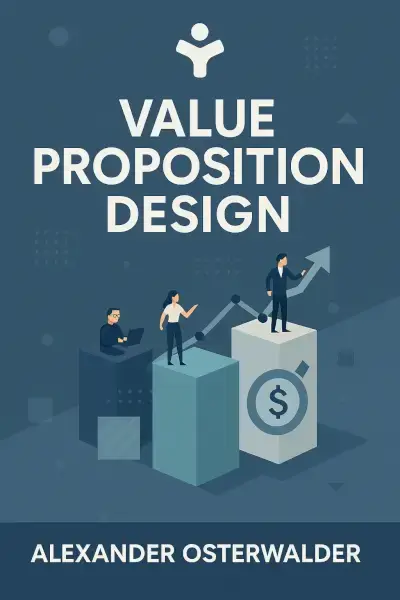
Value Proposition Design opens up a new perspective of what added value in a product consists of, how to find and target your market correctly, how you can design a product successfully, bring it forth to your prospects and have them be excited to buy it, all through the creation of a customer-centric business
Value Proposition Design opens up a new perspective of what added value in a product consists of, how to find and target your market correctly, how you can design a product successfully, bring it forth to your prospects and have them be excited to buy it, all through the creation of a customer-centric business
In designing a successful product or service, you must first put yourself in the shoes of your customer. Try to figure out a way to solve their daily problems in the most convenient way. Essentially, people have two types of jobs: functional and social jobs. Functional jobs can be buying groceries, whereas a social job is something a person does to impress others.
For a functional job, a person needs reliable items to solve their issues rapidly and conveniently. For a social job, such as creating a trendy, cool outfit, a person needs a different set of products and services. As such, the next step is identifying the customer’s pains, or where they struggle to find solutions for their problems. The first type of customer pain is an unwanted outcome.
When you don’t get what you expected, it can be pretty frustrating, right? Maybe you bought something that you thought would fix your problem, but it didn’t. The second problem implies obstacles faced in the way that prevent you from doing a job. The last customer pain is risk, which happens when a job is not performed. Address these types of customer pains with gains, which are the things a customer hopes to get.
Now you know which are the main customer pains that you can address. It’s time to get to the main part: designing and crafting a product or service to address it. A good product has both a tangible and an intangible part. The tangible part is, obviously, the product itself, whereas the intangible one can be a warranty.
More recently, products come with a digital component as well, such as an app linked to them which improves their functionality. Now that you have these three components in mind, it’s time to think of ways to alleviate your prospect’s pain points with your product. Which component will come in as a solution to their problem, while all others just keep on adding extra value?
You can try to identify exact situations where your product will come in handy. This way, you might also figure out how things can go wrong or where you should improve your product. Think of ways to exceed your customer’s expectations. You also need to assure your support in every step of the process, and even post-purchase.
Continue reading in the MinuteRead app
Get the complete 5-minute summary of Value Proposition Design
Get the complete summary in the appEmpathize with your customers and learn about them, so as to create the best product that you can
Determine the value proposition of your product by designing its components
Study the market before you enter it with a prototype
"Value Proposition Design" is a strong fit if you want practical ideas around business, career, creativity, especially themes like empathize with your customers and learn about them, so as to create the best product that you can; determine the value proposition of your product by designing its components. The MinuteRead summary distills these concepts into a focused read, whether you're deciding whether to buy the book or applying its lessons at work.
Dr. Alexander (Alex) Osterwalder is one of the world's most influential strategy and innovation experts, a leading author, entrepreneur, and in-demand speaker whose work has changed the way established companies do business and how new ventures get started. Ranked No. 4 of the top 50 management thinkers worldwide, Osterwalder is known for simplifying the strategy development process and turning complex concepts into digestible visual models. Together with Yves Pigneur, he invented the Business …
View all summaries by Alexander OsterwalderContinue Reading
Access the complete 5-minute summary and thousands more nonfiction books in the MinuteRead app.

Continue reading the complete summary in the MinuteRead app.