MinuteRead
30 min
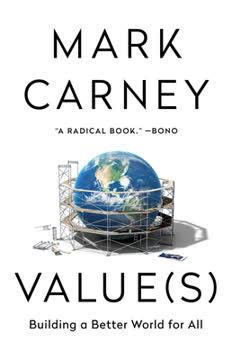
Book summary
by Mark Carney
Premium summary · Opens in the app · 30 min read
In the vaults of the Bank of England sit five and a half thousand tons of gold. For centuries, this gleaming metal was the foundation of the monetary system, the ultimate store of value, the thing that made money real. Today, it sits there doing nothing. No one uses it to settle debts. No currency is backed by it. It is, in the words of one observer, a relic of a system that collapsed because its values conflicted with society's.
**By Mark Carney**
**Estimated Reading Time:** 45 minutes
**What You'll Learn:**
- Why the relentless expansion of market logic into every corner of life is quietly reshaping what society considers valuable - How three recurring delusions have fueled eight centuries of financial crises, and why we keep falling for them - Why climate change represents a unique failure of decision-making that no existing institution is built to handle - What the 2008 crash, the Covid pandemic, and the climate emergency share in common - How purpose-driven companies consistently outperform their peers, and what this means for the future of capitalism - Practical frameworks for rebuilding an economy where value is grounded in values
**Who This Book Is For:**
This book is for anyone who senses that something fundamental has gone wrong with the way we measure progress, allocate resources, and define success. It is for business leaders wrestling with stakeholder expectations, policymakers confronting existential risks, investors seeking durable returns, and citizens wondering why the economy no longer seems to serve them. If you have ever felt that the relentless focus on price has crowded out what truly matters, this book will help you understand why, and what can be done about it.
In the vaults of the Bank of England sit five and a half thousand tons of gold. For centuries, this gleaming metal was the foundation of the monetary system, the ultimate store of value, the thing that made money real. Today, it sits there doing nothing. No one uses it to settle debts. No currency is backed by it. It is, in the words of one observer, a relic of a system that collapsed because its values conflicted with society's. Mark Carney knows this vault well. He served as Governor of the Bank of England for seven years, and before that, Governor of the Bank of Canada. He has stood at the center of the global financial system during its most turbulent moments. He has watched as markets soared and crashed, as governments scrambled to contain crises, as the invisible hand of the market repeatedly failed to grasp what truly mattered. And through it all, he has come to a troubling conclusion: the price of everything is becoming the value of everything. This is not a book about economics in the narrow sense. It is a book about what we value, how we measure it, and why the two have drifted dangerously apart. It is about the quiet transformation of our society from a market economy, where markets serve as useful tools for organizing productive activity, to a market society, where market logic governs virtually every domain of life. The distinction matters enormously. In a market economy, we…
Continue reading in the MinuteRead app
Get the complete 30-minute summary of Values
Get the complete summary in the app**Value is built on values.** The word "value" has a double meaning: price and principles. These meanings have drifted a
**We have moved from a market economy to a market society.** Market logic now governs virtually every domain of life, fr
**The commercialization effect transforms moral obligations into transactions.** Pricing an activity can crowd out the m
**Three lies fuel every financial crisis.** "This time is different," "markets always clear," and "markets are moral" ar
**Climate change is a tragedy of the horizon.** Its impacts fall beyond the planning windows of every decision-maker ali
**The costs of prevention are trivial compared to the costs of response.** This is true for pandemics, financial crises,
"Values" is a strong fit if you want practical ideas around economics, politics, business, especially themes like **value is built on values.** the word "value" has a double meaning: price and principles. these meanings have drifted a; **we have moved from a market economy to a market society.** market logic now governs virtually every domain of life, fr. The MinuteRead summary distills these concepts into a focused read, whether you're deciding whether to buy the book or applying its lessons at work.
Mark Carney is a Canadian economist and banker who has served as the Governor of both the Bank of Canada and the Bank of England. He holds degrees from Harvard and Oxford universities. Carney has extensive experience in international finance and policy-making, having worked in both the public and private sectors. He is known for his work on financial regulation, monetary policy, and climate change. As UN Special Envoy for Climate Action and Finance, Carney focuses on aligning the financial syste…
View all summaries by Mark CarneyContinue Reading
Access the complete 30-minute summary and thousands more nonfiction books in the MinuteRead app.

Continue reading the complete summary in the MinuteRead app.