MinuteRead
30 min
Book summary
by Mary Buffett
Premium summary · Opens in the app · 30 min read
Most investors spend their time asking the wrong question. They want to know what the stock market will do next week, which sector will outperform next quarter, or whether the Federal Reserve will raise interest rates. They study charts, follow technical indicators, and react to headlines. Meanwhile, the most successful investor in history sits quietly in Omaha, Nebraska, reading annual reports.
**Author:** Mary Buffett
**Estimated Reading Time:** 42 minutes
**What You'll Learn:**
- The single most important characteristic Warren Buffett looks for in any business - How to read an income statement, balance sheet, and cash flow statement like a value investor - The three business models most likely to produce lasting wealth - Why Buffett treats stocks as "equity bonds" with growing coupons - How to avoid the analytical traps that cause most investors to underperform
**Who This Book Is For:**
This book is for anyone who wants to understand how financial statements reveal the true economics of a business. Whether you are a beginning investor trying to make sense of annual reports or an experienced professional looking to sharpen your analytical skills, the principles here will change how you read financial documents. You do not need an accounting background. You only need curiosity and a willingness to think like a business owner rather than a stock trader.
Most investors spend their time asking the wrong question. They want to know what the stock market will do next week, which sector will outperform next quarter, or whether the Federal Reserve will raise interest rates. They study charts, follow technical indicators, and react to headlines. Meanwhile, the most successful investor in history sits quietly in Omaha, Nebraska, reading annual reports. Warren Buffett has built one of the largest fortunes in the world not by predicting markets but by understanding businesses. His approach is remarkably simple in concept and remarkably rare in practice. He looks for companies with a durable competitive advantage, what he calls a "moat," and then he reads their financial statements to confirm that the advantage is real, measurable, and likely to persist. The problem for most people is that financial statements look intimidating. Income statements, balance sheets, and cash flow statements are filled with accounting terminology that seems designed to confuse outsiders. Wall Street analysts often make matters worse by introducing complex metrics and jargon that obscure rather than clarify. The result is that many investors either avoid financial analysis altogether or rely on oversimplified measures that miss the most important information. This book exists to demystify the process. It explains how Warren Buffett reads financial statements and what he looks for when evaluating a business. The goal is not to turn you into an accountant. The goal is to help you see what Buffett sees when he examines a company's numbers. The central insight is that financial statements tell a story. They reveal whether a company has pricing power, whether it requires constant reinvestment just to stay in place, whether it generates enough cash to fund its own growth, and whether management is making smart decisions with…
Continue reading in the MinuteRead app
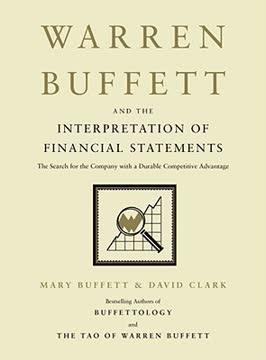
Get the complete 30-minute summary of Warren Buffett and the Interpretation of Financial Statements
Get the complete summary in the appThe durability of a competitive advantage, not growth, creates all the wealth.
Great businesses fall into three categories: unique products, unique services, or low-cost provision of essential goods.
Gross margins above 40 percent indicate pricing power and competitive strength.
Companies with durable advantages carry little debt and generate strong cash flow.
Capital expenditures should be a small fraction of earnings for great businesses.
Treat stocks of great companies as equity bonds with growing coupons.
"Warren Buffett and the Interpretation of Financial Statements" is a strong fit if you want practical ideas around finance, business, economics, especially themes like the durability of a competitive advantage, not growth, creates all the wealth; great businesses fall into three categories: unique products, unique services, or low-cost provision of essential goods. The MinuteRead summary distills these concepts into a focused read, whether you're deciding whether to buy the book or applying its lessons at work.
Mary Buffett is a bestselling author, international speaker, and entrepreneur. Her first book, Buffettology, co-written with David Clark in 1997, became an immediate bestseller. She has since authored seven successful books on finance and investing. Buffett regularly appears on major news networks as a finance expert and has spoken at prestigious organizations worldwide. Her diverse career includes consulting for Fortune 500 companies, working as an executive at Columbia Records, and co-founding…
View all summaries by Mary BuffettContinue Reading
Access the complete 30-minute summary and thousands more nonfiction books in the MinuteRead app.

Continue reading the complete summary in the MinuteRead app.