MinuteRead
30 min
Book summary
by Curtis Faith
Premium summary · Opens in the app · 30 min read
In 1983, Richard Dennis and William Eckhardt conducted one of the most famous experiments in the history of finance. Dennis, a legendary commodities trader who had turned a few thousand dollars into hundreds of millions, believed that trading could be taught. Eckhardt, his partner and a brilliant trader in his own right, believed that successful trading required an innate gift that could not be transferred.
**Author:** Curtis Faith
**Estimated Reading Time:** 45 minutes
**What You'll Learn:**
- How a group of novices were trained to become elite traders in two weeks - The specific rules that allowed ordinary people to earn extraordinary returns - Why psychology matters more than intelligence in trading - How to think in probabilities rather than certainties - The risk management principles that protect capital during inevitable losing streaks - Why simple systems outperform complex ones - How to apply the Turtle mindset beyond trading to any uncertain endeavor
**Who This Book Is For:**
This book is for anyone who wants to understand how disciplined systems and emotional control can produce exceptional results in environments dominated by uncertainty. While the setting is financial markets, the principles apply to entrepreneurs, investors, decision-makers, and anyone who must act decisively without knowing the outcome in advance.
In 1983, Richard Dennis and William Eckhardt conducted one of the most famous experiments in the history of finance. Dennis, a legendary commodities trader who had turned a few thousand dollars into hundreds of millions, believed that trading could be taught. Eckhardt, his partner and a brilliant trader in his own right, believed that successful trading required an innate gift that could not be transferred. Their disagreement led to a wager of sorts. They would recruit a group of people with no trading experience, train them in a specific set of rules, give them real money to manage, and see what happened. They placed advertisements in the Wall Street Journal, Barron's, and the New York Times. Thousands applied. Fourteen were selected. They became known as the Turtles. Curtis Faith was the youngest of the group. He was nineteen years old when he joined the program. Over the next four years, he and his fellow Turtles would earn profits exceeding one hundred million dollars. Faith himself earned more than thirty million dollars in trading profits before he turned twenty-three. The experiment answered the question definitively. Trading could be taught. The Turtles came from diverse backgrounds. There was a former professional gambler, an accountant, a fantasy game designer, a boy who had just graduated from high school. None of them had meaningful trading experience. All of them learned to trade profitably by following a specific set of rules. But the deeper lesson of the Turtle experiment was not about trading. It was about the relationship between systems, psychology, and performance. The Turtles succeeded not because they were smarter than other traders, but because they followed a disciplined process that exploited the emotional weaknesses of the crowd. Most people approach trading, investing, and many other uncertain endeavors with the wrong mental model. They believe that success requires prediction. They think the…
Continue reading in the MinuteRead app
Get the complete 30-minute summary of Way of the Turtle
Get the complete summary in the appYou do not need to predict the future to succeed. You need positive expectancy and discipline.
Risk management is the foundation of survival. Never risk enough on any single bet to cause serious damage.
Simple systems outperform complex systems. Complexity leads to overfitting and failure.
Consistency is more important than intelligence. Follow your rules regardless of how you feel.
Losses are costs of doing business, not failures. Expect them and learn from them.
Judge yourself on process, not outcomes. A good process with a bad outcome is still a good process.
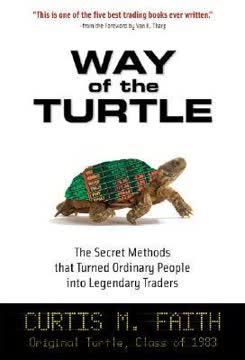
"Way of the Turtle" is a strong fit if you want practical ideas around finance, business, economics, especially themes like you do not need to predict the future to succeed. you need positive expectancy and discipline; risk management is the foundation of survival. never risk enough on any single bet to cause serious damage. The MinuteRead summary distills these concepts into a focused read, whether you're deciding whether to buy the book or applying its lessons at work.
Curtis Faith gained fame as a member of the Turtles, an elite Chicago trading group formed to test whether successful traders were born or made. As one of the youngest and most successful Turtles, Faith earned substantial profits in his early 20s using the group's trading methods. He later wrote the bestselling book "Way of the Turtle," which detailed his experiences and insights gained from the experiment. Faith's background in programming and his analytical approach to trading contributed to h…
View all summaries by Curtis FaithContinue Reading
Access the complete 30-minute summary and thousands more nonfiction books in the MinuteRead app.

Continue reading the complete summary in the MinuteRead app.