MinuteRead
30 min
Book summary
by Tina Seelig
Premium summary · Opens in the app · 30 min read
There is a moment that comes for everyone, often without warning, when the script runs out. The path that seemed so clearly marked suddenly disappears. The next step that everyone promised would be there is not. For some, this moment arrives at twenty-two, diploma in hand, facing a job market that does not care about GPAs. For others, it comes at forty, after a layoff, or at fifty, when the career they built no longer fits the life they want. It can arrive after a failed venture, a broken relati
**Author:** Tina Seelig **Estimated Reading Time:** 45 minutes
**What You'll Learn:** How to turn problems into opportunities, challenge assumptions that hold you back, learn from failure, create your own luck, and design a career that aligns with who you truly are.
**Who This Book Is For:** Anyone standing at a crossroads. Students wondering what comes next. Professionals feeling stuck. Entrepreneurs seeking a fresh lens. Parents and educators who want to help young people think differently. Anyone who suspects that the rules they learned about success might be incomplete.
There is a moment that comes for everyone, often without warning, when the script runs out. The path that seemed so clearly marked suddenly disappears. The next step that everyone promised would be there is not. For some, this moment arrives at twenty-two, diploma in hand, facing a job market that does not care about GPAs. For others, it comes at forty, after a layoff, or at fifty, when the career they built no longer fits the life they want. It can arrive after a failed venture, a broken relationship, or a quiet realization that the life you are living is not the life you meant to choose. Tina Seelig wrote this book because she has spent decades watching people confront this exact moment. As the executive director of the Stanford Technology Ventures Program, she has taught thousands of students at one of the world's most prestigious universities. These are students who have done everything right. They earned the grades. They checked the boxes. They followed the rules. And yet, she noticed something troubling. Many of them were terrified of the very thing they had been preparing for their entire lives: the moment when there is no syllabus, no rubric, and no clear answer key. The problem is not a lack of intelligence or ambition. The problem is that most people have been trained to solve problems that have already been solved. They have learned to follow instructions, meet expectations, and optimize within existing systems. But the world does not reward people who can only follow instructions. The world rewards people who can see what is missing and create it. The world rewards people who can turn uncertainty into possibility. Seelig's approach is different because she does not offer a set of career tips or motivational platitudes. Instead, she offers a fundamental shift in how you see yourself and your relationship to the world. She argues that the skills that matter most are not taught in most classrooms. They are learned through experimentation, failure, and the willingness to question everything you think you know. This book is built on a simple but profound premise: the world is full of opportunities hiding inside…
Continue reading in the MinuteRead app
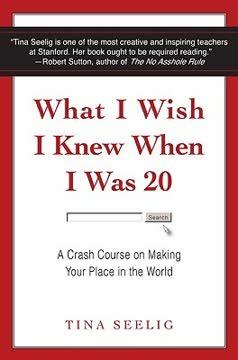
Get the complete 30-minute summary of What I Wish I Knew When I Was 20
Get the complete summary in the appProblems are opportunities in disguise. The bigger the problem, the bigger the opportunity.
Question the rules you accept without thinking. Many of your limitations are self-imposed.
Luck is a skill. Create the conditions for good things to happen.
Failure is data, not a verdict. Learn from it and move on.
Your sweet spot is the intersection of passions, skills, and market demand.
The world is small. Treat every interaction as significant.
"What I Wish I Knew When I Was 20" is a strong fit if you want practical ideas around self help, business, personal development, especially themes like problems are opportunities in disguise. the bigger the problem, the bigger the opportunity; question the rules you accept without thinking. many of your limitations are self-imposed. The MinuteRead summary distills these concepts into a focused read, whether you're deciding whether to buy the book or applying its lessons at work.
Tina Seelig is a prominent figure in entrepreneurship education and innovation. As the executive director of Stanford Technology Ventures Program, she leads efforts to promote high-technology entrepreneurship. Seelig teaches courses on creativity and innovation at Stanford University, where she has received numerous awards for her teaching excellence. With a PhD in neuroscience from Stanford, she has diverse professional experience, including roles as a management consultant and multimedia produ…
View all summaries by Tina SeeligContinue Reading
Access the complete 30-minute summary and thousands more nonfiction books in the MinuteRead app.

Continue reading the complete summary in the MinuteRead app.