 MinuteRead
30 min
Book summary
Premium summary · Opens in the app · 30 min read
Philip Delves Broughton arrived at Harvard Business School in the fall of 2004 with an unusual background. He was a journalist. For ten years he had covered wars, politics, and culture for The Daily Telegraph, serving as bureau chief in New York and Paris. He had never taken a business class, never built a financial model, and never imagined himself among the ranks of aspiring investment bankers and management consultants.
**Author:** Philip Delves Broughton **Estimated Reading Time:** 45 minutes
The real curriculum of Harvard Business School, beyond the prestige and the case studies. You'll discover why the most lucrative career paths often lead to the least fulfilling lives, how to read financial statements as reflections of human character, why cash flow matters more than profit, and what the world's most successful business leaders actually regret. You'll learn the frameworks that shape modern business thinking and the uncomfortable truths about what happens when ambitious people compete against each other for validation.
Anyone who has wondered whether an elite business education is worth the cost. Anyone considering an MBA, currently pursuing one, or recovering from one. Anyone who works alongside MBAs and wants to understand how they think. And anyone who suspects that the traditional markers of professional success might not lead where they promise.
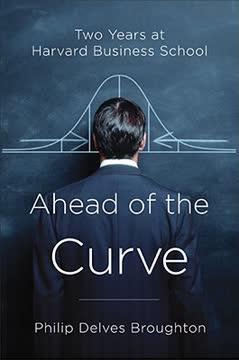
Philip Delves Broughton arrived at Harvard Business School in the fall of 2004 with an unusual background. He was a journalist. For ten years he had covered wars, politics, and culture for The Daily Telegraph, serving as bureau chief in New York and Paris. He had never taken a business class, never built a financial model, and never imagined himself among the ranks of aspiring investment bankers and management consultants. What he did have was curiosity. After years of reporting on the powerful, he wanted to understand the machinery behind their decisions. He wanted to know how business actually worked. So he applied to the most prestigious business school in the world, got accepted, and walked into a classroom filled with 895 students who had been chosen from 7,100 applicants. What he found was not what he expected. Harvard Business School is not a place where you learn to read balance sheets and call it an education. It is a place where you are systematically trained to think in a particular way. The method is famous: real business cases, cold calls, forced grading curves, and relentless pressure to participate. The content ranges from accounting to strategy to negotiations to entrepreneurship. But the deeper curriculum, the one nobody puts in the brochure, is about something else entirely. It is about learning to make decisions under conditions of profound uncertainty. It is about discovering that numbers tell stories, and those stories are shaped by the people telling them. It is about realizing that the most prestigious career paths often lead to the least satisfying lives. And it is about confronting the uncomfortable truth that being smart and accomplished does not automatically make you wise. Broughton's account is not a celebration of the Harvard Business School experience. Nor is it a bitter denunciation. It is something more valuable: an honest…
Continue reading in the MinuteRead app
Get the complete 30-minute summary of What They Teach You at Harvard Business School
Get the complete summary in the appJudgment is developed through practice, not memorization. The case method trains you to act under uncertainty.
Profit is an opinion; cash is a fact. A growing company can die from lack of cash even while reporting profits.
Financial statements are stories told through numbers. Always ask who prepared them and why.
Every financial model depends on assumptions. Precision is not accuracy.
Sustainable advantage comes from integrated systems, not single brilliant moves.
Problems are opportunities to improve. Make them visible. Apply the Five Whys. Make small changes. Repeat.
"What They Teach You at Harvard Business School" is a strong fit if you want practical ideas around business, education, biography, especially themes like judgment is developed through practice, not memorization. the case method trains you to act under uncertainty; profit is an opinion; cash is a fact. a growing company can die from lack of cash even while reporting profits. The MinuteRead summary distills these concepts into a focused read, whether you're deciding whether to buy the book or applying its lessons at work.
Philip Delves Broughton is an English journalist and author who transitioned into business education. After graduating from Oxford University, he spent a decade working for prominent British newspapers, including The Daily Telegraph and The Times of London. His journalistic career included roles as bureau chief in New York and Paris. In 2004, Broughton made a significant career shift by enrolling at Harvard Business School to pursue an MBA. This experience formed the basis for his book about HBS…
View all summaries by Philip Delves BroughtonContinue Reading
Access the complete 30-minute summary and thousands more nonfiction books in the MinuteRead app.

Continue reading the complete summary in the MinuteRead app.






