MinuteRead
5 min
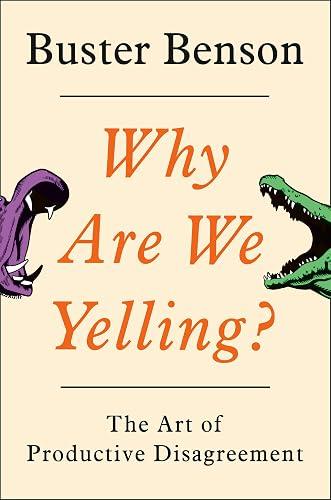
Why Are We Yelling? will improve your relationships, professional life, and the way you view the world by showing you that arguments aren’t bad, but important growing experiences if we learn to make them productive.
Why Are We Yelling? will improve your relationships, professional life, and the way you view the world by showing you that arguments aren’t bad, but important growing experiences if we learn to make them productive.
Is climate change real? Should we ban guns? Is it a good idea to make vaccination a requirement? These are just a few of the polarizing issues of our times that make us anxious.
Opposing viewpoints create cognitive dissonance. This happens anytime we come across something that contradicts the way we see the world, and it makes us distressed. To try to relieve the uneasiness that comes with conflict, the voices in our head begin working on us. There are four you need to know about:
Power Reason Avoidance Possibility
Let’s take a look at the voice of power first. This one tries to get us to win the argument by shutting it down without any acceptance of the opposing view. Someone who believes that vaccines should be a requirement for everyone, might say “Anti-vaxxers are obviously wrong and crazy!”
The voice of reason looks for evidence against the offending position. It might say “there’s no evidence that vaccines are dangerous!” If you subscribe to the voice of avoidance, however, you might think neither of these things and just give up on getting involved.
These three voices are problematic because they shut down dialogue that can open up opportunities. That’s where the voice of possibility comes in handy. It helps us look at why people might see the world a certain way. This curious perspective on issues opens the pathway to solving them, which we’ll get to more in the next lesson.
Another tool in your arsenal of arguing effectively is knowing how to ask the right questions. But first, do you remember the game Battleship? You and a partner would arrange ships on a grid that the other player couldn’t see, then ask questions to try to find and sink their ships. What does this have to do with arguments? Well, some of us disagree like we play Battleship, with the intent to destroy our opponents fleet. The problem is, questions are the pathway through the weeds of disagreement. Curiosity can widen perspectives, uncover concerns, expand understanding, encourage empathy, and sometimes solve problems. But this only works if we learn how to use it appropriately. Think about the game Twenty Questions now. When playing, one person thinks of an object or person and the other can ask twenty questions to try and guess what it is. This game provokes creative, open-ended questions while preventing questions that have a specific answer. These are the types of questions we need to ask when arguing. Let’s say…
Continue reading in the MinuteRead app
Get the complete 5-minute summary of Why Are We Yelling?
Get the complete summary in the appEndless possibilities open up when you pay attention to the different voices in your head and what they’re telling you about opposing views.
Questions are the golden ticket to make it through disagreements productively.
It is possible to disagree with dangerous ideas while also letting them into the conversation, and doing so helps solve these problems.
"Why Are We Yelling?" is a strong fit if you want practical ideas around career, communication skills, culture, especially themes like endless possibilities open up when you pay attention to the different voices in your head and what they’re telling you about opposing views; questions are the golden ticket to make it through disagreements productively. The MinuteRead summary distills these concepts into a focused read, whether you're deciding whether to buy the book or applying its lessons at work.
Motivated to help readers with why Are We Yelling? will improve your relationships, showing you how to argue productively wrote “Why Are We Yelling?” to package those ideas for a fast, focused read. In “Why Are We Yelling?”, showing you how to argue productively focuses on why Are We Yelling? will improve your relationships. Through “Why Are We Yelling?”, showing you how to argue productively distills the core ideas on career into lessons readers can absorb in a single short sitting. Readers tur…
View all summaries by Buster BensonContinue Reading
Access the complete 5-minute summary and thousands more nonfiction books in the MinuteRead app.

Continue reading the complete summary in the MinuteRead app.