MinuteRead
30 min
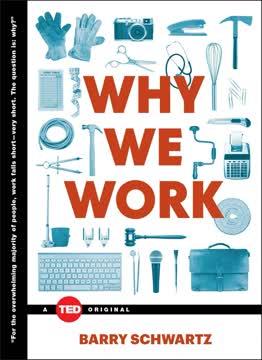
Most of us will spend the majority of our waking hours working. Over a lifetime, work consumes more time than anything else we do except sleep. And yet, when asked what work means to us, many people struggle to answer. We know we need the paycheck. We know we want the security. But is that really all there is?
**Author:** Barry Schwartz **Estimated Reading Time:** 45 minutes
### What You'll Learn
Why do you work? The obvious answer is money. But if money were the only reason, why do some people find deep satisfaction in their jobs while others count the minutes until Friday? Why do some of the most meaningful careers pay modestly while some of the highest-paying jobs leave people empty?
This book examines the real drivers of human motivation at work. You will learn why financial incentives often backfire, how workplace design shapes human character, and what separates a job from a career from a calling. You will discover why the way we think about human nature has become a self-fulfilling prophecy, and how changing that thinking can transform not just your work life but the lives of everyone your work touches.
### Who This Book Is For
This book is for anyone who has ever wondered whether their work matters. It is for managers who want to build teams that care. It is for employees who sense that something is missing but cannot name it. It is for anyone who suspects that the story we tell about work, that it is just a transaction of time for money, is incomplete and damaging.
Most of us will spend the majority of our waking hours working. Over a lifetime, work consumes more time than anything else we do except sleep. And yet, when asked what work means to us, many people struggle to answer. We know we need the paycheck. We know we want the security. But is that really all there is? Barry Schwartz believes the answer is no. And he believes that the widespread assumption that people work only for pay has done enormous damage, to individuals, to organizations, and to society. The problem is not just that many jobs are boring or poorly paid. The problem is deeper. It is about how we think about human nature itself. For centuries, a particular idea has dominated economics and management theory: that people are fundamentally lazy, that they work only because they must, and that the only way to get them to exert effort is through a combination of carrots and sticks. Pay them enough and watch them closely, the theory goes, and they will perform. This view is so deeply embedded in our institutions that we rarely stop to question it. We design jobs based on it. We structure incentives around it. We create entire organizations that assume people cannot be trusted to do good work without external pressure. And then, when people behave exactly as the theory predicts, treating their jobs as nothing more than a paycheck, we take it as confirmation that the…
Continue reading in the MinuteRead app
Get the complete 30-minute summary of Why We Work
Get the complete summary in the appPeople work for meaning, not just money. Autonomy, mastery, and purpose are the real drivers of engagement.
The belief that people are lazy and self-interested is a self-fulfilling prophecy. Treat people that way and they will b
Work can be a job, a career, or a calling. The difference is not in the work itself but in how it is experienced and des
Financial incentives often backfire. They can crowd out intrinsic motivation and turn moral obligations into transaction
The daycare fine study is the classic example: introducing a penalty for lateness made people later, not more punctual.
Hospital custodians found meaning in their work by connecting it to the healing mission. Any job can be a calling.
"Why We Work" is a strong fit if you want practical ideas around business, psychology, self help—especially themes like people work for meaning, not just money. autonomy, mastery, and purpose are the real drivers of engagement; the belief that people are lazy and self-interested is a self-fulfilling prophecy. treat people that way and they will b. The MinuteRead summary distills these concepts into a focused read, whether you're deciding whether to buy the book or applying its lessons at work.
Barry Schwartz is an American psychologist and professor at Swarthmore College. He specializes in social theory and social action, frequently applying psychological research to current events through editorials in the New York Times. Schwartz is known for his work on decision-making, choice overload, and the psychology of work. His research explores how societal structures and individual choices influence human behavior and well-being. As an author, Schwartz has written several books that bridge…
View all summaries by Barry SchwartzContinue Reading
Access the complete 30-minute summary and thousands more nonfiction books in the MinuteRead app.

Continue reading the complete summary in the MinuteRead app.