MinuteRead
5 min
Book summary
Premium summary · Opens in the app · 5 min read
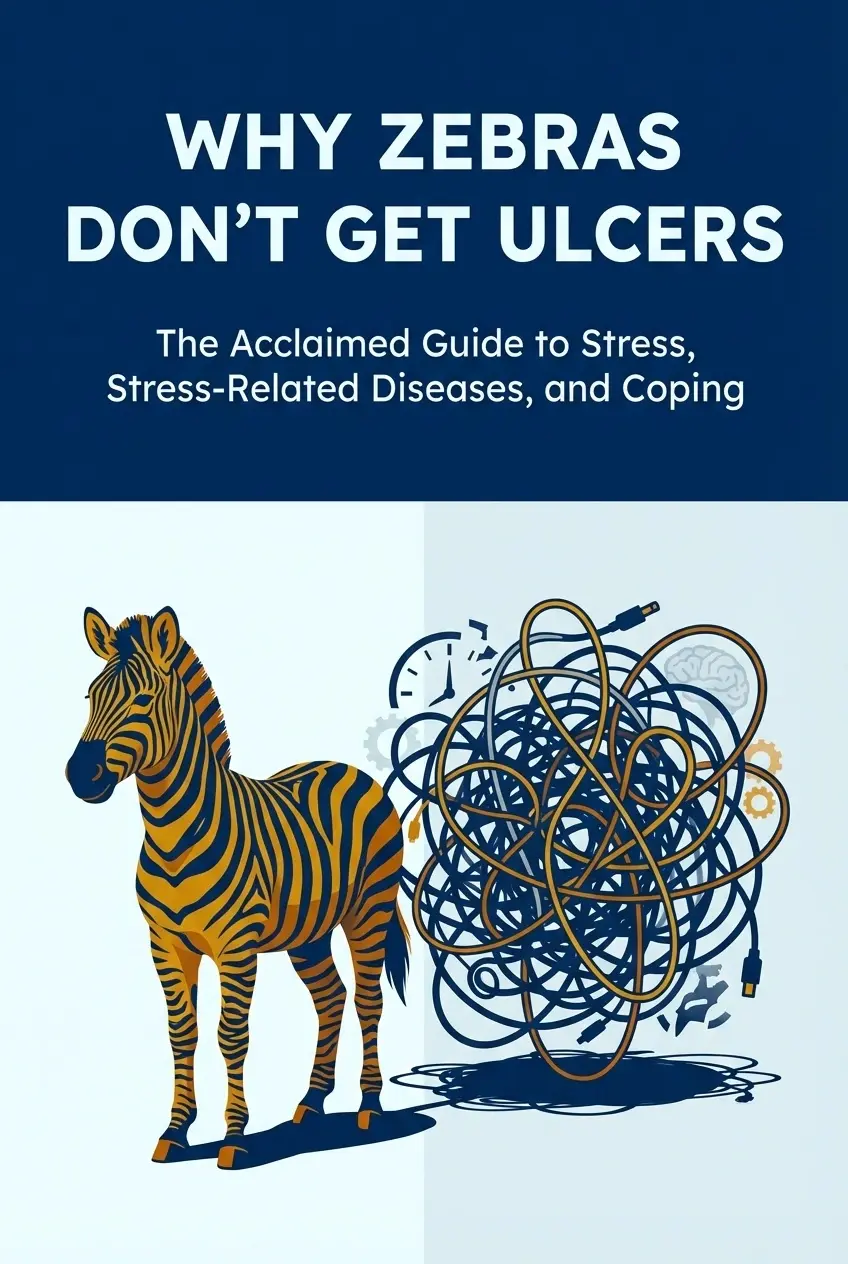
Why Zebras Don’t Get Ulcers explores the leading causes of stress and how to keep it under control, as well as the biological science behind stress, which can be a catalyst for performance in the short term, but a potential threat in the long run.
Why Zebras Don’t Get Ulcers explores the leading causes of stress and how to keep it under control, as well as the biological science behind stress, which can be a catalyst for performance in the short term, but a potential threat in the long run.
The human body is remarkable in many ways. Everything that makes up our mind is wired in a way that connects everything within us and with the outside world. So if one part of us feels as if something dangerous or uncomfortable is happening, our brain will perceive it as a stressful situation. That’s because we are programmed to survive in every circumstance.
Just like animals, we perceive stress as a response to a crisis situation, and it helps us act and react to the threats around us. However, our brain can self-induce a crisis situation if we perceive it that way, even though there is no threat around. This can be very harmful for our body. We are not made to survive the constant pressure of stress and the state of alert caused by danger.
Since our biggest source of stress is psychological, we have to learn how to deal with it better. As such, try to not perceive life situations like being stuck in traffic, having a close deadline, fighting with a loved one, like a crisis and a stressful situation. Instead, think of them like occurrences that will pass soon and don’t let your emotions run your thoughts for you. Take charge of them and minimize your brain’s response to cut down on your stress levels.
The autonomic nervous system is another outstanding function in our body which helps us respond and recover from stress. Let’s see how! First thing first, this system has two parts, which work on opposite functions. The first part is called the sympathetic nervous system. It is responsible for triggering stress during real, or imaginary, situations of crisis. This system alarms us that a threat is hovering on us. Or that something arousal or something that will make us become very active and awake is happening. Therefore, this system tells us that we should act accordingly by inducing a little bit of stress. Most commonly, this system triggers stress during flight, fright, fight, and during sex. On the other hand, the parasympathetic nervous system is responsible for the calm and the vegetative activities. This system promotes the digestive function, growth, energy storage, and other similar functions. Both of these systems activates very quickly to ensure survival. When they are awake, the brain sends signals to the entire body through blood vessels, reaching every organ, muscle and gland. Moreover, it releases specific hormones, which have long term effects…
Continue reading in the MinuteRead app
Get the complete 5-minute summary of Why Zebras Don't Get Ulcers
Get the complete summary in the appStress is a natural response to a crisis situation, but make sure not to create one out of thin air.
The autonomic nervous system works in a remarkable way.
Taking responsibility for your actions and giving back to your community improves stress levels.
"Why Zebras Don't Get Ulcers" is a strong fit if you want practical ideas around happiness, health, mental health, especially themes like stress is a natural response to a crisis situation, but make sure not to create one out of thin air; the autonomic nervous system works in a remarkable way. The MinuteRead summary distills these concepts into a focused read, whether you're deciding whether to buy the book or applying its lessons at work.
Motivated to help readers with why Zebras Don’t Get Ulcers explores the leading causes of stress and how to keep it under control, Robert Sapolski wrote “Why Zebras Don't Get Ulcers” to package those ideas for a fast, focused read. In “Why Zebras Don't Get Ulcers”, Robert Sapolski focuses on why Zebras Don’t Get Ulcers explores the leading causes of stress and how to keep it under control. Through “Why Zebras Don't Get Ulcers”, Robert Sapolski distills the core ideas on happiness into lessons re…
View all summaries by Robert SapolskiContinue Reading
Access the complete 5-minute summary and thousands more nonfiction books in the MinuteRead app.

Continue reading the complete summary in the MinuteRead app.