MinuteRead
30 min
Book summary
by Hal Hershfield
Premium summary · Opens in the app · 30 min read
You are not the same person you were ten years ago. Your tastes have shifted. Your priorities have evolved. Your body has changed in ways both visible and invisible. Yet when you imagine the person you will be in ten years, you probably picture someone remarkably similar to who you are today. You assume your current preferences will persist, your current values will hold steady, and your current goals will still matter.
**Author:** Hal Hershfield
**Estimated Reading Time:** 45 minutes
**What You'll Learn:**
- Why your brain treats your future self like a stranger - How time distorts your decision-making - Practical strategies to connect with who you are becoming - How to make choices today that serve you decades from now - Why commitment devices and emotional awareness transform behavior
**Who This Book Is For:**
Anyone who has ever struggled to save money, exercise regularly, eat well, or follow through on long-term goals. If you have ever felt like two different people, one who makes plans and one who breaks them, this book explains why and offers a path forward.
You are not the same person you were ten years ago. Your tastes have shifted. Your priorities have evolved. Your body has changed in ways both visible and invisible. Yet when you imagine the person you will be in ten years, you probably picture someone remarkably similar to who you are today. You assume your current preferences will persist, your current values will hold steady, and your current goals will still matter. This assumption is almost certainly wrong. The central problem this book addresses is not a lack of willpower or discipline. It is not that you do not care about your health, your finances, or your relationships. The problem is more fundamental and more fascinating. Your brain does not recognize your future self as you. When you think about who you will be in twenty years, your neural activity looks almost identical to the patterns that fire when you think about a stranger. Hal Hershfield, a professor of marketing, behavioral decision making, and psychology at UCLA, has spent his career studying how people think about time and identity. His research reveals a profound truth: the distance between your present self and your future self is not just a matter of time. It is a matter of perception, emotion, and identity. Consider what this means in practice. When you skip a workout, you are not choosing to harm yourself. You are choosing to let someone else deal with the consequences. When you fail to save for retirement, you are not being irresponsible with your money. You are being generous with someone else's money. When you eat poorly, smoke, or avoid the doctor, you are not making bad decisions for yourself. You are making bad decisions for a person who feels like a stranger. This is not a metaphor. Brain imaging studies show that when people think about their current selves, one set of neural regions activates. When they think about their future selves, the activation pattern shifts dramatically. It begins to resemble the pattern associated with thinking about other people entirely.…
Continue reading in the MinuteRead app
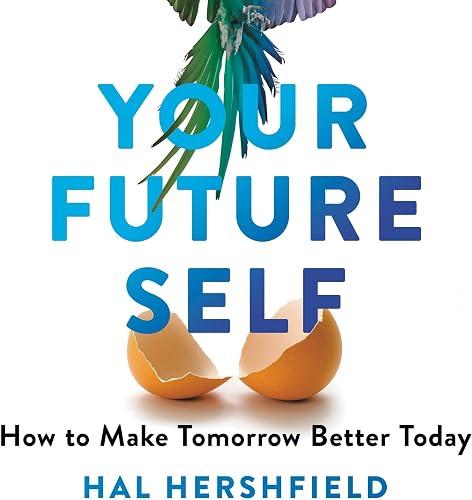
Get the complete 30-minute summary of Your Future Self
Get the complete summary in the appYour brain treats your future self as a stranger, which makes it harder to care about long-term consequences.
Time warps your perspective, making distant events feel less significant than immediate ones.
Strong emotions magnify the present and minimize the future.
You can build a relationship with your future self through visualization and reflection.
Procrastination is a failure to vividly imagine future consequences.
Commitment devices remove the need for willpower by limiting your future choices.
"Your Future Self" is a strong fit if you want practical ideas around self help, psychology, personal development, especially themes like your brain treats your future self as a stranger, which makes it harder to care about long-term consequences; time warps your perspective, making distant events feel less significant than immediate ones. The MinuteRead summary distills these concepts into a focused read, whether you're deciding whether to buy the book or applying its lessons at work.
Motivated to help readers with in the brain, Hal Hershfield wrote “Your Future Self” to package those ideas for a fast, focused read. In “Your Future Self”, Hal Hershfield focuses on in the brain. Through “Your Future Self”, Hal Hershfield distills the core ideas on self help into lessons readers can absorb in a single short sitting. Readers turn to this work when they want Hal Hershfield's perspective on the subject without working through the entire original volume. Hal Hershfield wrote “Your …
Continue Reading
Access the complete 30-minute summary and thousands more nonfiction books in the MinuteRead app.

Continue reading the complete summary in the MinuteRead app.