MinuteRead
30 min
Book summary
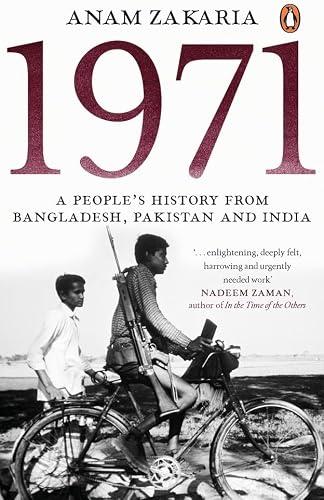
by Anam Zakaria
Premium summary · Opens in the app · 30 min read
Every nation carries stories about its past. Some stories are told loudly, repeated in textbooks and museums and official ceremonies. Others are whispered in private, shared only among families who remember what the state would rather forget. The year 1971 sits at the center of one of the most contested memories in modern history.
**Author:** Anam Zakaria
**Estimated Reading Time:** 45 minutes
**What You'll Learn:** How three nations remember the same war in radically different ways, why those memories still shape South Asian politics today, and what gets lost when states control historical narratives.
**Who This Book Is For:** Anyone who wants to understand the deeper roots of South Asian conflict, readers interested in how memory and identity intertwine, and those who believe that hearing multiple perspectives is essential to understanding history.
Every nation carries stories about its past. Some stories are told loudly, repeated in textbooks and museums and official ceremonies. Others are whispered in private, shared only among families who remember what the state would rather forget. The year 1971 sits at the center of one of the most contested memories in modern history. For Bangladesh, 1971 is the year of liberation. It is the moment when a people, long treated as second-class citizens in their own country, rose up against oppression and won their freedom. The nine-month war that followed the declaration of independence on March 26, 1971, was brutal and bloody, but it ended in triumph. Bangladesh was born. For Pakistan, 1971 is the year of dismemberment. It is the "Fall of Dhaka," a humiliating defeat that cut the nation in half. More than 90,000 Pakistani soldiers surrendered to Indian forces in December 1971. The country lost its eastern wing, and with it, a significant portion of its population and territory. The wound has never fully healed. For India, 1971 is remembered primarily as a military victory. It was the war where India defeated Pakistan decisively, created a new nation on its eastern border, and established itself as the dominant power in South Asia. The humanitarian crisis that preceded the war, the millions of refugees who fled into India, and the complex political dynamics within East Pakistan are often secondary to the story of military triumph. Anam Zakaria's book asks a difficult question: What happens when three nations remember the same events so differently? What gets lost in the gaps between these competing narratives? The answer, she discovers through years of interviews and research, is that ordinary people get lost. The Biharis stranded in Bangladesh, unable to return to Pakistan and unwelcome in their adopted homeland. The Bengalis living in Pakistan, who face suspicion and discrimination decades after the war ended. The survivors of violence who carry trauma that no official narrative can fully acknowledge. The voices of dissenters within Pakistan who spoke against the war and were silenced. Zakaria's approach is different from traditional histories. Rather than focusing on military strategy or political maneuvering, she centers the experiences of ordinary people. She travels across all three countries, interviewing survivors,…
Continue reading in the MinuteRead app
Get the complete 30-minute summary of 1971
Get the complete summary in the appThe year 1971 is remembered as liberation in Bangladesh, loss in Pakistan, and victory in India.
State narratives actively construct national memory through textbooks, museums, and public ceremonies.
The language movement of 1952 was about dignity and belonging, not just linguistic rights.
Economic exploitation of East Pakistan by West Pakistan fueled deep resentment.
The 1970 election produced a clear mandate for Bengali autonomy, but West Pakistani elites refused to accept it.
Operation Searchlight transformed a political crisis into a war by using brutal force against civilians.
"1971" is a strong fit if you want practical ideas around history, especially themes like the year 1971 is remembered as liberation in bangladesh, loss in pakistan, and victory in india; state narratives actively construct national memory through textbooks, museums, and public ceremonies. The MinuteRead summary distills these concepts into a focused read, whether you're deciding whether to buy the book or applying its lessons at work.
Motivated to help readers with every nation carries stories about its past. Some stories are told loudly, Anam Zakaria wrote “1971” to package those ideas for a fast, focused read. In “1971”, Anam Zakaria focuses on every nation carries stories about its past. Some stories are told loudly. Through “1971”, Anam Zakaria distills the core ideas on history into lessons readers can absorb in a single short sitting. Readers turn to this work when they want Anam Zakaria's perspective on the subject wit…
View all summaries by Anam ZakariaContinue Reading
Access the complete 30-minute summary and thousands more nonfiction books in the MinuteRead app.

Continue reading the complete summary in the MinuteRead app.