MinuteRead
30 min
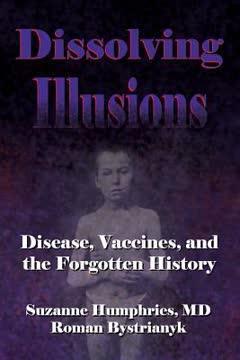
Book summary
Premium summary · Opens in the app · 30 min read
Every generation carries a set of stories about the past. Some of these stories are comforting. Some are cautionary. And some, despite being repeated so often that they feel like common sense, are simply not true.
### By Suzanne Humphries, MD
**Estimated Reading Time:** 42 minutes
**What You'll Learn:**
The true story of how infectious diseases rose and fell throughout history, why the "good old days" were far more dangerous than most people imagine, what actually drove the dramatic decline in disease mortality, and how communities once protected themselves without relying solely on medical interventions.
**Who This Book Is For:**
Anyone who has ever wondered whether the standard story of medical progress is complete. Anyone who wants to understand the complex relationship between sanitation, nutrition, vaccines, and disease. And anyone who believes that questioning established narratives is essential to genuine understanding.
Every generation carries a set of stories about the past. Some of these stories are comforting. Some are cautionary. And some, despite being repeated so often that they feel like common sense, are simply not true. One of the most persistent stories of the modern era goes something like this: Before vaccines, humanity lived in constant terror of infectious disease. Children died in staggering numbers. Epidemics swept through cities without warning. Then, thanks to the miracle of modern medicine, everything changed. Vaccines arrived, diseases disappeared, and we entered an era of unprecedented health. It is a compelling narrative. It is also, according to Suzanne Humphries, a physician who spent years examining the historical record, largely an illusion. The reality is far more complicated and far more interesting. The great decline in infectious disease mortality did not begin with vaccines. In most cases, it was already well underway before the vaccines arrived. Scarlet fever, measles, whooping cough, diphtheria, and tuberculosis all saw dramatic declines in death rates before the introduction of their corresponding vaccines. In some cases, the diseases had already become minor threats by the time vaccination programs began. So what actually drove the improvement? The answer, according to Humphries, lies in the unglamorous work of sanitation reform, improved nutrition, better housing, and cleaner water. These changes transformed the health of entire populations long before laboratory medicine had much to offer. This book is not a simple anti-vaccine polemic. It is an attempt to correct what the author sees as a fundamental misunderstanding of medical history. Humphries argues that by attributing the decline of infectious disease primarily to vaccines, we have forgotten the true lessons of the past. We have forgotten how much suffering was caused by poverty, filth, and exploitation. We have forgotten how much improvement came from basic sanitation and nutrition. And we have forgotten that communities once took responsibility for their own health in ways that modern medicine has largely replaced. The book begins with a stark portrait of life in the 1800s, when the "good old days" were anything but good.…
Continue reading in the MinuteRead app
Get the complete 30-minute summary of Dissolving Illusions
Get the complete summary in the appThe "good old days" were not good. Poverty, filth, and disease were constant companions in the past.
The Sanitation Revolution, not vaccines, was the primary driver of the decline in infectious disease mortality.
Death rates from most infectious diseases were already falling long before vaccines were introduced.
Early vaccines were often contaminated and dangerous.
The Leicester Method proved that sanitation and isolation could control disease without vaccination.
Compulsory vaccination laws sparked resistance and eroded personal liberty.
"Dissolving Illusions" is a strong fit if you want practical ideas around health & fitness, health, history, especially themes like the "good old days" were not good. poverty, filth, and disease were constant companions in the past; the sanitation revolution, not vaccines, was the primary driver of the decline in infectious disease mortality. The MinuteRead summary distills these concepts into a focused read, whether you're deciding whether to buy the book or applying its lessons at work.
Suzanne Humphries, MD is a former nephrologist who became skeptical of vaccines after observing kidney complications in patients following vaccinations. She left her medical practice to focus on researching and educating about vaccines. Humphries co-authored "Dissolving Illusions" with Roman Bystrianyk, presenting alternative perspectives on vaccine history and efficacy. Her work challenges mainstream medical narratives, arguing that improved sanitation and nutrition played a more significant ro…
View all summaries by Suzanne HumphriesContinue Reading
Access the complete 30-minute summary and thousands more nonfiction books in the MinuteRead app.

Continue reading the complete summary in the MinuteRead app.