MinuteRead
30 min
Book summary
Premium summary · Opens in the app · 30 min read
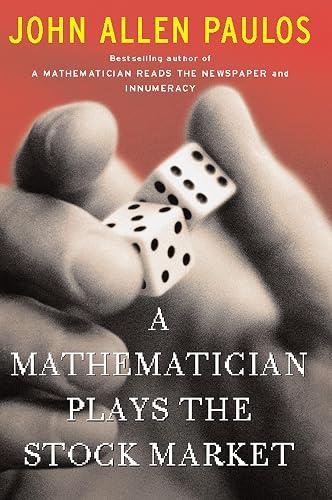
John Allen Paulos is a mathematician. He has spent his career teaching people how to think clearly about numbers, probability, and the hidden patterns that shape everyday life. He wrote bestselling books about mathematical illiteracy and about the ways numbers are misused in the news. He understood, perhaps better than most people, the difference between genuine insight and numerical nonsense.
**Author:** John Allen Paulos **Estimated Reading Time:** 45 minutes
**What You'll Learn:**
Why a mathematician lost a fortune in WorldCom and what that reveals about the limits of financial expertise. How psychological biases sabotage investment decisions. Why technical analysis often resembles astrology more than science. What power laws reveal about market crashes. And how to think more clearly about risk, uncertainty, and the stories we tell ourselves about money.
**Who This Book Is For:**
Anyone who has ever felt certain about an investment and been wrong. Anyone who suspects that the financial industry sells more confidence than it can deliver. And anyone who wants to understand the stock market not as a machine for generating wealth, but as a deeply human system full of paradox, complexity, and occasional absurdity.
John Allen Paulos is a mathematician. He has spent his career teaching people how to think clearly about numbers, probability, and the hidden patterns that shape everyday life. He wrote bestselling books about mathematical illiteracy and about the ways numbers are misused in the news. He understood, perhaps better than most people, the difference between genuine insight and numerical nonsense. Then he bought WorldCom stock. It seemed like a reasonable decision at the time. The company was a telecommunications giant, a Wall Street darling, a stock that analysts loved and institutions held. Paulos watched the price climb and decided to get in. He bought shares. He bought more shares as the price fell, convinced that the market was making a mistake. He averaged down, certain that his analysis was sound and that the market would eventually recognize the company's true value. WorldCom filed for bankruptcy in 2002 in one of the largest accounting frauds in American history. Paulos lost a significant amount of money. The experience humbled him. But it also fascinated him. Here was a mathematician, someone trained in probability and logic, someone who had literally written books about the ways people fool themselves with numbers, and he had fallen into the same traps he warned others about. He had been overconfident. He had anchored to a price he believed was fair. He had let his ego and his identity as a smart person override his judgment. This book emerged from that experience. It is not a get-rich guide. It is not a systematic investment strategy. It is something more valuable: an honest examination of what happens when mathematics meets human psychology in the world's most emotional marketplace. Paulos explores the stock market as a mathematician would, but with the humility of someone who has been burned. He examines the efficient market hypothesis, the theory that stock prices reflect all available information. He investigates technical analysis, the practice of reading…
Continue reading in the MinuteRead app
Get the complete 30-minute summary of A Mathematician Plays the Stock Market
Get the complete summary in the appThe stock market is driven by human psychology, not just rational calculation.
You are subject to psychological biases, even if you understand them.
Technical analysis is largely ineffective and difficult to distinguish from pseudoscience.
Fundamental analysis has limits and cannot protect you from fraud or predict the future.
Markets are mostly efficient, but not perfectly efficient.
The efficient market hypothesis depends on what investors believe about it.
"A Mathematician Plays the Stock Market" is a strong fit if you want practical ideas around finance, economics, business, especially themes like the stock market is driven by human psychology, not just rational calculation; you are subject to psychological biases, even if you understand them. The MinuteRead summary distills these concepts into a focused read, whether you're deciding whether to buy the book or applying its lessons at work.
Motivated to help readers with "Investors can become (to borrow a phrase Alan Greenspan and Robert Shiller made famous) irrationally, John Allen Paulos wrote “A Mathematician Plays the Stock Market” to package those ideas for a fast, focused read. In “A Mathematician Plays the Stock Market”, John Allen Paulos focuses on "Investors can become (to borrow a phrase Alan Greenspan and Robert Shiller made famous) irrationally. Through “A Mathematician Plays the Stock Market”, John Allen Paulos distill…
View all summaries by John Allen PaulosContinue Reading
Access the complete 30-minute summary and thousands more nonfiction books in the MinuteRead app.

Continue reading the complete summary in the MinuteRead app.