MinuteRead
30 min
Book summary
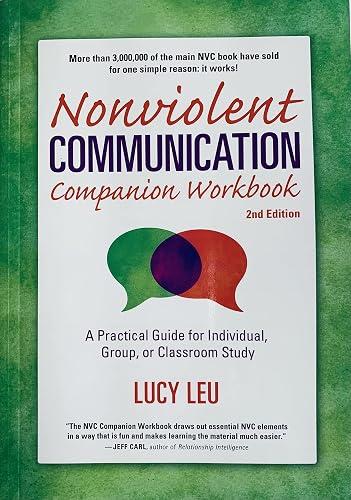
by Lucy Leu
Premium summary · Opens in the app · 30 min read
Most of us were never taught how to communicate. We learned to talk, certainly. We learned vocabulary, grammar, and how to make ourselves understood. But we were never taught how to speak in ways that create connection rather than distance, how to listen in ways that heal rather than wound, or how to express what we need without blaming others for our feelings.
**Author:** Lucy Leu
**Estimated Reading Time:** 42 minutes
**What You'll Learn:**
How to transform habitual patterns of judgment, blame, and defensiveness into a language of genuine connection. You will learn to observe without evaluating, identify feelings and needs with precision, make requests that invite collaboration rather than resistance, and offer empathy that heals rather than fixes.
**Who This Book Is For:**
Anyone who has ever walked away from a conversation feeling misunderstood, frustrated, or disconnected. Anyone who wants to communicate with more honesty and compassion. Anyone ready to examine the invisible mental habits that create distance between themselves and the people they care about.
Most of us were never taught how to communicate. We learned to talk, certainly. We learned vocabulary, grammar, and how to make ourselves understood. But we were never taught how to speak in ways that create connection rather than distance, how to listen in ways that heal rather than wound, or how to express what we need without blaming others for our feelings. What we learned instead was a language of disconnection. We learned to judge, to compare, to criticize, and to demand. We learned that some feelings are acceptable and others should be hidden. We learned to say "you make me angry" rather than "I feel angry because I need respect." We learned to argue about who is right rather than explore what matters to each person. These patterns were not taught to us by cruel or indifferent people. They came from well-intentioned parents, teachers, clergy, and others who were themselves taught the same limiting patterns. The tragedy is not that we learned these habits, but that we rarely recognize them as habits at all. We assume that the way we communicate is simply the way communication works. Lucy Leu's companion workbook to Marshall Rosenberg's Nonviolent Communication offers a different possibility. It suggests that communication can be a practice, something we learn and refine over time. It proposes that beneath every judgment lies an unmet need, beneath every criticism lies a longing for connection, and beneath every conflict lies an opportunity for understanding. The problem this book addresses is not a lack of intelligence or good intentions. It is a lack of awareness. Most of us genuinely want to connect with others. We want to be understood. We want to express ourselves honestly without hurting people. We want to resolve conflicts without destroying relationships. But we lack the tools. The tools offered here are deceptively simple. Observe without evaluating. Identify feelings. Connect feelings to needs. Make requests rather than demands. Listen with empathy. Express appreciation genuinely. Yet these simple practices require profound shifts in how we think about communication, relationships, and ourselves. The reason people…
Continue reading in the MinuteRead app
Get the complete 30-minute summary of Nonviolent Communication Companion Workbook
Get the complete summary in the appObserve without evaluating. Describe what happened in specific, factual terms before adding interpretation.
Feelings are signals that point to needs. Name them precisely.
Take responsibility for your feelings. No one else can make you feel anything.
Make requests, not demands. A request allows the other person to say no freely.
Listen with empathy. Focus on feelings and needs, not on fixing or advising.
Behind all anger are unmet needs. Pause and identify the need before speaking.
"Nonviolent Communication Companion Workbook" is a strong fit if you want practical ideas around communication, self help, psychology, especially themes like observe without evaluating. describe what happened in specific, factual terms before adding interpretation; feelings are signals that point to needs. name them precisely. The MinuteRead summary distills these concepts into a focused read, whether you're deciding whether to buy the book or applying its lessons at work.
Motivated to help readers with "We've all learned things that limit us as human beings, Lucy Leu wrote “Nonviolent Communication Companion Workbook” to package those ideas for a fast, focused read. In “Nonviolent Communication Companion Workbook”, Lucy Leu focuses on "We've all learned things that limit us as human beings. Through “Nonviolent Communication Companion Workbook”, Lucy Leu distills the core ideas on communication into lessons readers can absorb in a single short sitting. Readers tur…
Continue Reading
Access the complete 30-minute summary and thousands more nonfiction books in the MinuteRead app.

Continue reading the complete summary in the MinuteRead app.