MinuteRead
30 min
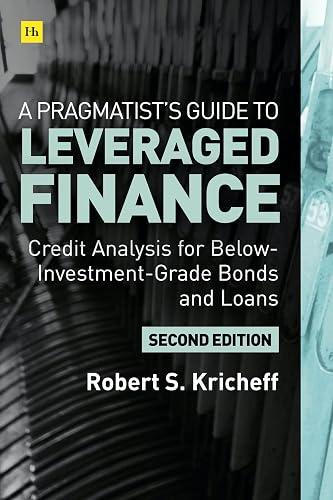
Book summary
by Robert S. Kricheff
Premium summary · Opens in the app · 30 min read
The leveraged finance market sits at an uncomfortable intersection. It is not quite fixed income, and it is not quite equity. It borrows tools from both worlds but follows rules that belong to neither. A bond that pays a fixed coupon should behave like a bond, yet high-yield debt often trades on the same news that moves stock prices. A loan secured by company assets should feel safe, yet leveraged loans frequently lose more value in downturns than their investment-grade counterparts.
**Author:** Robert S. Kricheff **Estimated Reading Time:** 45 minutes
**What You'll Learn:**
- How to analyze high-yield bonds and leveraged loans like a professional credit analyst - The critical financial metrics that reveal whether a company can service its debt - How capital structures, covenants, and debt rankings determine risk and recovery - How to build forward-looking models and respond to event-driven market moves - The practical frameworks used by portfolio managers and analysts in leveraged finance
**Who This Book Is For:**
This book is for anyone who wants to understand the leveraged finance market deeply. Whether you are a junior analyst entering the high-yield bond or leveraged loan business, an investor evaluating credit opportunities, a corporate finance professional working with debt capital markets, or a student preparing for a career in credit analysis, this guide provides the practical tools and mental models you need. It assumes no prior expertise but does assume you are serious about learning how credit decisions are actually made.
The leveraged finance market sits at an uncomfortable intersection. It is not quite fixed income, and it is not quite equity. It borrows tools from both worlds but follows rules that belong to neither. A bond that pays a fixed coupon should behave like a bond, yet high-yield debt often trades on the same news that moves stock prices. A loan secured by company assets should feel safe, yet leveraged loans frequently lose more value in downturns than their investment-grade counterparts. This hybrid nature creates a problem. Analysts trained only in traditional fixed income miss the equity-like signals that drive leveraged credit. Analysts trained only in equity research miss the structural protections and cash flow mechanics that determine whether a company can actually pay its debts. The leveraged finance market demands fluency in both languages. Robert Kricheff wrote this book to bridge that gap. Drawing on his experience as a Managing Director at Credit Suisse, where he led Leveraged Finance Strategy and Portfolio Analytics, he offers a practitioner's view of how credit analysis actually works. This is not an academic treatment filled with elegant theories that collapse on contact with real markets. It is a field guide built for people who need to make decisions with imperfect information and real money at stake. The stakes are substantial. The leveraged finance market represents trillions of dollars in outstanding debt across high-yield bonds and leveraged loans. Companies use this market to fund acquisitions, refinance existing obligations, and pursue growth strategies. Investors use it to earn returns that exceed what investment-grade bonds offer. But those higher returns come with higher risks, and the difference between a successful credit investment and a painful loss often comes down to the quality…
Continue reading in the MinuteRead app
Get the complete 30-minute summary of A Pragmatist's Guide to Leveraged Finance
Get the complete summary in the app**Cash is king.** The statement of cash flows matters more than the income statement. Focus on cash from operations and
**EBITDA is not cash flow.** Always trace EBITDA through to actual cash generation by subtracting capital expenditures a
**Ratios need context.** Debt-to-EBITDA, EBITDA-to-interest, and free-cash-flow-to-debt are useful, but they must be int
**Trends matter more than snapshots.** A company with deteriorating margins and declining same-store sales is risky even
**Build scenarios.** Base case, upside, and downside projections reveal the range of possible outcomes and key sensitivi
**Know the capital structure.** Structural subordination can make seemingly similar debt instruments very different in r
"A Pragmatist's Guide to Leveraged Finance" is a strong fit if you want practical ideas around finance, business, money, especially themes like **cash is king.** the statement of cash flows matters more than the income statement. focus on cash from operations and; **ebitda is not cash flow.** always trace ebitda through to actual cash generation by subtracting capital expenditures a. The MinuteRead summary distills these concepts into a focused read, whether you're deciding whether to buy the book or applying its lessons at work.
Motivated to help readers with it is often said that the leveraged finance market has characteristics of both fixed income and equity, Robert S. Kricheff wrote “A Pragmatist's Guide to Leveraged Finance” to package those ideas for a fast, focused read. In “A Pragmatist's Guide to Leveraged Finance”, Robert S. Kricheff focuses on it is often said that the leveraged finance market has characteristics of both fixed income and equity. Through “A Pragmatist's Guide to Leveraged Finance”, Robert S. Kr…
Continue Reading
Access the complete 30-minute summary and thousands more nonfiction books in the MinuteRead app.

Continue reading the complete summary in the MinuteRead app.