MinuteRead
30 min
For most of human history, the future was not something to be managed. It was something to be endured.
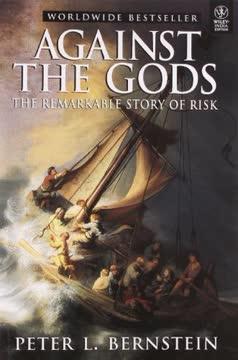
**Author:** Peter L. Bernstein
**Estimated Reading Time:** 45 minutes
**What You'll Learn:** How humanity's quest to understand and manage risk transformed civilization, the mathematical breakthroughs that made modern life possible, and why mastering uncertainty remains the defining challenge of our age.
**Who This Book Is For:** Anyone who makes decisions under uncertainty, which is to say everyone. Investors, business leaders, students of history, and readers curious about how humanity crossed the boundary from superstition to science will find this book essential.
For most of human history, the future was not something to be managed. It was something to be endured. When crops failed, when floods came, when armies fell, when plagues swept through cities, the explanation was always the same: the gods had willed it. The future was a mystery locked in the minds of divine beings, and ordinary men and women could only hope to catch glimpses through oracles, omens, and the interpretations of priests. The idea that human beings could systematically understand what might happen next, could measure uncertainty, could make decisions based on calculated odds rather than superstition, would have seemed absurd to our ancestors. Yet somewhere along the way, a revolution occurred. It did not happen overnight, and it did not happen in a single place. It unfolded over centuries, across continents, through the work of mathematicians, gamblers, merchants, scientists, and philosophers. It was a revolution of thought, and it changed everything. The central question of this book is simple: How did humanity learn to think about the future in a new way? How did we move from a world where the future was unknowable to a world where we can assign probabilities, hedge against losses, insure against disasters, and build entire economies on the foundation of calculated risk? The answer is a story that spans five hundred years of intellectual history. It begins with gamblers trying to figure out the odds of dice throws. It passes through the coffeehouses of London where insurance markets were born. It winds through the statistical breakthroughs of the nineteenth century, the portfolio theories of the twentieth, and the complex financial instruments of our own time. At every step, the story is the same: human beings refusing to accept that the future is beyond their control. What makes this story remarkable is not just the mathematical discoveries, though those are extraordinary. What makes it remarkable is the shift in mindset. The mastery of risk is not primarily a technical achievement. It is a philosophical one. It is the belief that the future, while uncertain, is not entirely unknowable. It is the conviction that human beings can use reason, evidence, and mathematics to make better decisions in the face of uncertainty.…
Continue reading in the MinuteRead app
Get the complete 30-minute summary of Against the Gods
Get the complete summary in the appThe mastery of risk is the defining achievement of modern civilization.
Probability theory emerged from gambling in the seventeenth century.
The law of large numbers transforms individual uncertainty into aggregate predictability.
The normal distribution provides a framework for measuring uncertainty, but many phenomena have fat tails.
Regression to the mean explains why extreme performances are often followed by more moderate ones.
Correlation does not imply causation.
"Against the Gods" is a strong fit if you want practical ideas around finance, history, business, especially themes like the mastery of risk is the defining achievement of modern civilization; probability theory emerged from gambling in the seventeenth century. The MinuteRead summary distills these concepts into a focused read, whether you're deciding whether to buy the book or applying its lessons at work.
Peter L. Bernstein was a renowned economist, financial historian, and investment manager. He founded Peter L. Bernstein, Inc. in 1973, offering economic consulting to institutional investors worldwide. Bernstein authored nine books on economics and finance, as well as numerous articles in professional journals and popular publications. He served as the first editor of The Journal of Portfolio Management and lectured extensively on risk management and market history. Bernstein received multiple a…
View all summaries by Peter L. BernsteinContinue Reading
Access the complete 30-minute summary and thousands more nonfiction books in the MinuteRead app.

Continue reading the complete summary in the MinuteRead app.