MinuteRead
30 min
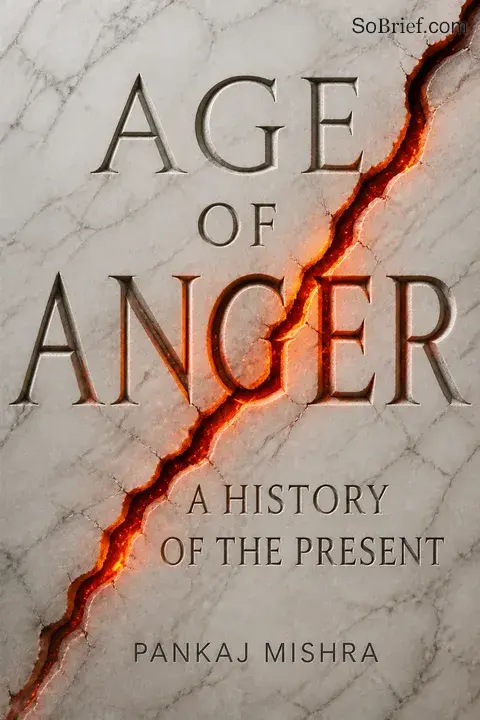
Something feels broken. The headlines arrive faster than comprehension: terrorist attacks in European capitals, nationalist movements winning referendums, crowds storming government buildings, demagogues elected in established democracies, ethnic violence flaring across continents. Each event gets its own explanation. Economic grievance. Religious fanaticism. Russian interference. Racism. But the explanations never quite cohere. They treat each crisis as a separate fire when the whole landscape
**Author:** Pankaj Mishra **Estimated Reading Time:** 45 minutes
**What You'll Learn**
Why the world feels gripped by fury. How the promises of modernity created the very resentments now tearing societies apart. Where today's nationalism, nihilism, and demagoguery actually come from. And why the story we tell ourselves about Western progress is dangerously incomplete.
**Who This Book Is For**
Anyone who senses that conventional explanations for our political chaos (economic anxiety, religious extremism, foreign interference) miss something deeper. Anyone willing to trace today's anger back to its origins in the eighteenth century. Anyone prepared to see that the violence and disorder we associate with distant places are not alien to the modern condition but central to it.
Something feels broken. The headlines arrive faster than comprehension: terrorist attacks in European capitals, nationalist movements winning referendums, crowds storming government buildings, demagogues elected in established democracies, ethnic violence flaring across continents. Each event gets its own explanation. Economic grievance. Religious fanaticism. Russian interference. Racism. But the explanations never quite cohere. They treat each crisis as a separate fire when the whole landscape is burning. Pankaj Mishra argues that we are living through something larger than any single political crisis. We are witnessing a global replay of a drama that first unfolded in Europe two centuries ago. The anger that now courses through societies from Ankara to Washington, from Mumbai to Budapest, is not a departure from modernity. It is modernity's shadow, its recurring nightmare. The standard story of the modern West goes like this. The Enlightenment replaced superstition with reason. Science and commerce liberated individuals from feudal hierarchies. Democracy extended rights to citizens. Progress, though uneven, moved in one direction. The world wars and totalitarian regimes of the twentieth century were aberrations, monstrous but temporary deviations from the path. Mishra shows this story is a sanitized version of events. The actual history of European modernization was far bloodier and more chaotic than we like to remember. The rise of industrial capitalism did not simply liberate individuals. It destroyed communities, overturned traditions, created new forms of inequality, and generated psychological states of envy, humiliation, and rage that found expression in nationalism, anarchism, and eventually fascism. The nineteenth century was not a calm march toward liberal democracy. It was an age of anger. That age, Mishra contends, has now gone global. The same forces that convulsed Europe (rapid economic transformation, the collapse of traditional authority, the spread of literacy and mass media, the gap between promised equality and actual inequality) are now operating on a planetary scale. And they are producing familiar results: ressentiment, tribalism, the worship of strong leaders, the search for scapegoats, and the aestheticization of violence. This is not a book about…
Continue reading in the MinuteRead app
Get the complete 30-minute summary of Age of Anger
Get the complete summary in the appThe anger now spreading across the world is a replay of the disorder that accompanied Europe's own violent transition to
Ressentiment (the festering bitterness of those who feel weak and humiliated) is the emotional fuel of modern political
Rousseau diagnosed this dynamic in the eighteenth century, showing how social comparison makes people miserable and hung
The German Romantics transformed cultural insecurity into nationalism, a pattern now visible across the developing world
Mazzini turned nationalism into a political religion, and his ideas spread globally, inspiring movements from Ireland to
Bakunin's celebration of destruction anticipated the nihilistic violence of contemporary terrorism.
"Age of Anger" is a strong fit if you want practical ideas around history—especially themes like the anger now spreading across the world is a replay of the disorder that accompanied europe's own violent transition to; ressentiment (the festering bitterness of those who feel weak and humiliated) is the emotional fuel of modern political. The MinuteRead summary distills these concepts into a focused read, whether you're deciding whether to buy the book or applying its lessons at work.
Pankaj Mishra is an Indian essayist and novelist known for his critical examinations of globalization, modernity, and cultural conflicts. His works include travelogues, novels, and non-fiction books that explore the social and cultural changes in India and other parts of Asia. Mishra's writing often blends personal experiences with historical and philosophical insights. His debut novel, The Romantics, won acclaim and was translated into multiple languages. Mishra's essays and reviews have appear…
View all summaries by Pankaj MishraContinue Reading
Access the complete 30-minute summary and thousands more nonfiction books in the MinuteRead app.

Continue reading the complete summary in the MinuteRead app.